

As cities worldwide grapple with congestion, urbanisation and sustainability challenges, buses are emerging as the quickest and most effective pathway towards cleaner public transportation. At Busworld India Conclave 2026, Michele Straniero, Vice President – Marketing & International Business Development, BLUE Engineering S.r.l., spoke with Ashish Bhatia about the global momentum.
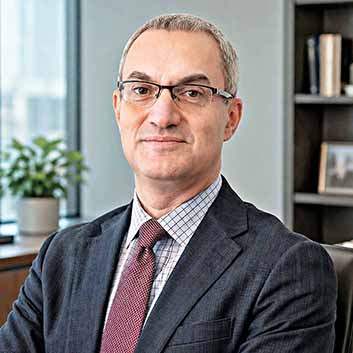
Michele Straniero, Vice President-Marketing & International Business Development, Blue Engineering S.r.l.
Q. As someone deeply involved with the global bus ecosystem, how do you assess the broader direction of the bus industry today? What are the common goals driving stakeholders across markets?
A. The fact that we started the conclave slightly late because of traffic is itself an indication of one of the biggest challenges cities face worldwide. Whether it is Delhi, Milan, São Paulo or Johannesburg, congestion is becoming a common reality. That challenge is driving a gradual shift from individual transportation towards collective public transportation. Buses are the quickest and most effective way to address that need. While metro and urban rail systems offer higher capacity, they require significant investments and longer implementation timelines. The bus, on the other hand, is the immediate solution. Across Southeast Asia, Africa and South America, countries undergoing rapid urbanisation are investing heavily in public transport. Increasingly, electric buses are becoming an effective solution not only to move people efficiently but also to reduce urban pollution. That is why this is such an exciting time to be part of the bus industry globally.
Q. You have spent time travelling across different parts of India this week. What impressions have you taken away from the country?
A. One thing that immediately stands out is the incredible diversity of India. This week alone, I visited four cities across different states and regions. For someone coming from outside, it is fascinating to experience how distinct each region feels in terms of culture, ideas and identity. Sometimes people tend to look at India as one homogeneous market, but that is not the reality. India is a mosaic of cultures, traditions and aspirations. Interestingly, that reminds me a lot of Italy. Italy was unified less than 200 years ago and remains a collection of regions with strong individual identities. Tuscany, Sicily, Rome and Milan each have their own character. That diversity is one of Italy’s greatest strengths and sources of creativity. I see many similarities in India. The diversity here is not a challenge; it is a source of strength.
Q. The bus itself often becomes a reflection of a city’s identity. Do you see that happening in India as well?
A. Absolutely. The city bus is not just a transportation asset. In many ways, it becomes part of the identity of a city or region. As public transportation systems evolve, buses increasingly reflect local priorities, whether those relate to sustainability, accessibility, passenger comfort or technological advancement. That local character is something very unique and visible in India.
Q. There is broad consensus around the benefits of electric buses. What, in your view, is required for electric buses to move from policy-driven adoption to a stronger market-led pull?
A. India is already setting an example for many countries around the world. The transition towards electric mobility in public transportation often requires strong top-down policy support in the early stages. What the Indian administration has done over the last few years has been exceptional. Of course, there is always more that can be done, but India has demonstrated how policy support can accelerate adoption and create momentum. Most importantly, it is working. I visit India regularly, and every time I come back, I see a greater presence of electric vehicles and electric buses on the roads. The progress is visible. Many countries are observing India’s experience closely because it offers important lessons on how to scale electric public transportation.
Q. Have you noticed improvements in public transportation accessibility and usage compared to your earlier visits?
A. Certainly in terms of visibility and frequency, yes. I can clearly see public transportation becoming more present and more accessible than before. However, there is still an opportunity around passenger convenience, particularly for visitors and tourists. Today, it is incredibly easy to book a cab through a smartphone application. Public transportation could benefit from a similar unified digital experience where users can access information, purchase tickets and plan journeys through a single platform. This is not just an Indian challenge. In Italy, where we welcome millions of tourists every year, we face similar issues. A unified public transportation application could make the experience much more intuitive for occasional users and visitors.
Q. Do you believe digital integration will become an increasingly important part of future public transportation systems?
A. Without question. The future of public transportation is not only about the vehicle itself. It is also about the user experience. People expect simplicity, convenience and seamless connectivity. The easier it becomes to access and use public transportation, the more likely people are to choose it over private vehicles. Digital integration therefore becomes a very important enabler of public transport adoption.
Q. Looking ahead, what excites you most about the future of the bus industry?
A. What excites me is that we are witnessing a transformation that combines sustainability, technology and urban development. Cities across the world are looking for cleaner, more efficient mobility solutions. Electric buses are becoming an important part of that answer. At the same time, every market is adapting these solutions in its own way, reflecting local requirements and priorities. That combination of global objectives and local innovation makes the future of the bus industry extremely exciting.