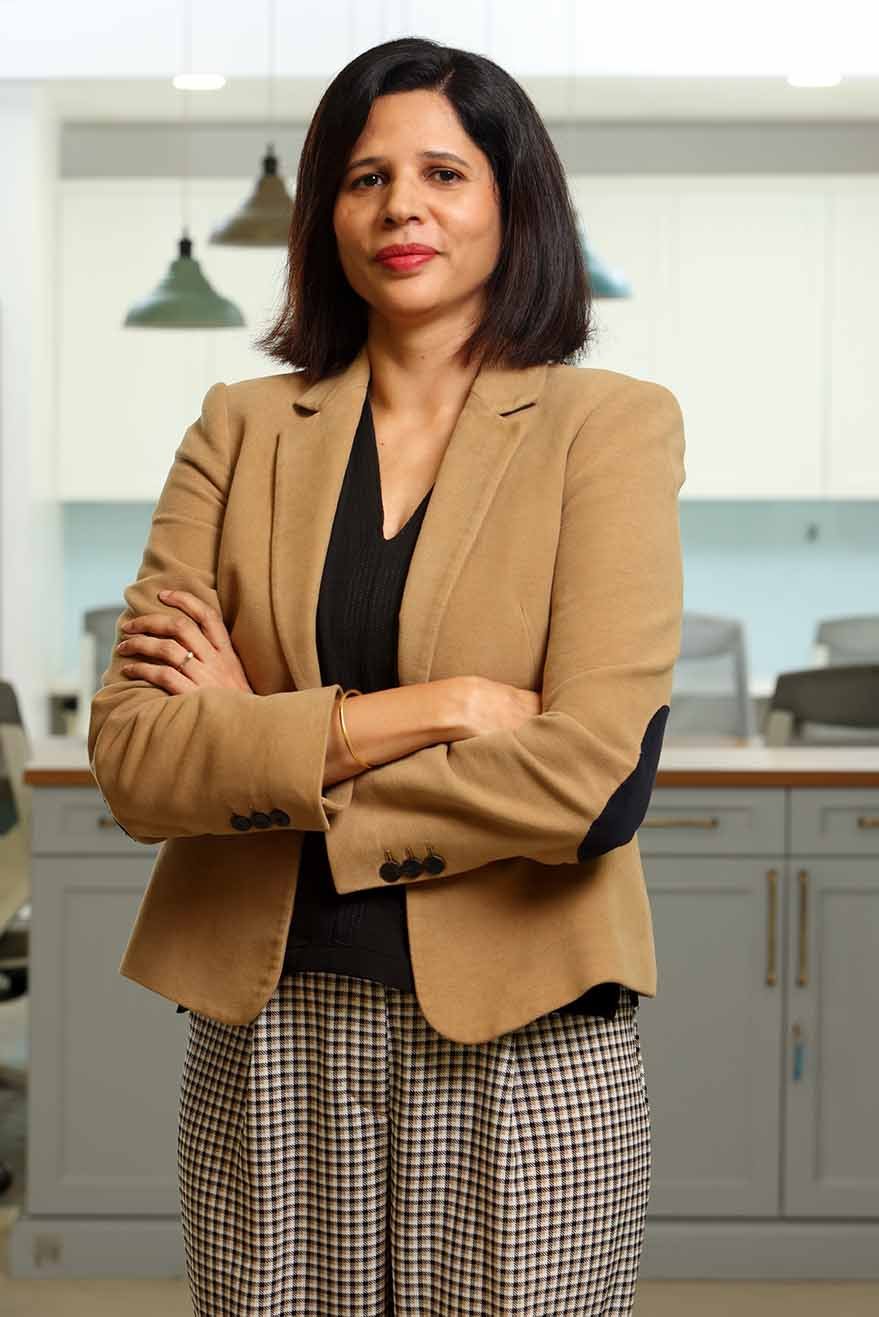


Michael Moebius, President & Chief Procurement & Supply Chain Officer, Daimler India Commercial Vehicles, in conversation with Ashish Bhatia.
Q. You bring a very rich experience across continents and roles, with a strong focus on quality assurance, procurement and supply chain. What are the key learnings you bring to the table?
A. Michael Moebius: I bring broad experience across continents. What is very astonishing is that, no matter in which part of the world I’ve worked, what really beats everything is a robust system. You always have local heroes who want to dominate, but at the end, what makes it is the system behind. That means robust processes, policies, clear rules and responsibilities, combined with performing people who are engaged and passionate about the product. We are celebrating 130 years of forward, and that is also an obligation for us to drive this even more forward into the future. I am now 35 years with the company, and I identify myself with the company. I grew in this company, and that passion for the brand and the company is what I spread across the organisations where I work.
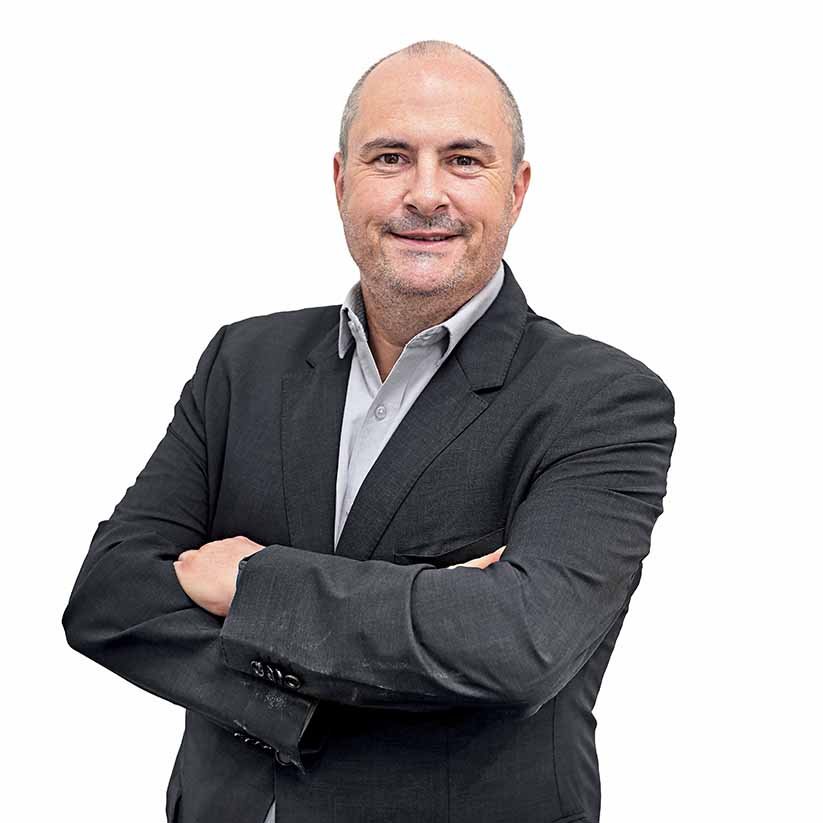
Michael Moebius, President & Chief Procurement & Supply Chain Officer, Daimler India Commercial Vehicles
Q. We are looking at sentiment, energy transition, geopolitics and the impact of politics on the automotive industry. How do you look at the current environment, where volatility means that nothing is certain?
A. Michael Moebius: Our job is to make the uncertainty as certain as possible. The key word is actually resilience. The times have changed over the last 15 to 20 years. In the past, we were looking at getting parts cost down, getting cost efficient in time and quality. But now we have to look beyond that. Basically, resilience beats cost. With all these geopolitical tensions and uncertainties in politics and the economy, resilience is even more important than cost. You can have a part quite good at cost, but if you don’t get the part because of tensions across the globe, then the damage to the company is even higher. That’s why we started shifting our mindset from looking at the best sourcing country to taking into account all the facets around it — the economy, political tension and interaction between different countries, including free-trade agreements. The perspective became multifold. We are looking from different angles to ensure that resilience is kept.
Q. You also say that strategies don’t fail; it is the people and lack of commitment that can cause them to fail. What does commitment mean to you?
A. Michael Moebius: Commitment is multifold. It’s a commitment to your family, to your job and to your company. But the most important one is the customer. Everything we do in our company is to make the customer successful every day. That is the mindset and spirit we follow in our company. At the end, the customer is who pays our salary, who makes our brand image and who makes our company successful. I share exactly the same with our supplier partners. There is only one goal, which is the end customer who enjoys our product every day and is successful with it. Our products should be the most desirable products that the customer wants to have.
Q. You have brought experiences from markets such as Vietnam and Brazil. What have those markets taught you, and how do you look at India?
A. Michael Moebius: In India, there is one thing which astonishes me every day. We have a very young, edgy workforce, and the passion to change something is unbelievable. This is definitely more than I have seen in other regions. I have visited many start-ups and seen how they are burning to get their idea from an initial thought really to a finished product. That same spirit I saw when I first came to India.
“In the past, we were looking at getting parts cost down, getting cost efficient in time and quality. But now we have to look beyond that. Basically, resilience beats cost.”
I was part of the founding team of DICV, and it was quite challenging because we had people from different parts of the industry. I had 10 people in the room and we had 11 different opinions. But they were not contradicting opinions. Everybody was burning to bring the best to the table. That made it very easy for us to sort out what was best for the company and what fitted into the strategy. This is why we could build up a very good reputation and brand in India in a very short period of time. It’s the passion to succeed, and that’s definitely different from other regions.
Q. DICV has crossed major milestones and has built a significant export contribution from India. Was this always part of the roadmap?
A. Michael Moebius: When DICV entered in 2012, it was already clear and part of our strategy that the products we produce in Oragadam would not stay only in India. It was part of the strategic roadmap. But when you build a new brand in a new market, you need to earn the trust. You need to gain the trust of customers and also within our own organisation. Are we able to deliver what we have promised?
That happened quite fast. Even after two years after the inception, we already had the first product for the export markets. Today, we are delivering products out of Oragadam to markets around the globe. That would not have been possible if we had not proven that the brand, facility and team are capable of delivering. I always call it walk the talk. We walk the talk. But that’s the journey. This is not just a one-time event. We need to prove and earn the trust every day within our organisation and with the customer.
Q. Procurement and supply chain are the foundation behind the product. What does that role look like from the back end?
A. Michael Moebius: Before, when you asked me about my experience across the globe, I told you that we always have local heroes. I’m not a local hero. I’m a spark to the team, with ideas and direction.
The heroes are actually the entire team. This is not limited to procurement and supply chain. This is for the entire DICV organisation. We all are local heroes because we celebrate together. But if we fail, we also fail together. When we started DICV, I was in the role of building up quality. Building quality from scratch is a challenge. But the spark I gave to the team was that quality is the argument which sells. Quality is not produced only by the quality department. It is produced by everybody in the value chain. It starts with R&D, which designs the quality; manufacturing and engineering, where quality is produced; the supplier partner, which brings the quality parts; and procurement and supply chain, which has to bring the parts cost-competitive, in time, in quantity and in quality.
“Even after two years after the inception, we already had the first product for the export markets. Today, we are delivering products out of Oragadam to markets around the globe.”
If you combine all of this together, the sales force has the right quality product to sell to the customer. That is the sum which makes the customer experience.
Q. The industry has gone through GST, BS-IV to BS-VI, Covid and now geopolitical uncertainty. How do you navigate one disruption after another?
A. Michael Moebius: Covid, you cannot plan. Covid came. The same applies to a financial crisis — you could predict a little bit, but its impact was to a certain degree unpredictable. When you talk about emission norms or safety regulations, these are things policymakers decide, and you have an outlook. You can get prepared for them. This is exactly where our strength is — looking forward.
We don’t want to participate just in the industry. We want to lead the industry. We want to be the best truck manufacturer in the world. That’s why you need to look always upfront. For uncertainty, you need resilience. You can set up your processes, but you will learn every day when a new uncertainty comes. You also need the courage to make a bold step ahead into uncertainty. Uncertainty is actually not something which should scare you. It’s an opportunity to learn.
“We are looking into zero emission vehicles with technologies such as H2 ICE, battery-electric vehicles and fuel cells. That is the future.”
Q. How do you look at India’s evolution within Daimler Truck’s global portfolio?
A. Michael Moebius: I would call it market intelligence. Markets around the globe behave differently because they develop at different pace. If you look, for example, at Africa, the emission norms are not at the same level. Markets are not developing at the same speed according to norms and regulations. But we are a global player, so we have to look into all these different markets. Market intelligence is very important because that intelligence defines how you plan your product portfolio and when is the right time to enter which market with which technology. We need to be on the global stage and look at all the different areas. That’s a challenge, but we know what we want.
Q. What is the technology mix you see emerging, and how does that translate into procurement and supply-chain strategy?
A. Michael Moebius: We are looking into zero-emission vehicles with technologies such as H2 ICE, battery-electric vehicles and fuel cells. That is the future.
But to be ready for the future, you need to understand which parts you need and where the right sourcing opportunities are. India has always been attractive because of its cost advantage, and that hasn’t changed. We have been delivering out of India to the world for more than 10 years through our consolidation centre. Till date, we have supplied 300 million parts out of India to the world, not only into DICV but across Daimler Truck globally. These are 300 million arguments that India is a strategic hub of importance, not only for engineering capabilities but also for sourcing.
For future technologies, we are already looking for the best sourcing country where we can get the parts right.
Q. Finally, how do you see the role of suppliers evolving as technology and product cycles accelerate?
A. Michael Moebius: We need to reduce the design lead time for new products. But that is also a consequence of new technologies.
Everybody speaks now about AI, where there is uncertainty and even some fear. But let’s look back to the 1980s and 1990s, when computers were introduced. At that time, products were designed by many people with drawing boards, pencils and rubber. Then the computer came, and people said computers would take over our jobs. What did the computer do? We still have our jobs. The computer helped us to be faster and reduce the development cycle.
Q. The same cycle needs to continue because technology changes are extremely rapid. We need to reduce development and testing times, but without compromising quality, safety and reliability. What is the final measure of all these efforts?
A. Michael Moebius: The key is customer uptime. We have to coordinate all the functions within our organisation, and transparency is critical. I’m not speaking about Excel sheets. I’m speaking about process automation, automated reporting, traceability and real-time data transmission with our supplier partners. We need data in real time. We need to know where the truck bringing the part to the plant is. We need just-in-time and just-in-sequence delivery. Only this will work successfully if you have the data and work with it in real time. Our objective is to ensure that the customer has the uptime that he needs. ACI