

In an upfront conversation. Amberish Shinde, Chief Manufacturing Officer, Yokohama-ATG, talks to Ashish Bhatia about the inherent advantages aligned with the Yokohama Transformation Strategy
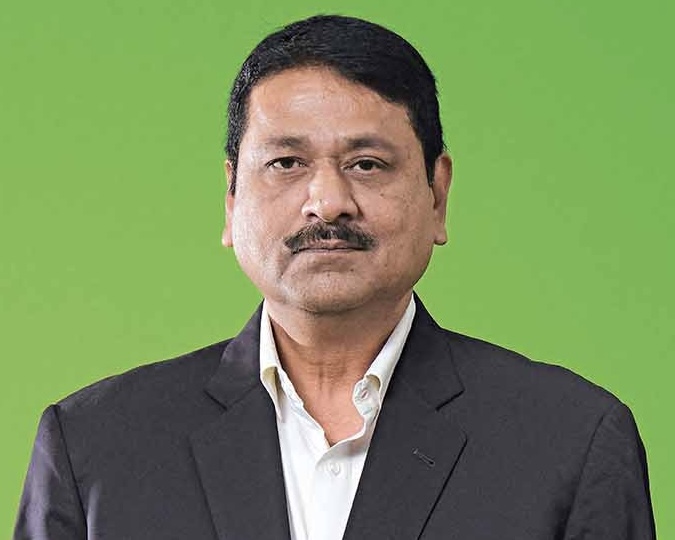
Amberish Shinde, Chief Manufacturing Officer,Yokohama- ATG
Q. Considering your focus segments, what is the approximate revenue contribution from each, in terms of percentage?
A. This value-driven approach is reflected in the company’s performance metrics. Between 2023 and 2025, business volumes in the Indian market more than doubled, signalling a strong reception for the Alliance and Galaxy brands.
Q. What is the distribution ratio between Original Equipment sales and the aftermarket for the company?
A. Our India journey is nascent, and most of our sales come from the aftermarket. We have initiated conversations with and supplies to some of the leading tractor manufacturers.
Q. How is Y-ATG managing the near-term volatilities in the rubber industry, particularly given the pressure from the West Asia conflict?
A. Addressing global volatilities, Shinde highlights the company’s structural resilience: By diversifying our sourcing and leveraging our presence in over 130 countries, we mitigate the risks associated with geopolitical disruptions and logistics inflation. Our regional warehousing and agile supply-chain planning ensure that customer support remains uninterrupted, even in a dynamic global environment.
Our presence across more than 130 countries also helps reduce overdependence on any single geography or shipping corridor. While we have witnessed moderate increases in freight costs, transit times and insurance premiums due to rerouting and global uncertainty, much of the impact has been mitigated through regional warehousing, agile supply-chain planning and close coordination with channel partners.
Over the years, disruptions such as COVID, tariff changes and geopolitical uncertainties have strengthened our ability to adapt quickly, and the focus remains on ensuring continuity of supply and long-term customer support.
Q. Has operating profit been a concern area for the company and the tyre manufacturing industry over the past five years, and more specifically now?
A. The conversation concludes with a focus on the human and operational elements of the business. From implementing IoT-led modernisation at manufacturing plants in Vizag, Dahej, and Tirunelveli to fostering a diverse, inclusive workforce-including entirely women-led production lines-Yokohama-ATG is proving that operational excellence and social responsibility are mutually reinforcing.
In this segment, customers increasingly prioritise reliability, performance, productivity and total cost of ownership rather than purely upfront pricing. This provides opportunities for technology-driven and premium products to maintain stronger value positioning. Our focus, therefore, remains on operational efficiencies, prudent cost optimisation, manufacturing excellence and innovation-led differentiation rather than taking short-term reactive measures. Our commitment is to ensure that we meet the needs of our customers, irrespective of the prevailing situation.
Additionally, investments in automation, renewable energy adoption and process optimisation across our facilities are helping improve efficiency and reduce operational intensity over the long term. While near-term cost pressures do create margin sensitivities across the industry, we believe long-term fundamentals for the Off-Highway segment remain robust.
Q. What initiatives are in place to ensure sustainability both upstream and downstream, and how do major ESG programs like “Forever Forest” fit into this strategy?
A. Sustainability is deeply integrated into both our operational strategy and community engagement initiatives. Upstream, we are increasing the use of sustainable and recycled raw materials, including sustainable natural rubber, reclaimed rubber, crumb rubber, recovered carbon black, bio-based oils, and silica derived from rice husk ash. We are among the first Indian tyre majors to use recovered carbon black in mass production, while our sustainable natural rubber usage has increased significantly. We are progressing towards our long-term goal of 100 per cent sustainable raw material usage by 2050.
On the energy front, renewable electricity usage has increased significantly, and we aim to achieve net-zero emissions across the value chain by 2050. Downstream, our products are designed to improve operational efficiency, reduce downtime, and support sustainable farming and industrial operations through technologies such as VF tyres that reduce soil compaction and improve productivity. Programs such as ‘Forever Forest’ further reflect our long-term commitment to ecological responsibility, where every visitor to our facilities plants a tree, contributing to our global afforestation target of 1.5 million trees by 2030. Alongside this, our rainwater harvesting initiatives across Gujarat, Tamil Nadu, and Vizag continue to support water conservation, irrigation, and community development.
Q. Could you detail the major milestones achieved in FY26, including developments in R&D and patents?
A. Last year, we launched IF 1400/45R42, the world’s largest tyre by inflation volume, for our customers globally. Keeping customer centricity in mind, we launched AGRI HAUL, a bias tyre range for addressing the specific needs of Indian farmers.
Q. Has the government done enough to ensure a stable ecosystem for the industry?
A. The government has taken several positive and proactive steps towards strengthening India’s manufacturing and infrastructure ecosystem over the last few years. Investments in roads, mining, irrigation and rural development have significantly supported demand across agriculture and construction-linked industries, including the Off-Highway tyre segment.
Similarly, GST rationalisation on tyres, continued focus on ease of doing business and the push towards Free Trade Agreements (FTAs) are expected to strengthen India’s competitiveness as a manufacturing and export hub. These measures support affordability, improve market access and create long-term opportunities for growth.
Q. Finally, what is India’s strategic role in creating synergy for Y-ATG’s global operations and requirements?
A. India plays a highly strategic role in Y-ATG’s global operations, serving as a key manufacturing, innovation and export hub. The country offers strong advantages in terms of cost competitiveness, engineering talent, manufacturing capabilities and proximity to high-growth emerging markets.
Facilities such as Vizag are increasingly being positioned as benchmark manufacturing ecosystems with advanced automation, scalable production capabilities and globally aligned quality standards. Since its inauguration, the Vizag facility has steadily expanded its capabilities and workforce, while supporting growing demand across agriculture, construction and industrial segments globally.
Beyond manufacturing, India also contributes significantly towards product development, localisation strategies, customer engagement models and supply-chain resilience. As global supply chains continue to evolve, India is expected to play an even more important role in supporting Y-ATG’s long-term growth, operational agility and global competitiveness.