

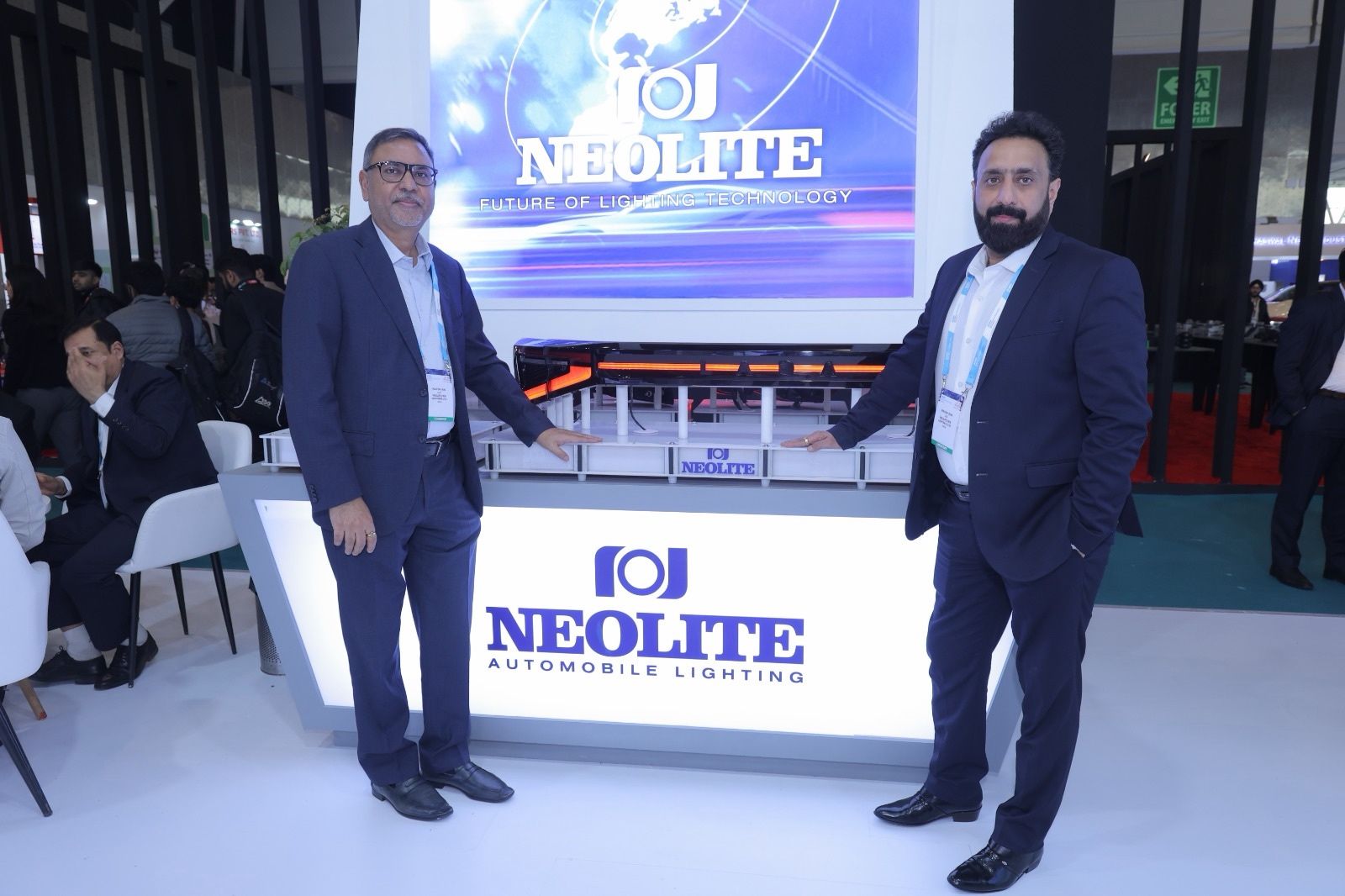
Rajesh Jain, Managing Director, and Rajesh Soni, Chief Executive Officer at Neolite ZKW Lightings Ltd., share insights on localised EV-lighting in an upfront conversation with Richa Tyagi.
Q. What have been the flagship product showcases at recent, leading trade fairs?
A. At ACMA Automechanika 2026, we showcased our latest product range and the technologies under development. There is a strong focus on embedded lighting innovations. It is an important exhibition for us, given our global footprint; we export to over 250 countries and are among India’s leading automotive lighting exporters. Such trade fairs attract a significant number of overseas customers, making them highly valuable. While it is primarily aftermarket-focused, we engage with both OEM and aftermarket clients globally as well as in India. It remains a key platform for us to connect, showcase, and expand our reach.
Q. How is the shift toward electric and software-defined vehicles changing the role of automotive lighting, and how is Neolite responding to this transformation?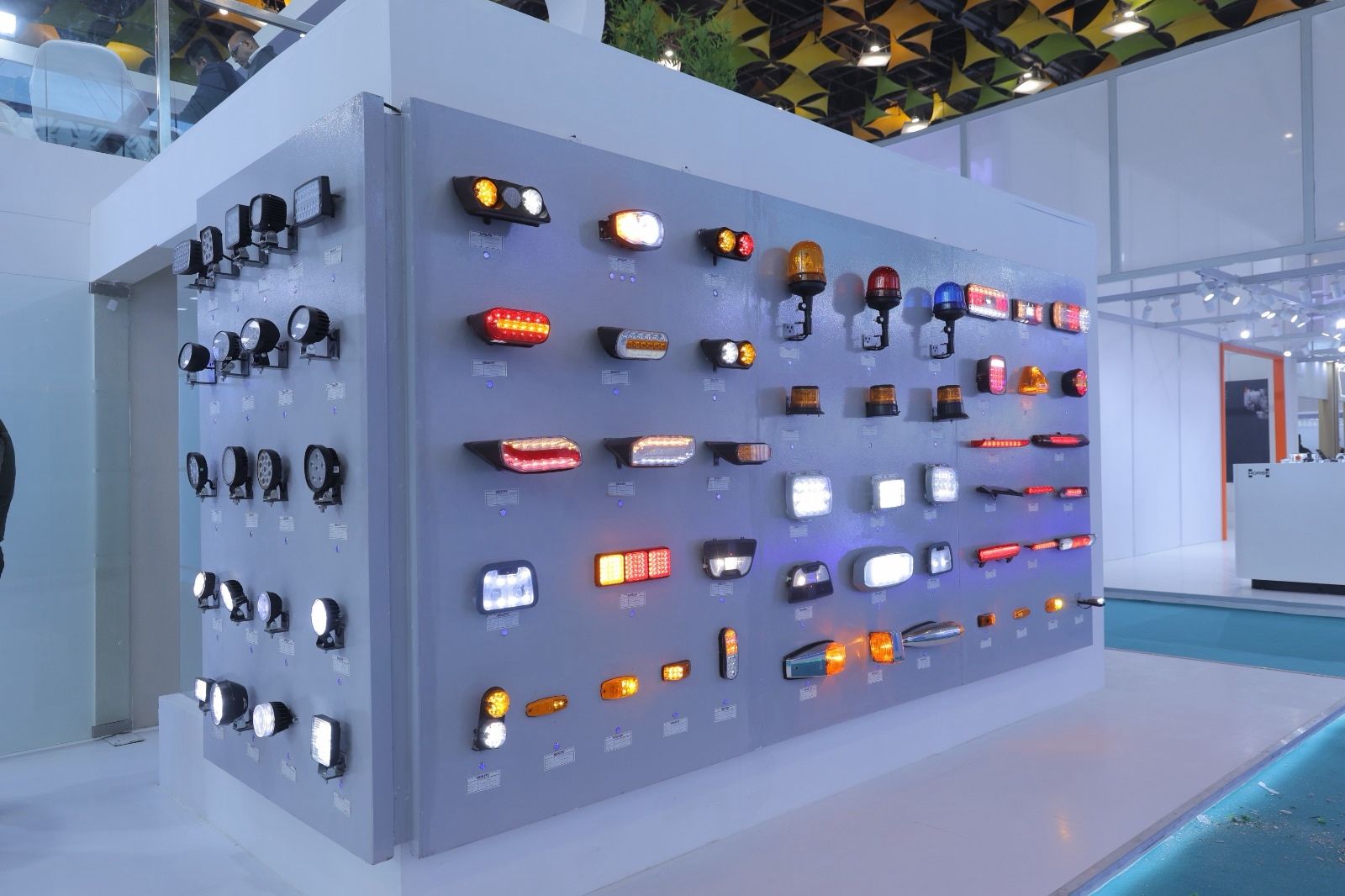
A. I would say that whether it is an EV or an ICE vehicle, the fundamental role of automotive lighting remains the same. However, when it comes to EVs, there is a clear shift toward higher-end technologies. Lighting systems are becoming more compact, and more advanced variants are being introduced. One of the most notable changes is the growing importance of ambient lighting, which plays a much bigger role in EVs, especially in enhancing the overall user experience. For us, this shift does not change our core function; we continue to serve across all vehicle segments, whether premium or mass-market, domestic or global. Clearly, the number of lighting components within an electric vehicle is rising because of ambient light, and the cost of the lamp also increases. At the same time, this significantly enhances the value proposition of the product.
Q. How does the Pune plant expansion strengthen your ability to serve India’s rapidly growing automotive and EV ecosystem?
A. The Pune plant is strategically located, close to our key customers in western India, including Tata Motors and MG Motor India, to whom we already supply for their EV vehicles. It is a state-of-the-art facility built to Industry 4.0 standards, enabling higher efficiency, better quality, and greater flexibility. The plant currently has a capacity of 2.72 million units annually, with the potential to double. This expansion strengthens our presence in a key automotive hub and enhances our ability to meet growing demand across both automotive and EV segments.
Q. What new capabilities or technologies have been introduced at the Pune facility that set it apart from your other plants?
A. Both our plants, whether it is the older facility in Bahadurgarh or the newer one in Pune, are technologically advanced. The products we manufacture in Pune can also be produced at our older plant, so in that sense, the new facility is an extension that enhances our overall capability to serve a larger customer base. At the same time, the Pune plant incorporates the latest machinery and current-generation technologies, which help us achieve higher quality standards and improved operational efficiency. Our collaborators have also played a significant role, particularly in designing the plant layout. Together, we have incorporated global best practices and brought in the latest developments from across the industry. This includes features such as lean material flow, advanced vertical storage systems, and robotic movement of goods, all of which contribute to greater efficiency, precision, and scalability in our operations.
We have established a dedicated technical centre and R&D facility in Pune, which supports both the Pune plant and our Bahadurgarh operations. Through this centre, we are enhancing not only our design capabilities but also significantly expanding our electronics expertise. Modern lighting systems, such as full-LED lamps, require Integrated Circuits (ICUs) and other electronic components to function efficiently. As a result, we have extended our role beyond traditional lighting manufacturing and are now developing certain electronic components, including ICUs, in-house. In fact, we have already begun exporting them and have secured some export orders as well.
Q. With recent Free Trade Agreements in place, how do you see their impact on your business, especially in terms of imports and exports?
A. These agreements are expected to bring significant advantages to us. However, the ecosystem is quite interconnected, involving multiple regions such as Austria and others, with the movement of components and products across markets. At the same time, we are actively planning to expand our exports to the U.S. We already supply to OEMs there and are also present in the aftermarket segment. Going forward, we see strong potential to further scale our global footprint through these opportunities.
Q. How do you balance delivering advanced lighting technologies with the cost sensitivity of the Indian aftermarket?
A. This is an ongoing challenge; it never really ends. As technology advances, customer expectations rise, while cost sensitivity remains high. Balancing innovation with affordability is one of the industry’s biggest challenges. It is a continuous journey of improvement, and a cycle every generation will face without a definitive endpoint.
Q. Sustainability and localisation are becoming critical for OEMs. How are Neolite’s India operations aligning with these priorities?
A. Localisation, especially in electronics, is a key focus for us. Components that were once imported are now increasingly being developed in-house, reflecting our shift as automotive lighting becomes more electronics-driven. This also aligns with OEM expectations for higher localisation. On sustainability, nearly 50 per cent of our energy comes from solar, with plans to move toward 100 per cent renewable power. We also follow zero water discharge practices, maintain ISO 14001 certification, and actively invest in employee welfare and CSR initiatives. We continue to strengthen both localisation and sustainability to improve our operational and environmental performance.
Q. How are preferences evolving with the shift toward EVs, sustainability, and software-defined vehicles?
A. Sustainability, as a factor, has not yet become a primary consideration for most Indian consumers. While sustainability itself is important, awareness around whether a manufacturer is a sustainable supplier is still relatively limited among buyers. This may be more developed in markets like Europe, but in India, it is not yet a key purchasing driver. What Indian consumers are clearly looking for, however, is new technology and innovation. There is a growing interest in advanced lighting features, such as dynamic and animated lamps, colourful lighting elements, and more sophisticated designs, many of which are being introduced by newer entrants, including Chinese automotive brands. Consumers want the best and most advanced features available. At the same time, they are highly price-sensitive and are not willing to pay a significant premium for these technologies. This makes India a very unique and challenging market. The expectation is clear: deliver cutting-edge technology, but at a highly competitive price point.
Q. Looking ahead, what is your vision for Neolite over the next five years?
A. Over the next five years, the company aims to grow market share and position itself as a strong, technology-driven player by building deeper in-house capabilities and delivering affordable, self-reliant solutions. Additionally, we are progressing toward an IPO, having filed our DRHP. While continuing to leverage global support, the focus is on independently developing and deploying technologies aligned with market readiness. A key priority is expanding its electronics segment, supported by new manufacturing investments, including facilities in Pune and Chennai, and in-house SMT lines, with most LED modules now produced internally. Looking ahead, it is preparing to lead the adoption of advanced innovations such as adaptive and sensor-based lighting in India.