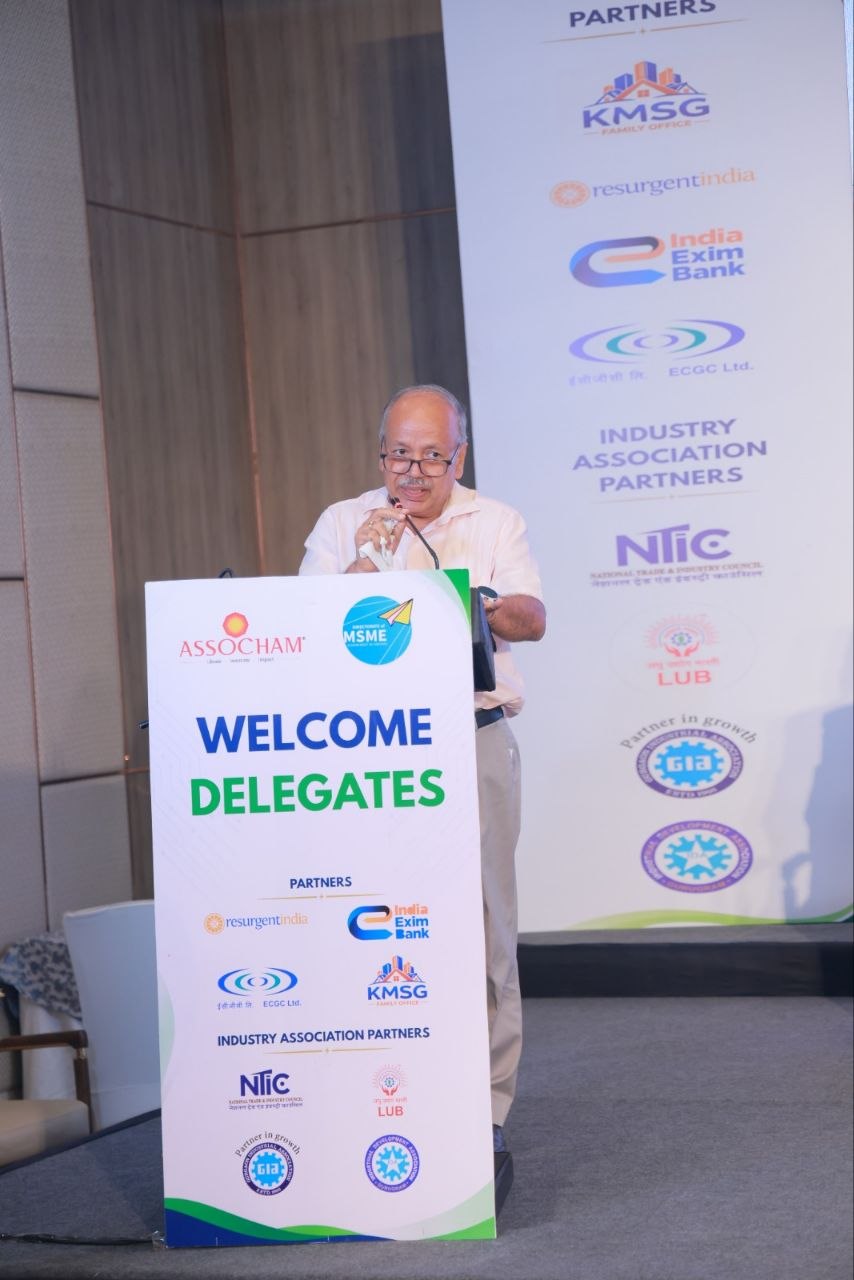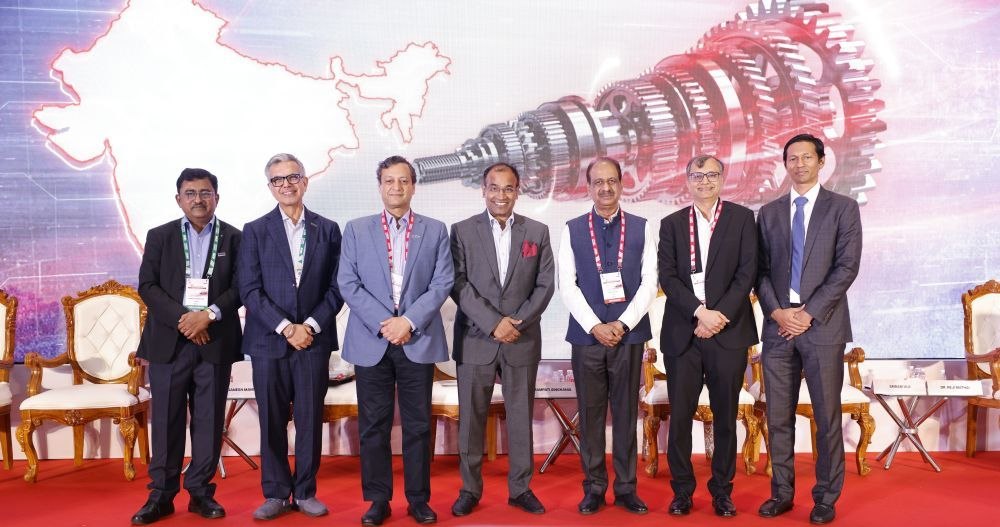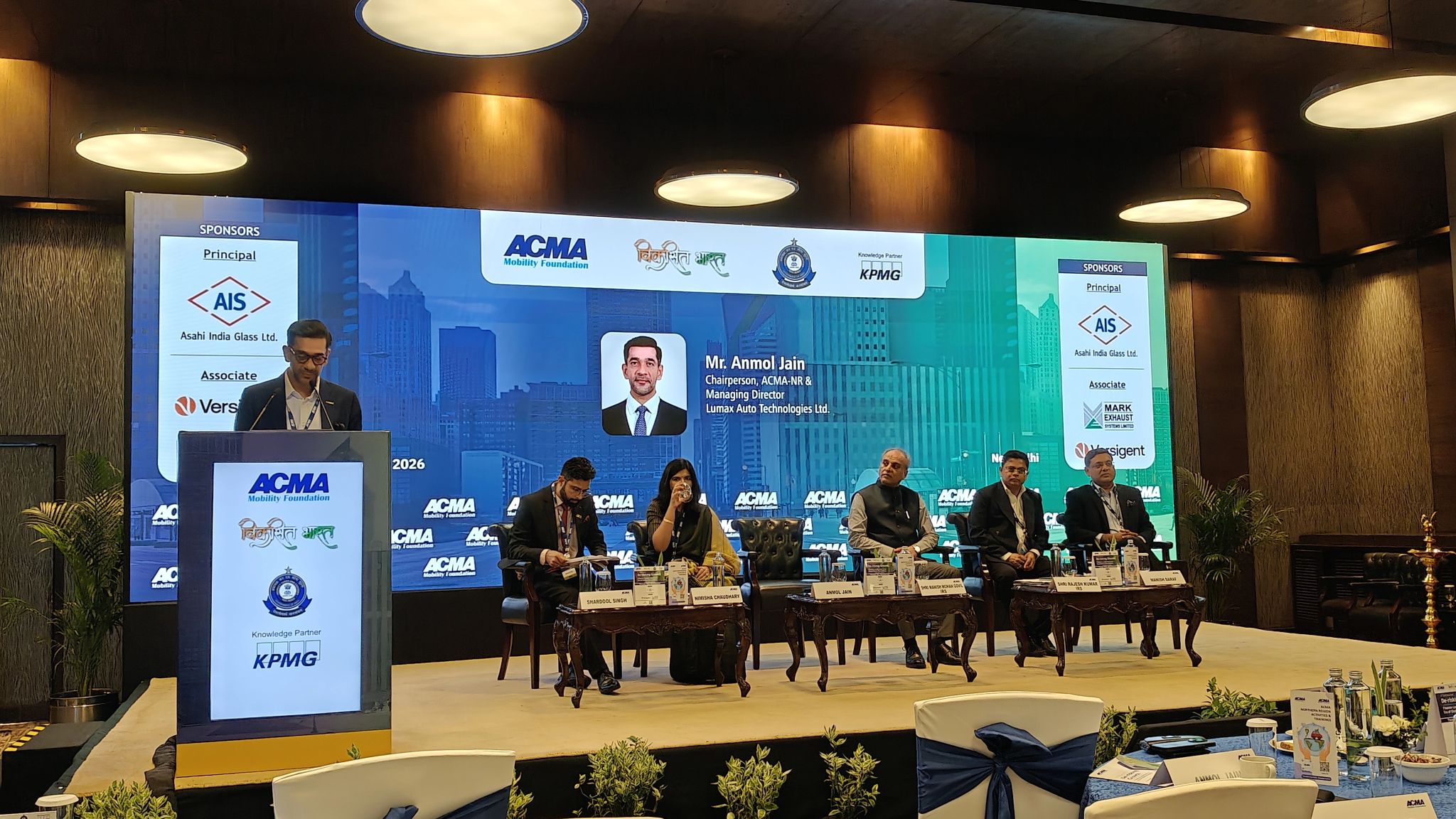


ASDC Annual Conclave 2026 brought industry, government and skilling stakeholders together to discuss building a future-ready automotive workforce, writes Richa Tyagi.
 ASDC Annual Conclave 2026 brought together industry leaders, government representatives, skilling institutions and other stakeholders to discuss the changing requirements of India’s automotive workforce. With electric vehicles, connected vehicles, ADAS, software-defined vehicles, industrial IoT and automation changing automotive jobs, the discussions focused on how training and qualifications must evolve alongside technology. A central message from the conclave was that the industry needs to move beyond training people for a specific job and prepare them for careers that will continue to change. Prabhu Nagaraj, Vice Chairperson, Automotive Skills Development Council (ASDC), said, “We need to move from training people for a particular job to preparing them for careers that will continue to evolve. This means creating a culture of continuous upskilling and reskilling.”
Nagaraj said ASDC has a role at the intersection of government, industry and the skilling ecosystem, with the objective of keeping training aligned with the direction of the automotive industry. The organisation’s scale has expanded over the past year. In FY25-26, ASDC impacted more than 5 lakh learners, compared with 4.29 lakh in FY24-25. It conducted close to 1.53 lakh assessments as part of competency-based assessment and certification. During the year, 2.88 lakh apprenticeship contracts were generated across approximately 3,700 establishments, achieving more than 112per cent of the annual target. ASDC also added 286 training partners and 178 affiliated centres, supported by 575 certified trainers, including 443 newly certified trainers. Its ecosystem includes 44 industry partners and 100 approved qualifications.
-

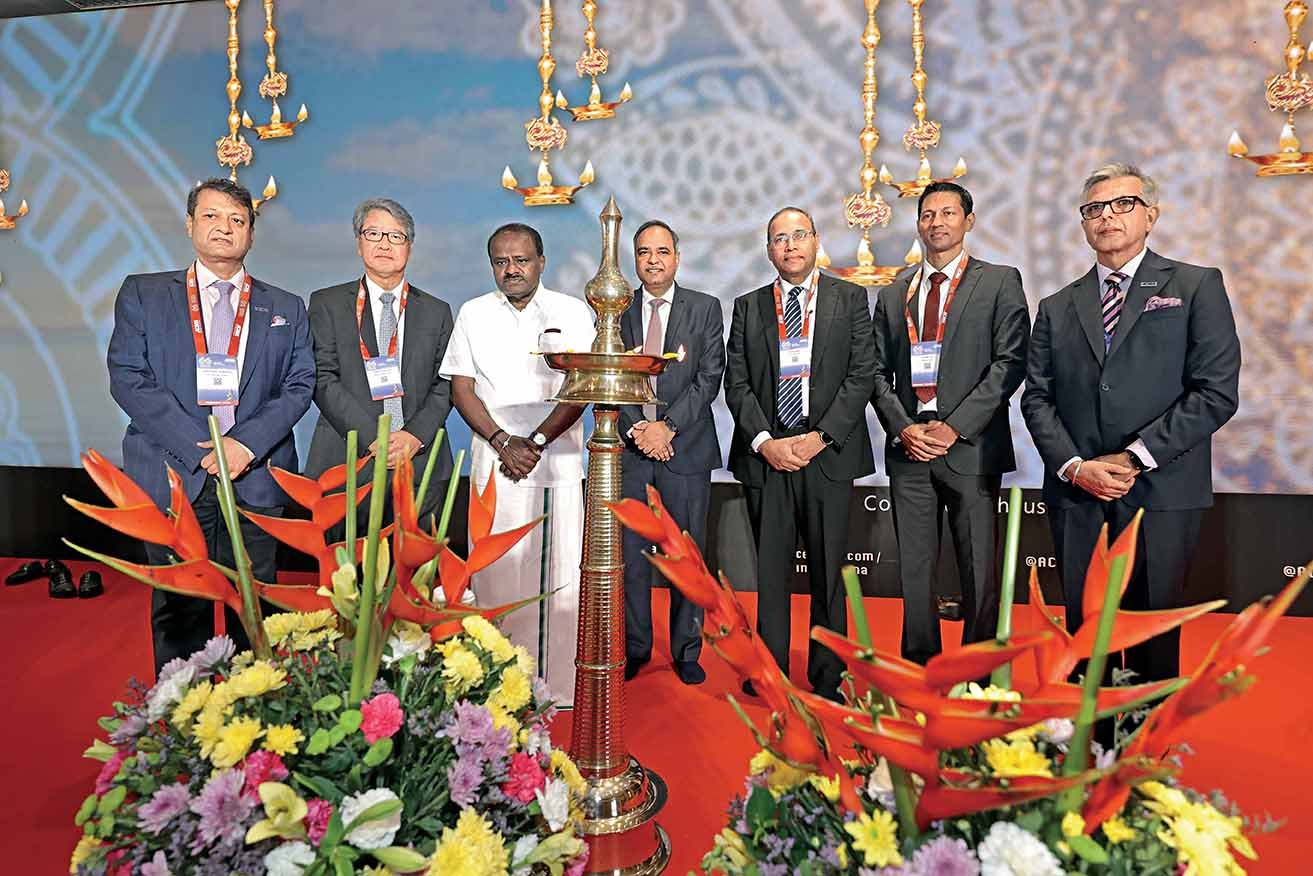
- Vinkesh Gulati, Chairperson, ASDC
-

- Prabhu Nagaraj, Vice Chairperson, ASDC
-

- Prasanna Pahade, CEO, ASDC
Vinkesh Gulati, Chairperson, ASDC, said the changing automotive technology landscape requires a broader mix of skills. “We need skilled hands. Unless and until we have a skilled team, we cannot talk about the future because then it will not be at the right efficiency and productivity,” he said.
Modern vehicles increasingly combine mechanical systems, batteries, BMS, ADAS, ECUs and software, making cross-disciplinary skills more important. Gulati said ASDC’s role is to bring these competencies together and prepare people specifically for automotive applications. He also pointed to a gap between R&D and workforce planning. While companies begin developing products years before launch, the skills required to support those technologies are not always planned with the same lead time. “The biggest skill gap is always that we work on R&D first; we work on manufacturing first. We never plan what skill will be needed for the team for which the R&D is already working,” Gulati said.
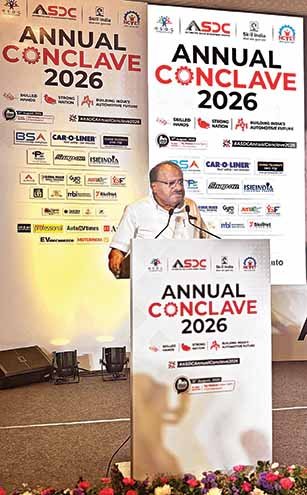
H. D. Kumaraswamy,
Union Minister of Heavy Industries
and Steel, GoI
Prasanna Pahade, CEO, ASDC, said skilling must become more industry-focused, collaborative and outcome-driven. “The first and foremost is to make our courses more relevant to the needs of the industry,” he said, adding that government, industry, training providers and educational institutions need to work together. Pahade said the automotive industry is changing faster than the wider education ecosystem, creating a skills gap. ASDC helps bridge it through industry-led courses and certifications.
Government Push
Speaking at the ASDC Annual Conclave 2026, Union Minister for Heavy Industries and Steel H. D. Kumaraswamy said India’s transition to electric mobility will require more than manufacturing capacity and supporting infrastructure. It will also require a workforce capable of handling increasingly sophisticated vehicle technologies. “We need people who can operate new technologies, maintain increasingly sophisticated systems, adapt to rapid technological change and contribute to innovation and productivity,” Kumaraswamy said.
He said the growth of electric mobility is creating employment opportunities across vehicle manufacturing, battery production, charging infrastructure, servicing and after-sales support. This makes the development of a future-ready talent pipeline an important part of the industry’s next phase of growth.
Kumaraswamy also called for closer alignment between education, skilling and employment, with institutions such as ASDC playing a role in keeping training programmes connected to changing industry requirements. He said curricula, training methods and assessment systems need to evolve in consultation with companies. “Skilling cannot stay in isolation from the workplace,” he said, stressing the importance of industry participation in ensuring that training reflects actual workplace requirements. He also said India’s ambition should extend beyond meeting domestic workforce requirements. As the country expands its manufacturing capabilities and strengthens its position in global automotive value chains, its skilled workforce should be prepared to meet international benchmarks for quality, productivity, safety and innovation.
Changing Technician Skills
Ravi Tennety, Managing Director, Nettur Technical Training Foundation (NTTF), said training infrastructure is being developed around battery management, charging infrastructure, power electronics, motor controls and powertrains. NTTF has also introduced Industrial IoT (IIoT) elements into its curriculum, including edge routers, edge network elements and embedded systems. Data interpretation is another emerging requirement. Tennety said technicians need to go beyond observing data and learn to interpret it. NTTF is therefore introducing subjects such as statistical analysis and data sensors to support diagnostic and evidence-based troubleshooting. Training facilities are also being developed with equipment from multiple vendors. This vendor-agnostic approach exposes trainees to different human-machine interfaces and industrial systems before they enter the workplace. The objective is to prepare technicians for factories where automation and digital systems are increasingly part of everyday operations.
Aftermarket Challenge
Raghavan N, President, Lucas Indian Services Limited (LIS), pointed to the lack of a standardised benchmark for technicians as a major gap. While vehicle dealerships provide training within their networks, their reach does not cover the entire market, particularly in Tier-4 and Tier-5 locations. As a result, many independent aftermarket technicians have limited access to structured training and newer technologies. “The major gap is: how do we retrain those independent aftermarket technicians to meet a certain minimum standard,” Raghavan said. He described the requirement as immediate, rather than a challenge that can be addressed several years later.
Preparing for Software-Defined Vehicles
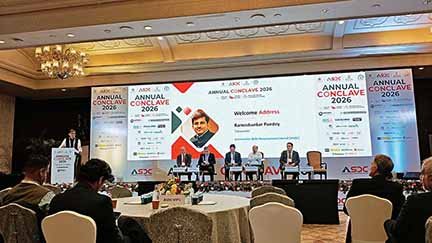
Ramashankar Pandey, Treasurer, ASDC, spoke about developments in V2V and V2X communication, ADAS, connected vehicles and Software-Defined Vehicles (SDVs). As software becomes a larger part of vehicle engineering, the skills required across the automotive workforce are also changing. “What brought us here today, our industry, will not take us there,” Pandey said, pointing to the need for new capabilities as the industry moves towards software-intensive vehicles. He also spoke about the responsibility of industry and institutions to support young people entering the workforce through better hand-holding and industry participation. For training institutions, the implication is clear: automotive education can no longer remain limited to conventional mechanical skills. Electronics, software, data interpretation, diagnostics and connected technologies are becoming increasingly relevant.
Stronger Industry Participation
GM Mohan Reddy, General Manager, National Skill Development Corporation (NSDC), discussed the role of Sector Skill Councils (SSCs) in bringing industry requirements into the skilling ecosystem. He said SSCs should function as industry bodies that provide sector-specific insights to the wider skilling system. NSDC has been working with SSCs and is also looking at a cluster-based approach, where three or four SSCs can work together and combine their strengths. Such collaboration can become important as the boundaries between automotive, electronics, software, energy and manufacturing technologies become less distinct.
 Aligning Qualifications
Prof. (Dr.) Ashok Kumar Gaba, Executive Member, National Council for Vocational Education and Training (NCVET), brought an international perspective to the discussion, drawing on his research and experience with automotive skill training in India and Australia. He discussed the importance of qualification systems, vocational pedagogy and competency-based training. According to his research, skill training boosts productivity, employability, and the national economy. He also noted that the automobile industry contributes around 7.1per cent to India’s GDP, underlining the importance of building a workforce capable of supporting the sector’s continued development.
The discussions at the conclave point to a shift in the way automotive skills need to be developed. The industry is dealing with multiple technology transitions at the same time. EVs, connected vehicles, ADAS, SDVs, IIoT, automation and data-driven diagnostics are creating new requirements, while the existing ICE ecosystem continues to employ a large workforce. This makes continuous upskilling important for both new entrants and experienced technicians. ACI