

SIAM’s World Environment Day 2026 conference convened industry leaders to establish a multi-fuel roadmap to accelerate India’s low-carbon mobility transition, writes Richa Tyagi.
The Society of Indian Automobile Manufacturers (SIAM) organised the 6th International Conference on “Climate Action: Accelerating India’s Transition to a Low-Carbon Future,” reaffirming the Indian automobile industry’s commitment to sustainable development, climate responsibility and low-carbon mobility. The conference brought together policymakers, industry leaders, academia, research institutions, and sustainability experts to discuss strategies for advancing climate action and accelerating the transition to sustainable mobility.
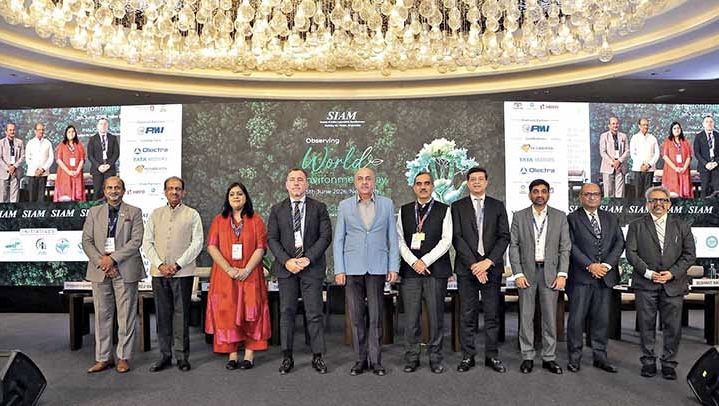
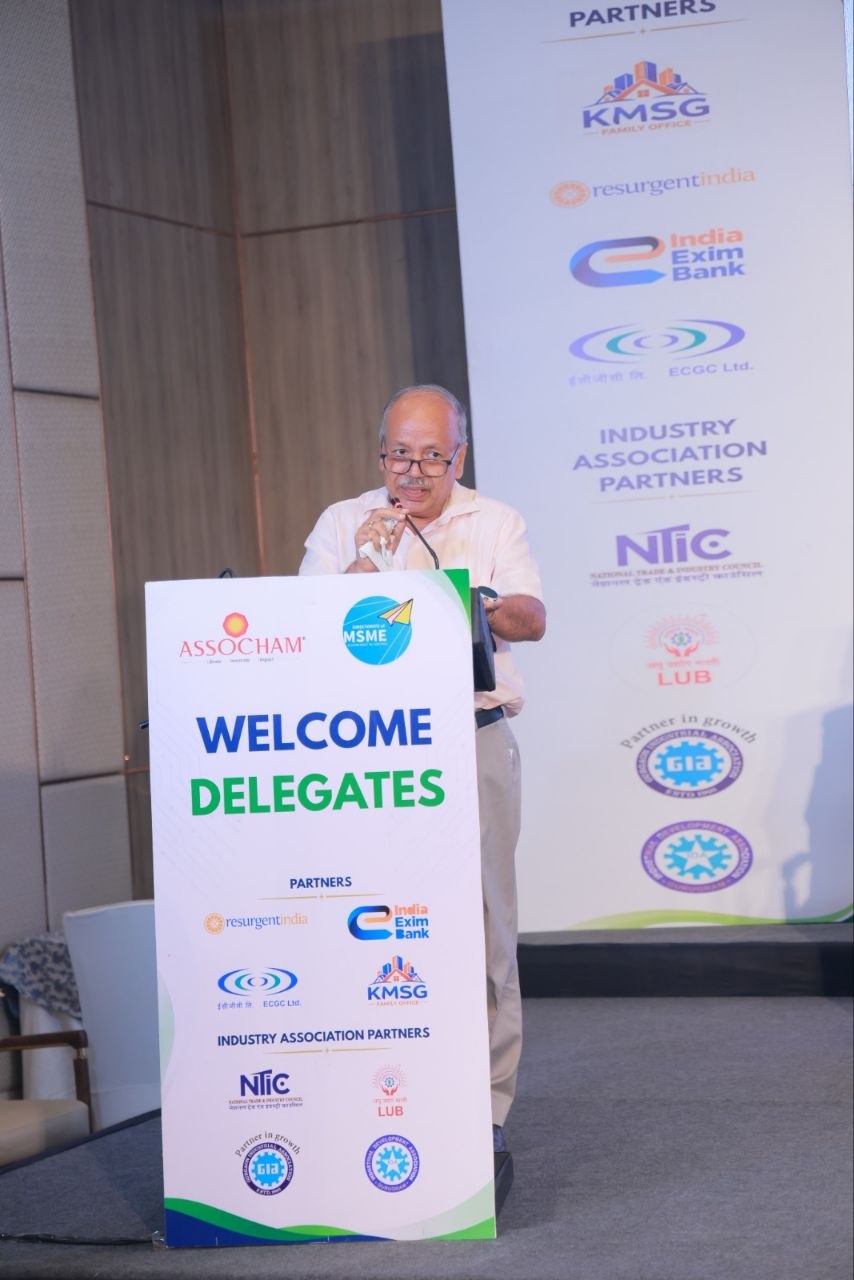
The inaugural session, “Climate Action for India’s Sustainable Development Pathway,” delivered a powerful consensus: India’s transition to a low-carbon future is no longer a localised environmental initiative, but a core pillar of national economic and energy security. In his opening remarks, Prashant K. Banerjee, Executive Director, SIAM, set the tone by urging collective action among government, industry, regulators, and academia to build a sustainable future and, specifically, to accelerate progress in hydrogen and biofuels. “We are living through a time of unprecedented challenges, from climate change and air pollution to energy security concerns. But every challenge also creates an opportunity, and as the world’s largest market for two-wheelers and three-wheelers, India has already demonstrated remarkable progress in sustainable mobility,” Banerjee noted.
This sentiment was reinforced by the Chief Guest, Tarun Kapoor, Advisor to the Prime Minister of India, who expanded on the broader macroeconomic objectives driving the government’s policies. For India, a nation heavily reliant on imported crude oil, the shift toward sustainable mobility is intrinsically linked to financial sovereignty. “India must accelerate its journey toward energy self-reliance by reducing dependence on imported fuels and expanding the use of sustainable fuels produced domestically. The transport sector must play a central role in strengthening India’s energy security. We cannot continue to depend on large-scale fuel imports and, over time, must move towards fuels that can be produced within the country,” Kapoor stated.
He also addressed the pace of technological adoption across different vehicle segments. “While three-wheelers are ready for rapid electrification, we need much faster adoption in the four-wheeler segment as well. India is advancing multiple clean and alternative fuel pathways, including biofuels, ethanol and isobutanol blends, flex-fuel technologies, compressed biogas, green hydrogen, LNG/CNG, electric mobility, and synthetic fuel options. In addition, coal gasification-based fuel pathways are also being explored as part of India’s broader effort to diversify domestic energy sources and strengthen clean mobility, energy security, and decarbonisation outcomes.”
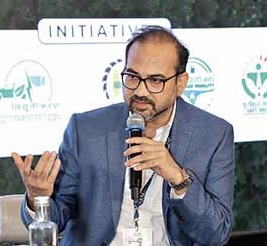
Parag Sharm,Vice President of Purchasing for India & Asia Pacific at Stellantis
A major driver behind this transformation is the urgent, overriding need for resource independence. Mahesh Babu, Managing Director of Olectra Greentech Ltd., observed that India’s growing reliance on oil imports presents a substantial and systemic energy security challenge, making the transition to e-mobility increasingly critical for the nation’s financial health. “Decarbonising mobility is a significant challenge, but we must focus equally on energy security,” he explained. He pointed out the practical hurdles of mass transition, adding that to achieve large-scale adoption, the unit economics have to work for the customer. Ultimately, for a country of more than a billion people, strengthening public transport will be the cornerstone of achieving a Viksit Bharat.
Scaling Electrification and Hydrogen Horizon
While the challenges are vast, India has already recorded massive victories in specific segments, most notably in the three-wheeler market. Diego Graffi, Chairman of the SIAM 3W CEOs Council and Chairman & Managing Director of Piaggio Vehicles Private Limited, highlighted that electric three-wheelers are currently among the fastest-growing segments in the country. In several regional markets, they now account for over 50 per cent of new vehicle registrations and contribute more than half of the total EV sales across all vehicle categories nationwide. “Electric three-wheelers have become a practical and reliable solution for millions of users. India is one of the most demanding mobility markets in the world, and solutions that succeed here at scale and at the right price point can succeed anywhere. Alongside shared mobility and public transport, the three-wheeler segment will continue to play an important role in India’s sustainable mobility future,” Graffi remarked.
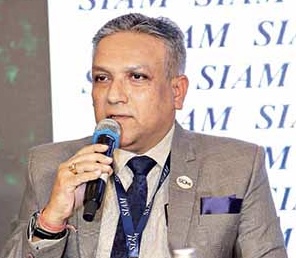
Mohit Jauhari,Head of Supply Chain Management at Shriram Pistons and Rings
Looking beyond Battery Electric Vehicles (BEVs), the conference also spotlighted the immense, long-term potential of green hydrogen. Guest of Honour Abhay Bakre, Mission Director of the National Green Hydrogen Mission under the Ministry of New & Renewable Energy, commended the automotive sector for its proactive stance while offering a vital perspective on technology evaluation. “The industry deserves credit for accelerating India’s energy transition,” Bakre said. “One important lesson is that decisions on new technologies cannot be driven by today’s costs alone. We need to evaluate these solutions based on where they will be 10 years from now, because scale and adoption will gradually reduce costs. Another critical requirement is that vehicle deployment and charging infrastructure must grow together. Green hydrogen also presents a significant opportunity, and manufacturing fuel cells in India could be a game-changer for the automotive sector.”
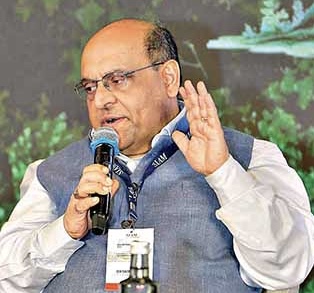
Vikram Gulati,Country Head and Excutive Vice President of Corporate Affairs & Government at Toyota Kirloskar Motor pvt.Ltd.
However, not all segments are transitioning at the same pace. Dr Reji Mathai, Director of The Automotive Research Association of India (ARAI), highlighted the nation’s impressive strides in lowering carbon intensity through ethanol blending, Liquefied Natural Gas (LNG) adoption, and cleaner public transit. Yet, he offered a reminder regarding the commercial transport sector. “While the industry has embraced these solutions with strong momentum, decarbonising the diesel segment remains a major hurdle, requiring a sharper focus on alternative fuels and domestic biofuel production,” Dr Mathai noted. “The rapid growth of electric mobility has demonstrated that India can successfully scale clean transportation with the right policy support and industry alignment. Moving forward, a multi-technology approach backed by collaborative research, robust data, and stronger partnerships will be essential to shaping effective policies and a clear roadmap for the sector.”
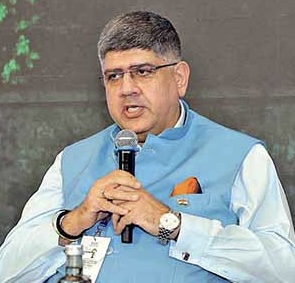
Lt Col Monish Ahuja (Retd) Chairman and Managing Director of Punjab Renewable Energy System pvt .Ltd.
Manufacturing and Digitalisation
Echoing the call for relentless ambition, Harshavardhan Chitale, CEO of Hero MotoCorp Ltd., pointed out that while India’s economic growth has historically been more carbon-efficient than that of many developed nations, sustained momentum is vital to hit the country’s 2070 net-zero targets. He highlighted the auto industry’s pivotal, dual role in cutting emissions across both manufacturing operations and vehicle lifecycles: “We have a shared responsibility to align with India’s climate goals. We must embed sustainability across our operations through responsible manufacturing, water conservation, waste reduction, product recyclability, and green dealerships, while advancing clean mobility via electric vehicles, flex-fuel, and alternative fuel technologies.”
Parag Sharma, Vice President of Purchasing for India & Asia Pacific at Stellantis, detailed how global OEMs are restructuring their procurement strategies to mandate sustainability from the ground up. “Our company has committed to reducing greenhouse gas emissions by 20-30 per cent by 2030 from the 2021 baseline, with a target of achieving net zero by 2050,” Sharma revealed. “This cannot be achieved by Stellantis alone; it requires participation across the entire value chain. Every vehicle platform is designed with a carbon footprint target, and these targets are integrated into supplier requirements from the very beginning.”

Vedang Pittie, Executive at Hari Nagar Sugar Mills
Enabling this massive shift toward a green supply chain requires modern technological interventions. Mohit Jauhari, Head of Supply Chain Management at Shriram Pistons and Rings, emphasised the role of Industry 4.0 in this transition. “Digital transformation is reshaping supply chains by integrating advanced technologies, which not only improve the efficiency and resilience of supply chains but also reduce emissions,” Jauhari explained.
Multi-Fuel Pathways
India’s vast geography, varied consumer needs, and diverse economic strata necessitate a broad portfolio of energy solutions. Addressing this, Vikram Gulati, Country Head and Executive Vice President of Corporate Affairs & Governance at Toyota Kirloskar Motor Pvt Ltd, stated, “India needs multiple indigenous green energy pathways to protect itself from energy shocks and geopolitical uncertainties. The answer lies in a multi-fuel and multi-technology approach because consumers have diverse needs and usage patterns. Ultimately, it is the consumer who will determine the mobility solution they choose. What customers look for is economic viability, convenience, performance, and environmental sustainability. Whether it is electrification, biofuels, hydrogen, or other alternatives, we must focus on solutions that best serve consumer needs while reducing dependence on traditional fossil fuels.”
To support this diverse fuel ecosystem, infrastructure is rapidly evolving. Subhankar Sen, Director of Marketing at Bharat Petroleum Corporation Ltd. (BPCL), noted that traditional fuel stations are actively transforming into multi-fuel energy hubs. These modernised hubs offer everything from conventional fuels and CNG to biogas and high-speed EV charging. “The automotive industry’s contribution to India’s economy is significant, and its role in the country’s sustainability goals is equally important,” Sen observed. “The progress made in ethanol blending over the past decade has been remarkable and has drawn global attention. India’s transition will be driven by a mix of technologies and fuels, supported by coordinated progress in technology, infrastructure, policy, and consumer awareness.”
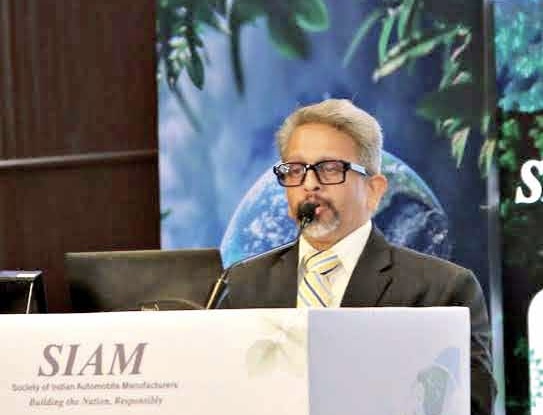
Sushant Naik,Chairman, SIAM Electric Mobility Group and Global Head- Government & Corporate Affairs Officers, Tata Motors Ltd.
The push for biofuels, particularly ethanol, carries profound socio-economic implications for India’s massive agricultural sector. Lt Col Monish Ahuja (Retd), Chairman and Managing Director of Punjab Renewable Energy Systems Pvt. Ltd., highlighted the transformative potential of bioenergy during a panel discussion. “From farm and agricultural residue to biofuels and bioenergy, there is immense potential,” Ahuja explained. “When we look at possible solutions, it is important to understand that energy and electricity are often used interchangeably, but electricity accounts for only around 20 per cent of our overall energy basket. The remaining energy demand comes from transportation, cooking, and other sectors. Farm and agricultural residue can contribute across all these segments. It also enables farmers to become active participants in the energy transition. In many ways, farmers are transforming from food providers to energy providers when agricultural residue is converted into energy. If we have to move towards E85 and higher ethanol blends, it will be driven largely by farm and agricultural residue-based second- and third-generation ethanol.”
Meeting this ambitious biofuel demand requires robust supply-side readiness. Vedang Pittie, Executive at Hari Nagar Sugar Mills, reassured the industry that the agricultural and milling sectors are well-prepared to support the automotive industry’s green transition. “We are ready from the supply side,” Pittie affirmed. “Today, we have almost double the ethanol production capacity required to meet current demand. We need policies that encourage greater adoption and allow customers to choose. Whether it is EVs, hydrogen, or ethanol, let the customer decide what fuel they want to use. It should not be hydrogen versus ethanol or one fuel versus another. We need multiple solutions working together because no single fuel alone will be able to address our energy security needs and reduce the fuel import bill.”
Subhankar Sen, Director (Marketing), Bharat Petroleum Corporation Ltd. noted that traditional fuel stations are actively transforming into multi-fuel energy hubs offering everything from conventional fuels and CNG to biogas and EV charging, a shift that directly reflects a technology-neutral approach to decarbonisation. He said, “The automotive industry’s contribution to India’s economy is significant, and its role in the country’s sustainability goals is equally important. The progress made in ethanol blending over the past decade has been remarkable and has drawn global attention. India’s transition will be driven by a mix of technologies and fuels, supported by coordinated progress in technology, infrastructure, policy and consumer awareness.”
On this occasion, Sushant Naik, Chairman, SIAM Electric Mobility Group and Global Head – Government & Corporate Affairs, Chief Corporate Affairs Officer, Tata Motors Ltd., delivered the vote of thanks, summarising that India’s transition to low-carbon mobility will ultimately be driven by a pragmatic mix of alternative fuels, robust policy support, and deep cross-sector collaboration.