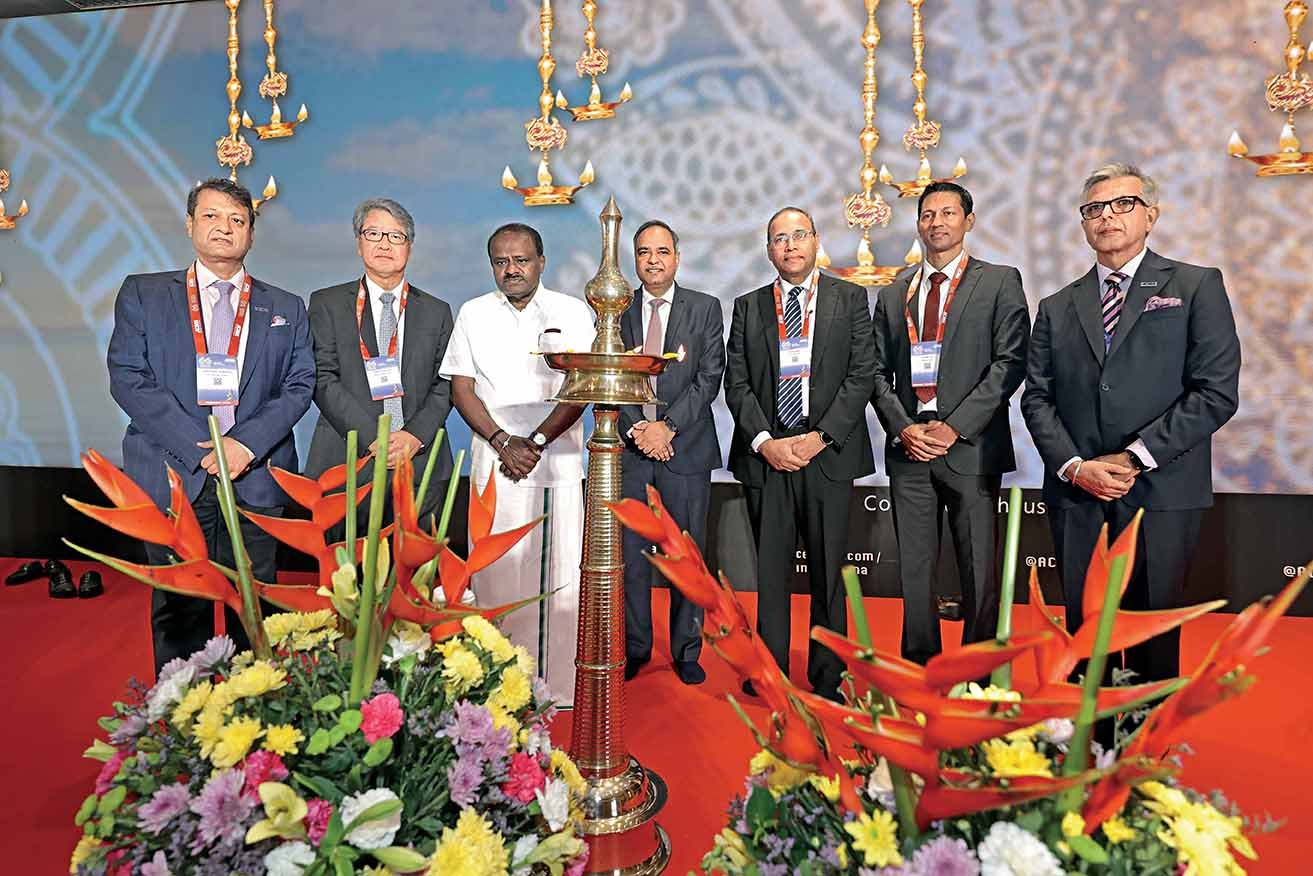


Inaugurating Gestamp’s fifth Indian plant in Bhagapura, Gujarat, Glyn Jones Country Manager, Gestamp speaks with Richa Tyagi about the production facility.
Q. Gestamp has expanded significantly into Gujarat. What made this the ideal destination for your newest facility, and how does it anchor your presence in the western manufacturing corridor?
A. Gestamp has operated in India for 20 years. We established our first facility in Pune back in 2006, followed by Chennai, and subsequently added a second facility in Pune. While our two Pune sites firmly established our western presence and Chennai served the south, our operational philosophy centers on a ‘local-for-local’ strategy, positioning ourselves as physically close to our clients’ assembly lines as possible. Gujarat emerged as the natural next industrial growth cluster. Setting up a greenfield facility anywhere globally entails complex local compliance, but Gujarat offered exceptional ease of doing business. The state’s progressive industrial policies and streamlined governance convinced us that Gujarat was the right strategic hub for Gestamp’s next growth phase.
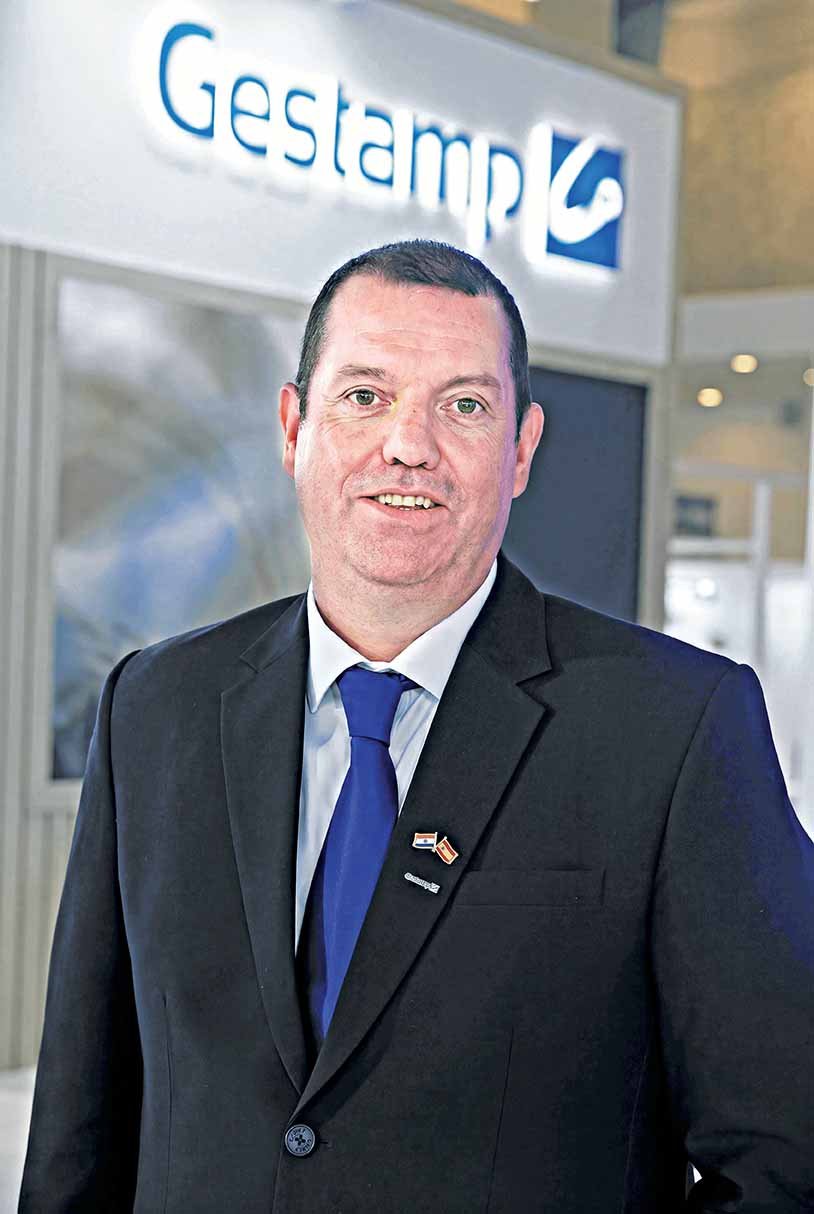
Glyn Jones – Country Head and President of Gestamp India
Q. Setting up global manufacturing operations often involves bureaucratic friction. How did your experience with local authorities and regulatory bodies unfold here?
A. It was remarkably transparent and seamless. We collaborated closely with the Gujarat Industrial Development Corporation (GIDC), who facilitated our land acquisition efficiently. Their team guided our legal and operational departments through every regulatory milestone, from land purchase to securing statutory operating licenses and building permits. For international manufacturers deploying foreign direct investment, finding a state administration so proactive and business-focused is refreshing. Their hands-on support enabled us to get the plant operational within a relatively compressed timeframe.
“With the advent of Bharat NCAP and tightening CAFE norms, along with discussions around CAFE 3, OEMs increasingly require full-service suppliers capable of handling end-to-end design, simulation, and manufacturing.”
Q. What impact will this facility have on local employment and the surrounding automotive supply chain?
A. We currently have approximately 240 professionals working on-site as production gets underway. As operations scale over the coming years, we project our direct workforce at the facility will grow to around 700 personnel. Beyond direct headcount, our expansion brings our broader tier-supplier ecosystem along with us into Gujarat. Locating within this manufacturing cluster stimulates indirect job creation and strengthens regional economic activity across the local vendor base.
Q. Automakers face competing pressures: higher crash safety standards, lighter weight for fuel efficiency and range, and strict cost targets. How is Gestamp engineering around these trade-offs?
A. Our mandate is to deliver more for less, superior crash performance at lower overall mass. That capability is driven by our global engineering network. Gestamp operates 13 R&D centers worldwide that collaborate 24/7 across time zones. Our Indian technical teams are fully interlinked with these centers, allowing us to engineer localised structural solutions in the shortest possible cycle time. With the advent of Bharat NCAP and tightening CAFE norms, along with discussions around CAFE 3, OEMs increasingly require full-service suppliers capable of handling end-to-end design, simulation, and manufacturing. We address this through advanced hot stamping and our proprietary gigastamping technology, which yields the lightest feasible structural architectures for critical assemblies such as door rings and single-piece floor modules.
Q. India has a diverse powertrain mix, petrol, diesel, CNG, hybrids, and electric vehicles. How do your structural designs accommodate this fragmentation cost-effectively?
A. India’s multi-powertrain environment is unique. While developed markets often pivot sharply toward a single propulsion format, India runs petrol, diesel, CNG, strong hybrids, range extenders, and battery electric vehicles in parallel. Despite this powertrain divergence, OEMs require standardised vehicle architectures to keep tooling and platform capital expenditure manageable. That is one of our primary competitive advantages: we engineer unified platforms capable of housing multiple propulsion architectures without forcing the client into costly structural redesigns.
Q. How closely does the technology deployed at this new Indian site match what Gestamp runs in Europe or North America?
A. Our production technology is standardised worldwide. Whether you walk into a Gestamp plant in Europe, the Americas, or Asia, you encounter identical hot stamping equipment and post-operation automation. In India, we have implemented our latest generational advance, gigastamping. In fact, not all of our global plants feature gigastamping lines yet. We chose to introduce it here because India is central to our future growth. We operate two gigastamping lines in production today, with a third coming online before the end of the year. Over the past several years, we have systematically localised our global manufacturing processes, ensuring that future innovations are tailored directly around how the Indian market evolves.
Q. As India champions export-led manufacturing, do you envision this facility supplying international programs or serving primarily domestic vehicle platforms?
A. Gujarat’s proximity to major maritime ports offers natural logistical advantages for global trade. While component export allocations depend on our clients’ commercial strategies, many of the structural assemblies manufactured here will be integrated into vehicles built for overseas markets. We work closely with OEMs to engineer structures that meet stringent Global NCAP export crash criteria. While Gestamp possesses the technical and operational capability to export components directly from India, our immediate priority is helping our domestic OEM clients meet their global export targets under the government’s ‘Make in India’ framework.
Q. Beyond capital expenditure on machinery, how is Gestamp investing in Indian engineering talent and technical skills?
A. Human capital is our most critical asset. We employ roughly 1,300 professionals across the country, and our business expansion depends entirely on their ingenuity and technical output. We maintain active partnerships with academic institutions, universities, and technical colleges across the region to build a robust engineering pipeline. Our technical workforce reflects substantial geographic diversity across multiple Indian states, alongside a deliberate emphasis on increasing female participation in advanced manufacturing. Incorporating early-career engineers and Gen Z talent alongside veteran toolmakers ensures our technical teams approach structural engineering with innovative, forward-looking perspectives.
“Setting up a greenfield facility anywhere globally entails complex local compliance, but Gujarat offered exceptional ease of doing business.”
Q. Automotive manufacturing requires substantial energy. How does the Gujarat facility align with Gestamp’s Environmental, Social, and Governance (ESG) targets?
A. We assess environmental impact across the entire value chain. Geographically, our Gujarat site was chosen to sit close to upstream raw material mills and downstream customer assembly plants. Minimising transport mileage across the supply chain delivers an immediate, permanent reduction in freight-related carbon emissions. Inside the plant, we have phased out LPG furnaces in favor of high-efficiency electric furnaces for our hot stamping lines. This transition directly supports our corporate carbon-neutrality trajectory. Furthermore, the facility integrates Industry 4.0 automation: monitoring systems dynamically power down idle machinery between cycles and optimise utility usage to the physical minimum required to form ultra-high-strength steel components.
Q. What are your long-term capital deployment and capacity expansion plans for this facility over the next three to five years?
A. We inaugurated the facility in January with an initial industrial footprint of approximately 24,000 square meters. Our phase-two expansion is already underway and scheduled for completion by year-end, bringing our total built footprint to roughly 32,000 square meters. The site holds a further 64,000 square meters in reserve for subsequent expansion phases. Financially, our cumulative capital investment in this facility will reach approximately Rs. 460 crore by the end of 2026. Any further capital outlays over the subsequent three-to-five-year horizon will scale in lockstep with our clients’ capacity requirements.
Q. We have observed positive momentum in Q1 and Q2 following policy updates like GST 2.0. How is this broader economic sentiment translating into Gestamp’s automotive performance in India?
A. We have seen encouraging signs across both quarters. The momentum following the GST 2.0 revisions has delivered positive tailwinds across multiple Indian sectors, not merely the automotive domain. Within our space, we are experiencing strong commercial traction. This gives us substantial confidence that the current year could be our strongest automotive year to date in India compared to previous periods.
Q. Looking ahead to the end of the decade, how central is India to Gestamp’s global corporate vision?
A. India is strategically indispensable. Over the past five years alone, Gestamp India achieved an 80% revenue increase. Independent industry forecasts project the Indian passenger vehicle market to expand to between 6 and 7 million units annually by 2031, with several major OEMs targeting domestic volumes above 6 million units. Our Bhagapura plant places us in prime position within Gujarat’s rapidly growing automotive cluster, alongside our established hubs in Pune and Chennai. Backed by solid corporate capital commitments, we will continue investing heavily in advanced manufacturing and engineering capabilities across India. ACI