

Ipone strengthens its presence in Asia with India entry, targeting the premium and performance motorcycle segment, writes Niharika Singh
French motorcycle lubricant specialist Ipone has made its India debut, bringing a dedicated motorcycle-focused brand to one of the world’s fastest-growing two-wheeler markets. The launch reflects the increasing premiumisation of India’s motorcycle ecosystem, where demand for high-performance lubricants is growing alongside the rise of adventure touring, motorsports participation and premium motorcycle ownership.
Founded in France in 1985, Ipone has built its identity around products developed exclusively for motorcycles. Unlike multi-segment lubricant manufacturers, the company focuses solely on two-wheelers, offering engine oils, chain maintenance solutions, cleaning products and rider-care accessories. The brand will initially be introduced across six core markets and fourteen key cities, leveraging both offline retail and online channels.
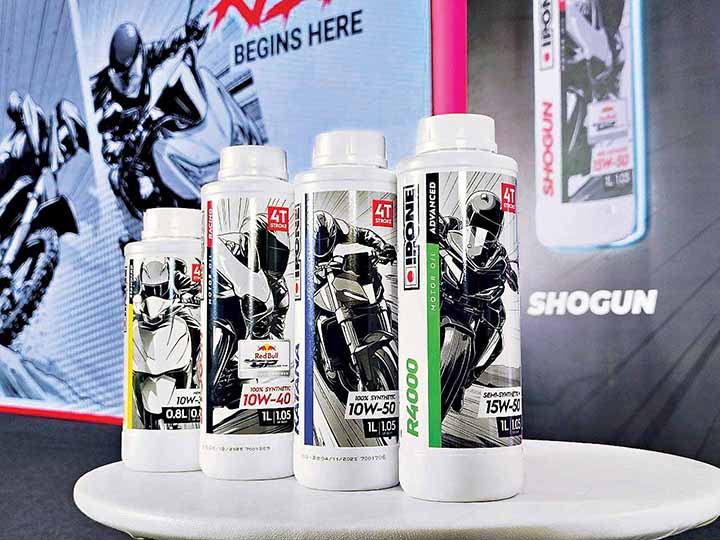
Product Portfolio Structured Around Riding Application
A key differentiator in Ipone’s India strategy is its product architecture, which follows a “belt” classification system inspired by Japanese judo rankings. The approach categorises products according to riding intensity and performance requirements, simplifying lubricant selection for consumers.
Technology at Core
Ipone products utilise advanced PAO (Polyalphaolefin) and Ester-based lubricant technologies, formulations commonly associated with high-performance and synthetic lubricant applications. The company believes these technologies will resonate with riders increasingly seeking enhanced engine protection, thermal stability and performance consistency across varied operating conditions.
Market Potential and Future Strategy
Speaking at the launch, Nagendra Pai, highlighted the rapid expansion of India’s premium lubricant segment and positioned Ipone as part of multi-brand growth strategy.
Pai noted that premium and synthetic lubricants already contribute significantly to global business and emphasised that the company is witnessing a strong shift towards younger riders interested in adventure touring, off-roading and performance-oriented motorcycling. He described the Ipone launch as a combination of advanced lubrication technology and meaningful premiumisation rather than purely cosmetic differentiation.
Pai projected substantial growth for the premium lubricant category, indicating that the segment could expand from around 10 million litres currently to nearly 40 million litres over the next four to five years. He also revealed that with Ipone complementing the existing portfolio while additional brands may be introduced in the future.
Ipone’s Long-Term Outlook
While current products are being sourced from France and Vietnam, the company has indicated that local manufacturing could be explored in the future if market demand reaches sufficient scale. This possibility aligns with the broader localisation trend seen across India’s automotive component and lubricant industries.
The arrival of Ipone underscores a wider transformation within India’s two-wheeler aftermarket. As motorcycles become more technologically advanced and enthusiast communities continue to expand, lubricant manufacturers are increasingly moving beyond conventional products to offer specialised, application-driven solutions. Ipone represents not only a portfolio expansion but also a strategic bet on the future growth of the country’s premium motorcycle maintenance and performance ecosystem.
The Range introduced in India includes:
Black Belt– Racing Range The flagship category is led by Shogun, a fully synthetic lubricant developed for high-performance motorcycles and competitive riding environments. The product is associated with the Red Bull MotoGP Rookies Cup and is positioned at the top of the brand’s performance hierarchy.
Blue Belt- Sport Range Represented by Katana, this fully synthetic range is targeted at riders seeking enhanced engine performance for both road and off-road applications.
Green Belt- Advanced Range The R4000 semi-synthetic formulation is aimed at riders looking for a balance between performance, durability and everyday usability.
Yellow Belt- Standard Range Designed for commuter motorcycles and scooters, the M4 Scoot mineral oil caters to the entry-level segment while maintaining the brand’s motorcycle-specific focus.
Beyond engine oils, Ipone has also introduced chain lubricants, chain-cleaning products and helmet maintenance solutions, indicating a broader motorcycle maintenance ecosystem strategy rather than a standalone lubricant play.
Differentiated Lubricant Technology
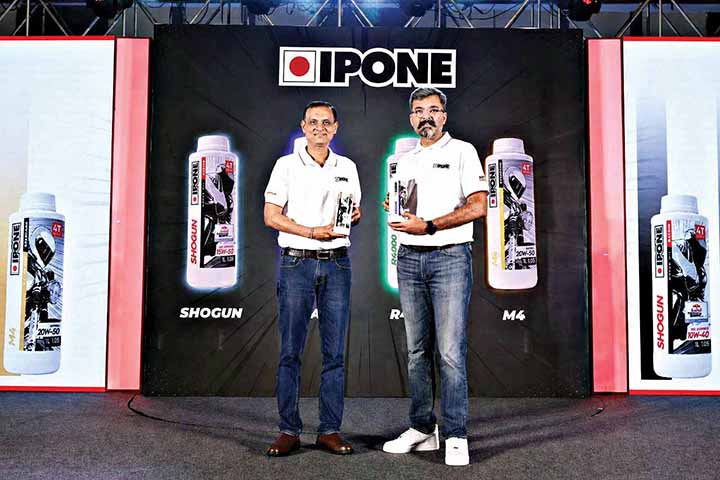
Nagendra Pai, CEO, and Milind Acharya, CMO, discuss the timing of the foray as the outlook for premium products looks up.
Q. Why does Ipone consider this the right time to enter the Indian market, and what opportunities does it see for growth in the country?
A. India’s two-wheeler market is undergoing a significant transformation. While commuter motorcycles continue to dominate volumes, we are witnessing strong growth in premium motorcycles, adventure touring, motorsports participation and enthusiast riding communities.Today’s riders are more informed and increasingly seek specialized products that enhance performance and vehicle longevity. This shift created the ideal opportunity to introduce Ipone in India. As a brand dedicated exclusively to motorcycles, Ipone complements existing portfolio and allows us to address evolving consumer expectations more effectively. We believe the Indian market has reached a stage where riders are ready to appreciate differentiated, application-specific lubricant technologies rather than viewing lubricants as a generic maintenance product.
Q. Can you elaborate on the “Japanese DNA” philosophy behind the brand and product development?
A. The Japanese DNA philosophy is reflected in the way Ipone approaches product development-with precision, discipline, continuous improvement and a deep understanding of rider requirements. Similar to the Japanese philosophy of “Kaizen,” the focus is on constantly refining product performance and user experience. One example is our belt-based product classification system inspired by Japanese martial arts. This approach helps riders easily identify products according to their riding style and performance requirements, whether they are daily commuters, touring enthusiasts or track riders. At the technical level, the philosophy emphasizes reliability, consistency and engineering excellence.
Q. With Prime Minister Narendra Modi recently emphasizing reduced import dependency and stronger domestic manufacturing, how does Ipone plan to localize its supply chain in India?
A. India is an extremely important strategic market for us, and we fully recognize the government’s focus on strengthening local manufacturing and reducing import dependency. At present, Ipone products are being sourced from our established global manufacturing facilities to ensure consistency in quality and performance. However, localization remains a long-term consideration. As volumes grow and the business reaches the appropriate scale, we will evaluate opportunities for local blending, packaging and potentially broader manufacturing operations in India. Any such move would be guided by maintaining the same global quality standards while improving supply-chain efficiency and responsiveness to local market requirements.
Q. How are global geopolitical tensions and supply chain disruptions impacting lubricant raw material sourcing and pricing for the company?
A. The lubricant industry operates within a global supply chain, and developments such as geopolitical conflicts, trade uncertainties and logistics disruptions inevitably influence raw material availability and costs. Base oils, additives and specialty chemicals are sourced through interconnected international networks, making the industry sensitive to fluctuations in energy prices and transportation costs. Our approach has been to strengthen supplier diversification, improve supply-chain visibility and maintain strategic sourcing partnerships across multiple regions. While volatility remains a reality, our objective is to minimize its impact on customers through careful planning and operational efficiency.