

With the foray of Hulk PSX and Everest PSX, Galaxy of Yokohama ATG is leveraging its Off-Highway Tire (OHT) engineering to address the evolving requirements of utility and all-terrain vehicle applications, writes Sahil Kesari.
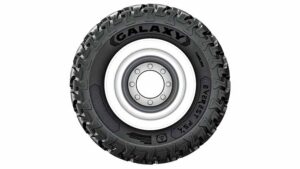
Galaxy Everest PSX tyre developed for utility-focused
UTV and ATV applications
Galaxy, a brand of Yokohama-ATG with a longstanding presence in construction, earthmoving and material handling tyres, has entered the Utility Task Vehicle (UTV) and All-Terrain Vehicle (ATV) segment with the launch of two new offerings, Hulk PSX and Everest PSX. The move expands the company’s off-highway portfolio into a category that demands a unique balance of durability, traction, puncture resistance and ride stability across diverse operating environments. Speaking on the launch, Dyutiman Chattopadhyay, Chief Technology Officer, Yokohama-ATG, said the company’s entry into the category reflects evolving customer expectations around performance, reliability and durability in increasingly demanding operating environments. For tyre manufacturers, the UTV and ATV segment presents a distinct set of engineering challenges. Unlike conventional industrial applications, these vehicles operate across a broad range of terrains and duty cycles, from agriculture and forestry to utility services, industrial support operations and recreational use. As a result, development in this category increasingly requires application-specific engineering rather than a one-size-fits-all approach.
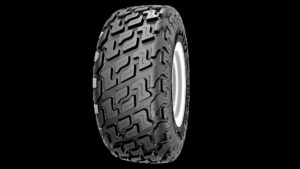
Galaxy Hulk PSX tyre engineered for performance-oriented UTV
and ATV operations
The launch reflects a broader trend within the industry, where in manufacturers are leveraging expertise gained in heavy-duty off-highway applications to address emerging mobility segments. As operating requirements become more specialised, product development is increasingly centred on tread design, construction architecture, compound technology and durability characteristics tailored to specific use cases. Among the two new products, Hulk PSX has been positioned as a performance-focused tyre engineered for demanding off-road environments. The radial is intended to improve ride handling and stability at higher operating speeds while maintaining traction across challenging terrain conditions. Deep tread geometry and reinforced shoulder blocks have been incorporated to improve grip, cornering performance and vehicle control on loose and uneven surfaces. From an engineering perspective, the design balances traction performance with wear characteristics. A high tread-to-void ratio contributes to stability and wear resistance while retaining the off-road capability required in rugged environments. The tyre also incorporates a durable compound and strengthened sidewall construction aimed at improving resistance against cuts and abrasions. These characteristics are particularly important for vehicles operating in rocky terrain and high-impact conditions, where tire durability directly influences uptime and operating efficiency.Galaxy is offering Hulk PSX across multiple size configurations for 12-inch and 14-inch rim applications, enabling compatibility with a wide range of UTV platforms. While Hulk PSX targets performance-oriented use cases, Everest PSX has been developed with a stronger focus on utility-driven operations where durability, ride comfort and operational consistency are equally important.
The tyre incorporates tread continuity features intended to improve roadability while reducing vibration during extended operating cycles. Enhanced resistance to cuts, chips and abrasions has also been integrated into the design, alongside rim-protection features aimed at extending service life in demanding environments.
These tyres are designed to meet the evolving needs of customers seeking performance, reliability and durability in extreme conditions.”
According to the company, Everest PSX has been engineered to deliver stable traction across mixed terrain conditions, including wet surfaces, while maintaining predictable handling characteristics. The product will be available across multiple 12-inch, 14-inch and 15-inch rim configurations, allowing deployment across a broad range of utility vehicle applications.
The design focus reflects the growing role of UTVs in commercial and utility operations, where reliability and operating efficiency often take precedence over outright performance. As these vehicles become increasingly integrated into agriculture, infrastructure support and industrial activities, tire requirements are evolving accordingly.
The UTV and ATV market has evolved significantly in recent years, expanding beyond recreational applications into agriculture, forestry, material handling and industrial support operations. This transition is influencing how tire manufacturers approach product development within the category. It is a 11.2 billion dollar market.
Unlike purely recreational applications, utility-focused operations often involve longer duty cycles, greater exposure to rough terrain and higher expectations around durability and operational reliability. This has encouraged manufacturers to move towards application-specific engineering capable of balancing traction, puncture resistance and ride quality across multiple operating conditions.
Galaxy’s entry into the segment builds on its longstanding experience in OHT engineering, where operating environments demand high structural durability and terrain adaptability. By introducing two differentiated platforms rather than a single generic product line, the company is addressing distinct operational requirements within the UTV and ATV space.

Dyutiman Chattopadhyay, Chief Technology Officer, Yokohama-ATG
The Technology Base
The introduction of Hulk PSX and Everest PSX highlights how manufacturers are increasingly applying off-highway engineering principles to specialised vehicle categories. By combining reinforced construction, application-specific tread design and durability-focused compound development, Galaxy is extending its technology base into a segment where operational requirements continue to evolve.
For Yokohama-ATG, the launch represents more than a portfolio expansion. It demonstrates how established expertise in construction, industrial and material-handling tyre applications can be translated into emerging off-road mobility segments, where performance, reliability and adaptability remain critical differentiators. As the UTV and ATV market continues to diversify, product development is likely to become increasingly specialised, creating opportunities for manufacturers capable of leveraging engineering knowledge across multiple off-highway categories.