

As the global Off-highway Tyre (OHT) landscape undergoes a paradigm shift toward mechanisation and sustainability, Yokohama-ATG is positioning itself at the vanguard of this evolution, writes Ashish Bhatia.
By aligning its diverse product mix and brand positioning with the overarching Yokohama Transformation Strategy 2026 (YX2026), Yokohama-ATG is leveraging a distinct competitive advantage. The manufacturer is integrating premiumisation, operational excellence, and technology-led value creation to redefine industry standards, with India serving as a critical global hub for innovation and manufacturing. Underpinning this growth is a commitment to specialised performance. Through its Alliance, Galaxy, and Primex brands, Yokohama-ATG addresses a broad spectrum of demanding applications in agriculture, construction, forestry, and industrial sectors. Amberish Shinde, Chief Manufacturing Officer, emphasises that the company’s ability to meet highly specific customer requirements across global markets is a result of a laser-focused approach to engineering and manufacturing.
“Our strategic focus is on strengthening the premium segment through application-specific products that enhance productivity and durability while reducing the Total Cost of Ownership (TCO),” Shinde notes. This strategy is manifest in the deployment of VF (Very High Flexion) tyre technologies and advanced compounds, which are essential as automation and heavier machinery reshape the segment. Parallel to technical innovation, sustainability remains a core pillar, with a clear roadmap targeting 100 per cent sustainable raw material usage by 2050. Within this framework, India’s role has evolved beyond a manufacturing base into a strategic export and innovation powerhouse.
The infrastructure supporting this vision includes significant investments in advanced manufacturing, automation, and localisation. These capabilities ensure that Yokohama-ATG remains future-ready and globally competitive. By maintaining high operational standards, the company ensures that its product delivery remains consistent with the premium positioning required by its global clientele. Innovation is not merely a goal but a philosophy embedded in the product lifecycle, as per Shinde. Recent introductions, such as the AGRI NOVA next-generation R-1 bias tyre and the AGRI HAUL range, demonstrate a keen understanding of regional farming needs. The AGRI NOVA, for instance, utilises 3-angle lug technology to improve traction and comfort while reducing soil compaction, a direct response to the requirements of modern mechanised farming.
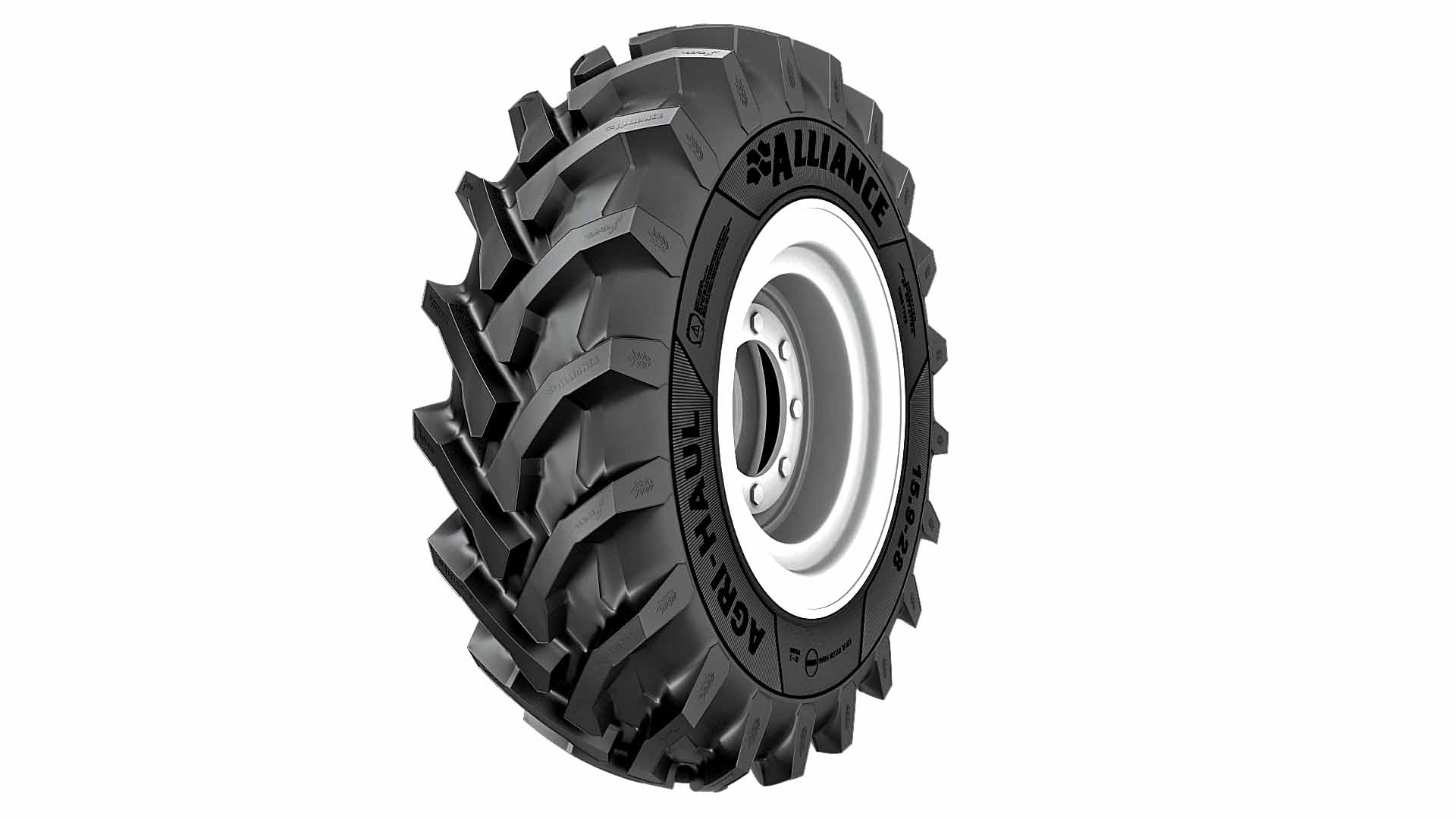
Shinde explains that the alignment is seamless: “Every product we launch is a building block for YX2026. Whether it is our flagship AGRI STAR II, which has seen one million units sold globally, or India-specific solutions, the focus is on value creation through technology. We are not just selling tyres, we are providing tools that enhance the efficiency of the entire agricultural and industrial value chain.” Similarly, AGRI HAUL range, the recent launch for the Indian market, addresses the growing need for faster and more efficient farm operations by offering improved load-carrying capacity, better grip and higher overall life. We are also seeing strong momentum in high-speed sprayer technologies, where our solutions are designed to provide enhanced stability, reduced vibration and superior field protection for precision farming applications. In the past, the company, cited Shinde, introduced its flagship product AGRI STAR II to the market, which has been sold one million times globally in the last five years. “Across all these innovations, our focus remains on developing farmer-centric, technology-led solutions that improve productivity, efficiency and durability in real-world farming conditions,” he stated.
The company operates from three manufacturing plants in India, in Dahej, Tirunelveli and Vizag, with one of the highest production capacities in the Indian OHT space. With globally renowned offerings like the AGRI STAR II (which has sold one million tyres in five years) and India-specific range AGRI HAUL, Shinde expressed confidence in the company, poised to grow aggressively in the region. “We want to grow significantly higher than the industry growth rate in the key agriculture belts in India,” he mentioned.
Here, exports continue to remain a strategic pillar for the business, supported by India’s growing competitiveness in manufacturing, skilled workforce, improving infrastructure and strong supply capabilities. At the same time, domestic demand has also remained robust, particularly across agriculture, infrastructure and construction-linked sectors. While global protectionism, tariff changes and geopolitical developments such as the West Asia conflict have introduced short-term uncertainties, the diversified presence across more than 130 countries reduces dependency on any single market or trade corridor, claimed Shinde. Over the years, the industry has become significantly more agile and resilient in navigating such disruptions, he opined. The company is confident that India’s growing network of FTAs, including potential agreements with regions like the EU, can significantly improve market access, enhance export competitiveness and strengthen India’s role within global supply chains over the long term.
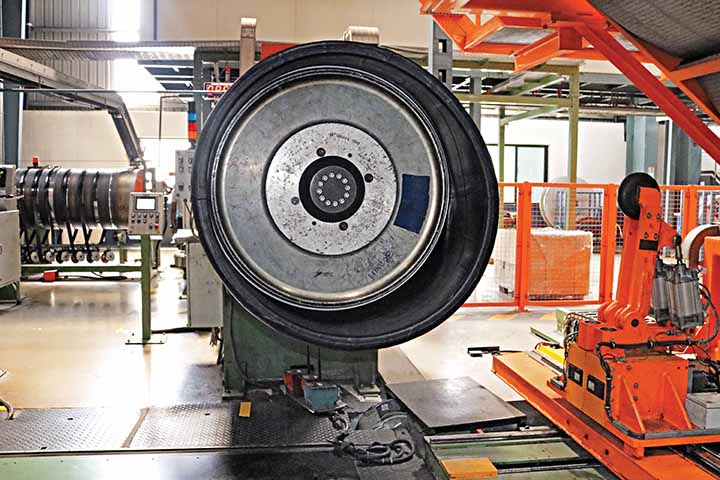
The manufacturing facilities across Vizag, Dahej and Tirunelveli are increasingly leveraging automation and digital controls to enhance operational efficiency, quality consistency and sustainability. The manufacturing plants integrate advanced automated raw material weighing systems, robotic tyre handling, automated guided vehicles, inline quality controls and digital traceability across multiple stages of manufacturing.
The use of smart manufacturing technologies enables improved process visibility, predictive maintenance capabilities and stronger process reliability. These systems also help minimise waste, improve yield and strengthen operational responsiveness while maintaining global quality benchmarks. The broader objective, explained Shinde, is to create a future-ready manufacturing ecosystem that combines advanced automation with human expertise, while supporting sustainability goals through greater energy efficiency and process optimisation.
Supply-chain efficiency and operational excellence are deeply embedded in the company’s manufacturing philosophy. Standardised operating procedures, digital traceability systems and robust quality controls help maintain consistency even as we continue to scale operations globally. There is a strong belief that frontline employees play a critical role in driving innovation and operational improvements. “Our ownership-driven shop-floor culture encourages employees to take responsibility for processes and equipment, contribute ideas, and actively participate in continuous improvement initiatives,” Shinde pointed out.
Diversity and inclusion remain core pillars of the workforce strategy. Through automation and advanced manufacturing processes, the company is claimed to have created a more inclusive work environment that enables greater participation of women in technical and shop-floor roles across our operations. It is proud to have women-led operations in specific manufacturing divisions, including the Truck Bus Radial (TBR) line at the Dahej facility, which is entirely operated by women. At the same time, the company is actively working towards increasing women’s participation across all the plants, including the Vizag facility, where an ambitious target of achieving 50 per cent female workforce representation has been set. The commitment extends beyond employment generation to building a future-ready and equitable workforce ecosystem. Through dedicated Skill Development Centres and focused vocational training initiatives, the company is providing equal livelihood opportunities to individuals across the country, irrespective of gender.

