

As electrification, Bharat NCAP and fuel-efficiency norms reshape vehicle engineering priorities, Body-in-White is emerging as one of the most strategic battlegrounds in India’s passenger vehicle industry, writes Ashish Bhatia.
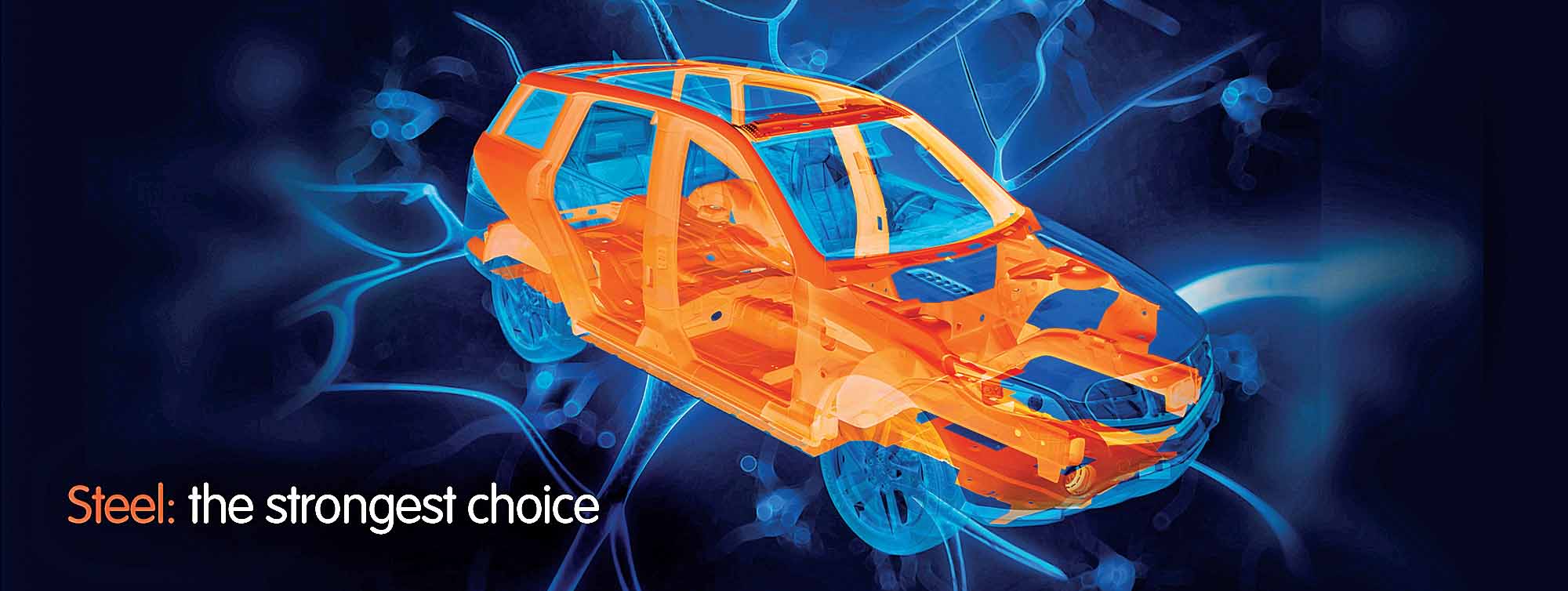
The Body-in-White (BIW) stage of vehicle manufacturing provided shape, strength and occupant protection before paint and assembly. Today, that perception has fundamentally changed. Across the global automotive industry, BIW has become one of the most critical engineering domains influencing vehicle safety, emissions, efficiency, driving dynamics and, increasingly, electric vehicle range. In India, where passenger vehicle manufacturers are simultaneously balancing affordability, Bharat NCAP requirements, CAFE norms, electrification targets and customer demand for feature-rich vehicles, the BIW is undergoing its biggest transformation since the advent of monocoque construction. That contradiction is driving a revolution in materials, manufacturing processes, joining technologies and design philosophies.
Light-weighting, until recently, was viewed through the lens of fuel economy across the board. Today, the implications are much broader. For internal combustion engine vehicles, lower mass directly translates into improved fuel efficiency and reduced emissions. For electric vehicles, however, the stakes are even higher. Every kilogram removed from a vehicle can contribute to improved range, lower battery requirements and reduced lifecycle energy consumption. An L5M category battery weighs an estimated 90 Kg, for context. A 30-kWh battery in the SUV weighs approximately 260 kg. A primary reduction of 100 kg from the BIW can trigger secondary savings elsewhere. Smaller brakes become feasible. Suspension systems can be downsized. Lighter wheels and tyres can be adopted. Electric motors may require lower output, and battery packs can potentially shrink. The cumulative benefit can significantly exceed the original weight reduction. No wonder, BIW engineering is now central to every new passenger vehicle programme.
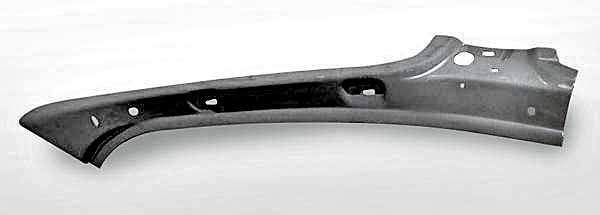
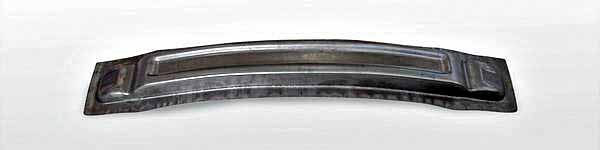
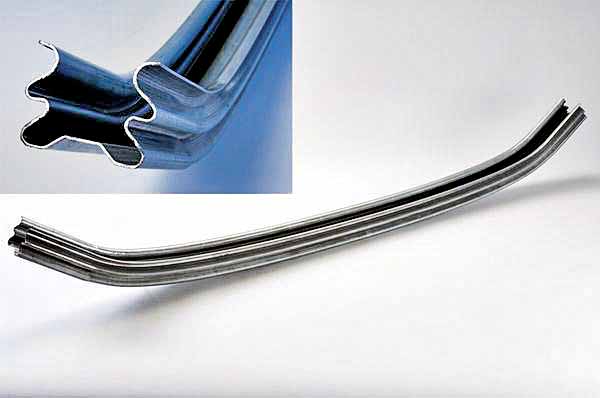
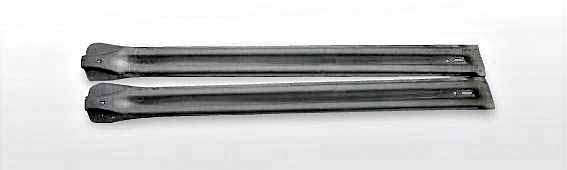
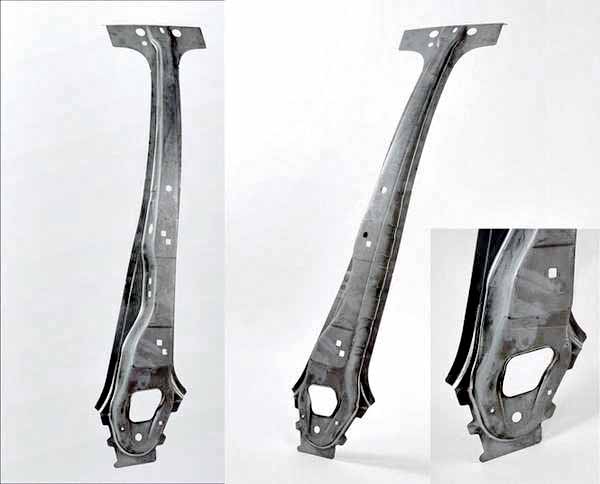
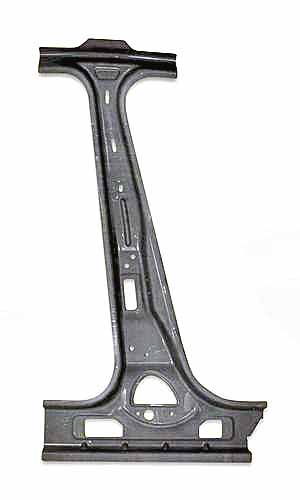
The most visible shift within Indian passenger vehicle manufacturing is the gradual move away from conventional mild steel. The industry is increasingly embracing Advanced High-Strength Steel (AHSS) and Ultra High-Strength Steel (UHSS) for crash-critical areas. Boron steel is now becoming commonplace in A-pillars, B-pillars, roof rails, front rails and door intrusion beams. These materials offer substantially higher strength than traditional steel while enabling thinner gauges. Passenger vehicle manufacturers targeting five-star Bharat NCAP ratings increasingly rely on such materials to maintain occupant survival space during frontal offset, side impact and pole impact tests. The evolution is particularly visible in newer SUVs and premium hatchbacks, where crash performance has become a significant purchase consideration.
The rise of AHSS has also accelerated the adoption of hot-stamping technologies. Hot stamping involves heating steel blanks to extremely high temperatures before forming and quenching them into ultra-high-strength components. The process enables manufacturers to create complex shapes with tensile strengths exceeding 1,500 MPa while maintaining dimensional accuracy. Historically concentrated in Europe, China and North America, hot stamping is now witnessing increasing localisation in India. The technology allows engineers to optimise safety-critical load paths without excessive material usage.
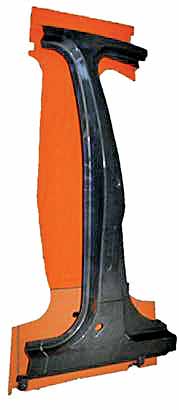
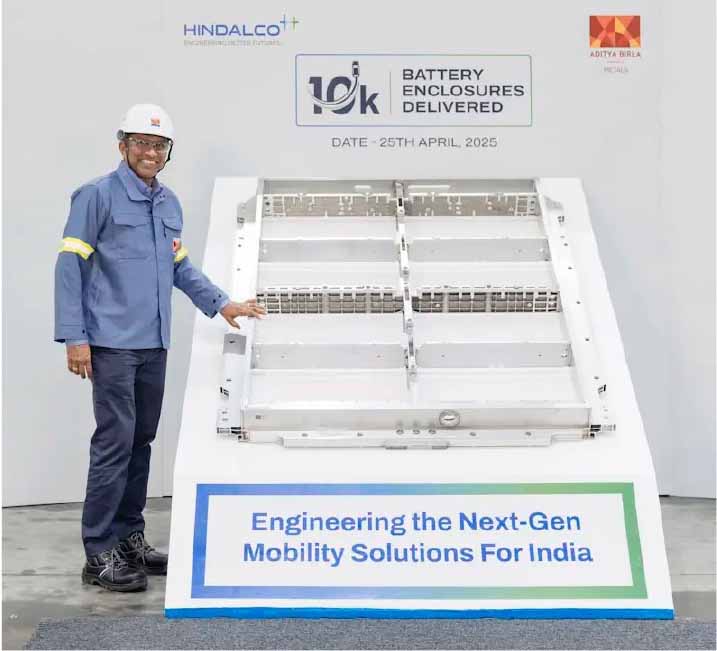
If steel remains the foundation of modern BIW construction, aluminium is rapidly emerging as the most important complementary material. Globally, aluminium-intensive architectures have become standard practice for premium vehicles. After consideration of export-only models, India is now beginning to follow that trajectory. Domestic material suppliers, including Hindalco and Vedanta Aluminium, are expanding automotive-focused capabilities as demand grows. While full aluminium monocoques remain limited, aluminium usage is increasing across closures, structural members, crash management systems and battery enclosures. The benefits are significant. Aluminium offers approximately one-third the density of steel while providing excellent corrosion resistance. For EVs, where battery packs add substantial mass, aluminium provides an attractive pathway to offset weight increases elsewhere in the vehicle.
One of the more interesting trends in Indian passenger vehicles is the rapid rise of panoramic sunroofs. Once restricted to luxury vehicles, sunroofs have become almost mandatory in mainstream SUVs. From a marketing perspective, they are enormously successful. From an engineering perspective, they create complications. Large glass roofs can add 50-70 kg of mass high above the vehicle’s centre of gravity, negatively affecting efficiency and handling. The industry’s response has been innovation. Automotive glass suppliers are reducing glass thickness from traditional 3.2 mm constructions to approximately 2.5 mm while maintaining impact resistance. This alone can deliver double-digit percentage reductions in glazing weight. Meanwhile, natural fibre composites and lightweight structural frames are increasingly replacing heavier steel reinforcements.
Modern BIW architecture, instead of using a single material throughout the structure, engineers now strategically deploy different materials according to load requirements. Boron steel may protect occupants. Aluminium may reduce mass. Composites may improve packaging efficiency. Magnesium may lighten interior mechanisms. The challenge lies not merely in selecting materials but in joining them effectively. And this is where BIW manufacturing is undergoing perhaps its most profound change.
Traditional Resistance Spot Welding (RSW) formed the backbone of automotive body shops for decades. However, it struggles when dissimilar materials enter the equation. Aluminium and steel do not cooperate well under conventional welding conditions. Thermal expansion differences, brittle intermetallic layers and heat distortion create significant challenges. As a result, Indian OEMs are increasingly adopting advanced joining technologies.
Self-piercing riveting (SPR) has become one of the most important solutions for multi-material construction. Rather than melting metals together, SPR mechanically locks sheets using specially designed rivets. The process is particularly effective for joining aluminium to steel and is increasingly used in EV battery structures and aluminium-intensive architectures. Its ability to operate without pre-drilled holes makes it attractive for high-volume production.
Structural adhesives are quietly transforming vehicle engineering. Instead of concentrating loads at individual weld points, adhesives distribute stress across entire surfaces. This enables thinner material sections while simultaneously improving stiffness, refinement and durability. When combined with spot welding, weld-bonding benefits become even greater. Engineers gain stronger structures, improved noise and vibration performance and better crash energy management. In many modern passenger vehicles, adhesives are becoming as important as welds themselves.
Electric vehicles have introduced a new engineering challenge. Battery protection. The battery enclosure must withstand severe impacts while remaining sealed against water, dust and contaminants. Friction Stir Welding (FSW) has emerged as a preferred solution. Unlike traditional welding, the metal never melts. Instead, a rotating tool plastically mixes materials to form extremely strong joints. The resulting welds are particularly suited to aluminium battery trays and enclosures where structural integrity is paramount.
Laser welding and laser brazing represent the premium end of modern joining technologies. High-energy fibre lasers create continuous seams with minimal heat distortion. Beyond structural benefits, the process also enhances aesthetics. Smooth roof-to-body joints eliminate the need for bulky roof ditch mouldings and improve aerodynamic performance. Many premium passenger vehicles now rely heavily on laser joining for both functional and visual advantages.
Today’s vehicle programmes increasingly use topology optimisation, finite element simulation and digital benchmarking to eliminate unnecessary mass before physical development begins. Tailor Welded Blanks (TWBs) represent a particularly effective example. Instead of using uniform-thickness sheet metal throughout a component, engineers selectively combine different thicknesses and grades of steel according to structural requirements. Crash-critical zones receive reinforcement. Low-stress areas remain lightweight.
India’s crash-testing landscape is also accelerating BIW evolution. Achieving a five-star Bharat NCAP rating increasingly requires more than simply adding airbags. Continuous joints created through adhesives and laser welding help maintain occupant survival space during frontal impacts. SPR systems allow aluminium crash structures to deform progressively during side impacts. Hot-stamped pillars resist cabin intrusion. Battery enclosures become structural members protecting occupants and energy storage systems simultaneously.
Compared with Europe, India’s passenger vehicle industry remains approximately five to ten years behind in widespread deployment of aluminium-intensive architectures, giga-casting, carbon-fibre composites and highly integrated structural battery systems. European manufacturers increasingly employ mega-castings, bonded aluminium structures and advanced composite-intensive platforms that remain uncommon in India. However, the gap is narrowing faster than many realise. Indian OEMs are adopting AHSS, hot stamping, advanced adhesives, laser joining and sophisticated CAE-driven optimisation at an accelerating pace. Technologies that were once exclusive to European luxury brands are now appearing in Indian mass-market SUVs and hatchbacks. The difference today is less about capability and more about scale and economics.