

As L5 electric three-wheelers evolve, ride dynamics is emerging as a key differentiator through advances in suspension, braking and chassis engineering, writes Upendra Kasbekar.
The evolution of India’s electric three-wheeler market has largely been measured by improvements in battery technology, certified driving range and charging time. While these parameters continue to influence purchasing decisions, the latest generation of L5 electric passenger and cargo vehicles suggests the industry is entering a new phase of product development. Ride dynamics once a secondary consideration in the segment is emerging as a key engineering differentiator.
Recent launches from Mahindra Last Mile Mobility, Bajaj Auto and Piaggio Vehicles indicate that manufacturers are investing beyond electrification to improve vehicle stability, ride comfort, braking confidence and structural rigidity. Instead of competing solely on kilometres per charge, OEMs are increasingly refining how these vehicles behave over broken roads, negotiate flyovers, carry passengers and cargo, and reduce driver fatigue during long operating hours.
This shift reflects changing market expectations. Fleet operators today seek vehicles that deliver higher uptime, predictable handling under varying payloads, lower maintenance costs and greater passenger comfort. These requirements have encouraged manufacturers to treat suspension, braking, chassis architecture and electronic vehicle controls as an integrated engineering package rather than isolated mechanical systems.
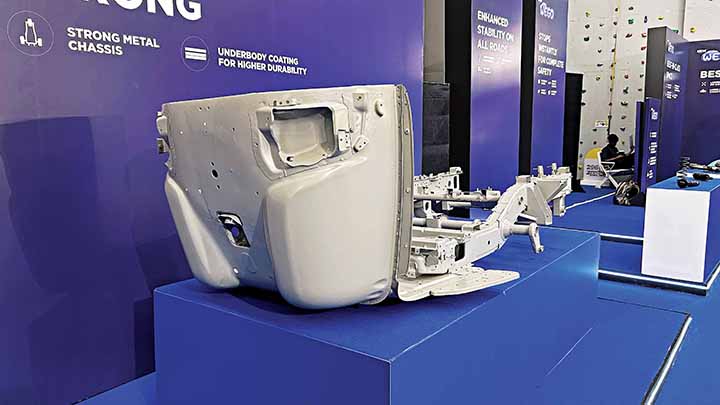
Mahindra’s recently introduced UDO, for instance, adopts a full monocoque architecture, independent rear suspension, regenerative braking and Hill Hold Assist to improve overall vehicle behaviour. Bajaj Auto has approached the challenge differently through its WEGO platform and the Riki range, introducing features such as regenerative braking, independent suspension, anti-roll technology and improved ergonomics. Piaggio’s new Apé WavE, meanwhile, places greater emphasis on passenger-focused suspension tuning, lower noise, vibration and harshness (NVH) levels and a full-metal monocoque body. Although each product targets a different operating profile, all three point towards the same engineering direction ride dynamics is becoming central to product development.
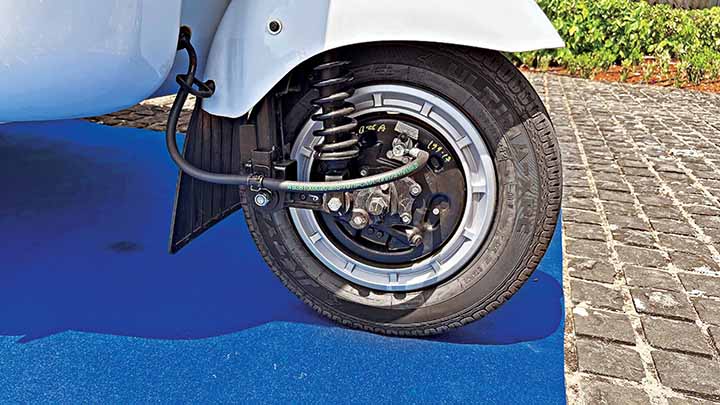
Beyond Suspension
Ride dynamics is often misunderstood as suspension performance alone. In reality, it is the combined behaviour of multiple vehicle systems that determines how confidently a vehicle accelerates, brakes, corners and absorbs road irregularities. Suspension geometry, chassis stiffness, steering characteristics, braking calibration, tyre contact, weight distribution and centre of gravity all influence the driver’s perception of stability and control.
For L5 electric three-wheelers, these interactions are becoming increasingly important. Compared with conventional internal combustion models, electric vehicles carry heavier battery packs while operating under demanding stop-start urban conditions. The additional mass influences braking distances, suspension loading and body movement, making careful integration of vehicle systems essential.
Consequently, manufacturers are moving away from designing individual components in isolation. Instead, suspension, chassis and braking systems are being calibrated together to achieve a balance between ride comfort, payload capability and durability.
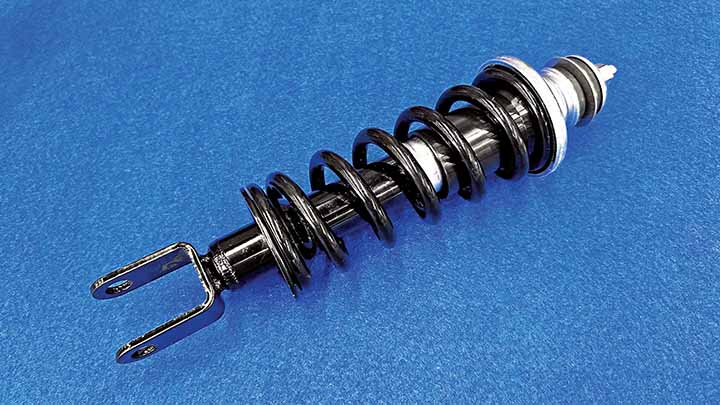
Engineering Balance
Among recent launches, Bajaj Riki demonstrates perhaps the clearest example of this integrated approach. Rather than introducing a single feature, the platform combines an all-steel monocoque chassis with independent suspension on all three wheels, an anti-roll bar and hydraulic braking. Individually, these components offer specific benefits; together, they create a more balanced ride dynamics package.
Independent suspension allows each wheel to respond individually to road disturbances, improving tyre contact and reducing the transfer of shocks to the cabin. However, greater wheel articulation can also increase body roll during cornering. Engineers typically counter this by introducing an anti-roll bar, which links the suspension across the axle to improve roll stiffness while preserving ride comfort. The result is better directional stability without significantly compromising compliance over uneven surfaces.
Equally important is the monocoque structure supporting the suspension. A torsionally rigid body provides more consistent mounting points for suspension components, reducing structural flex and allowing the suspension geometry to function as intended. This relationship between chassis rigidity and suspension tuning has long been established in passenger vehicles and is now becoming increasingly relevant in electric three-wheelers.
Bajaj has also integrated hydraulic brakes within this package. While braking systems generate stopping force, suspension determines how effectively tyres maintain contact with the road during deceleration. Improved wheel control therefore allows braking systems to operate more consistently, particularly over uneven surfaces where tyre grip constantly changes.
The engineering philosophy extends across Bajaj’s broader WEGO portfolio. Equipped with regenerative braking, a two-speed automatic transmission, Hill Hold, Climb Mode and improved driver ergonomics, the platform demonstrates how vehicle dynamics today is influenced not only by mechanical hardware but also by electronic control strategies. Explaining the product philosophy during the WEGO launch, Samardeep Subandh, President – Intra-City Business, Bajaj Auto Ltd., said the company had developed purpose-built products for distinct operating requirements, from congested urban routes to higher-capacity passenger and cargo applications. His remarks reinforce the industry’s move towards application-specific engineering rather than one-size-fits-all vehicle design.
Piaggio Vehicles has interpreted the same challenge through a different engineering lens. Instead of highlighting suspension hardware, the company repeatedly emphasises passenger comfort, reduced NVH and structural durability in the newly launched Apé WavE. Built on a full-metal monocoque architecture with a passenger-focused suspension setup, the vehicle has been developed to improve refinement during everyday shared mobility operations.
As Diego Graffi, Chairman and Managing Director, Piaggio Vehicles Pvt. Ltd., observed during the launch, the Apé WavE has been engineered to combine affordable ownership with “superior comfort, safety and operational reliability,” underlining how ride quality is increasingly becoming part of the overall value proposition rather than simply a comfort feature.
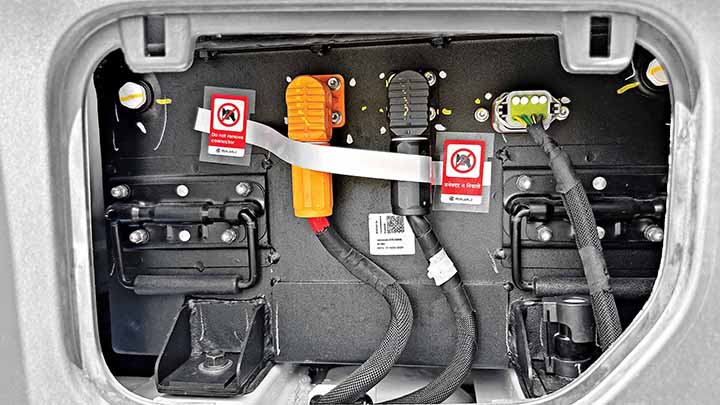
Integrated Control
While suspension forms the foundation of ride dynamics, braking and electronic vehicle controls increasingly determine how confidently an L5 electric three-wheeler responds under real operating conditions. The additional weight of battery packs, higher cruising speeds and longer operating hours have encouraged manufacturers to move beyond conventional braking systems towards integrated control strategies that combine mechanical hardware with intelligent software.
Mahindra Last Mile Mobility’s UDO reflects this approach. The platform combines a full monocoque chassis with independent rear suspension, regenerative braking, Hill Hold Assist, Creep mode and reverse throttle functions. Rather than functioning as standalone features, these systems collectively improve low-speed manoeuvrability, vehicle control on gradients and overall driver confidence during frequent stop-start urban operations. The 11.7 kWh battery pack, 10 kW motor and 52 Nm of peak torque further influence vehicle dynamics by requiring careful weight distribution and chassis tuning to maintain stability under varying passenger loads.
Speaking during the launch, Suman Mishra, Managing Director & CEO, Mahindra Last Mile Mobility, said the UDO had been developed to redefine last-mile transportation through a combination of technology, performance and reliability. While the statement reflects Mahindra’s product vision, the engineering package itself highlights a broader industry trend where vehicle dynamics is increasingly shaped through the interaction of suspension, braking, powertrain and electronic controls rather than mechanical systems alone.
The same philosophy is visible across Bajaj Auto’s WEGO range. Regenerative braking reduces reliance on conventional friction brakes during routine deceleration while simultaneously recovering energy to extend operating range. Features such as Hill Hold and Climb Mode further enhance drivability by improving traction and reducing rollback on gradients conditions frequently encountered in urban flyovers, parking ramps and congested city roads. Together, these technologies illustrate how ride dynamics is evolving beyond conventional suspension tuning into an integrated vehicle control strategy.
Component Ecosystem
Behind every improvement in ride quality lies an equally important evolution within India’s automotive component industry. While OEMs define the overall vehicle architecture and tuning philosophy, the performance of suspension, braking and steering systems depends heavily on specialised Tier-1 suppliers developing components capable of meeting increasingly demanding durability and comfort requirements.
Companies such as Endurance Technologies and Gabriel India have emerged as key contributors to India’s ride-control ecosystem, manufacturing front forks, hydraulic shock absorbers, suspension assemblies and damping systems for major two- and three-wheeler manufacturers. As electric platforms become heavier and more sophisticated, suspension suppliers are being challenged to deliver improved wheel control, reduced vibration transmission and longer service life without significantly increasing component weight.
Similarly, companies including Brakes India, Bosch, ZF and Rane Group continue to advance braking, steering and vehicle-control technologies that support the broader transition towards safer and more refined commercial mobility solutions. Although OEMs rarely disclose model-specific supplier relationships, the growing emphasis on ride dynamics is strengthening collaboration between vehicle manufacturers and component suppliers during the early stages of product development. Suspension tuning, braking calibration and chassis integration are increasingly being engineered simultaneously rather than sequentially, allowing complete vehicle systems to be optimised around specific operating conditions.
This collaborative engineering approach is expected to become even more important as L5 platforms continue to evolve, particularly with the future adoption of technologies such as electronic brake distribution, anti-lock braking systems, connected vehicle controls and more advanced ride-control strategies.
Validation on Road
A brief evaluation of the Bajaj Riki P4005 supported many of these engineering developments. The combination of independent suspension, hydraulic brakes and anti-roll architecture delivered noticeably better composure over uneven surfaces while maintaining reassuring stability during gradient evaluations. Visibility from the upright driving position, together with well-positioned mirrors and an ergonomic cabin layout, further enhanced driver confidence. Although a fully laden assessment would provide a more comprehensive understanding of suspension performance, the initial drive suggested a significant improvement in refinement compared with conventional electric rickshaws commonly operating in the unorganised market.
Future Direction
India’s L5 electric three-wheeler segment is rapidly progressing beyond the early phase of electrification. Battery capacity and certified driving range will remain important purchasing criteria, but they are no longer sufficient to differentiate products in an increasingly competitive market. Manufacturers are instead investing in suspension tuning, chassis rigidity, braking integration, electronic vehicle controls and driver ergonomics to create platforms that deliver greater confidence, durability and operational efficiency.
The latest offerings from Mahindra, Bajaj and Piaggio clearly demonstrate that ride dynamics is no longer a secondary engineering consideration. Whether through independent suspension, monocoque construction, regenerative braking or passenger-focused ride refinement, OEMs are adopting different technical approaches to achieve the same objective a safer, more comfortable and more productive electric three-wheeler.
As the segment continues to mature, the next phase of competition is unlikely to be defined solely by longer range or faster charging. Instead, the winners may well be those capable of integrating suspension, braking, chassis engineering and intelligent vehicle controls into a cohesive ride dynamics package that delivers tangible benefits for drivers, passengers and fleet operators alike.