

With Bosch and the TSF Group joining forces to develop electronically controlled air systems, software is beginning to redefine pneumatic technologies for commercial vehicles, writes Sahil kesari
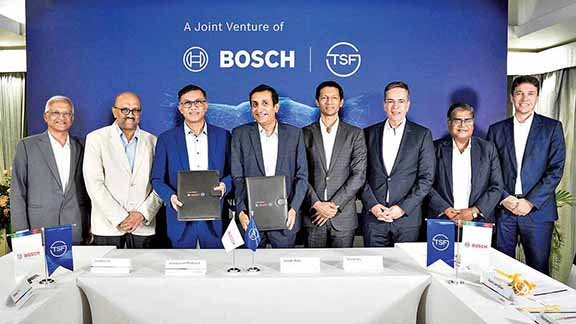
Commercial vehicles is no longer being driven solely by advancements in powertrains or chassis technologies. Increasingly, electronics and software are reshaping core vehicle systems, including braking, suspension and compressed-air management. Against this backdrop, Bosch and the TSF Group, through Brakes India Private Limited (BIPL) and Wheels India Limited (WIL), have announced a 50:50 joint venture to develop electronically controlled and software-driven air systems for commercial vehicles. Subject to regulatory approvals, the joint venture is expected to commence operations by the end of 2026. The collaboration combines Bosch’s expertise in electronics, software and system integration with the manufacturing capabilities of Brakes India and Wheels India. The new company will focus on the engineering, manufacturing and sales of electronically controlled modules for air compression, air processing, air suspension and air parking brake systems, supporting the evolving requirements of commercial vehicle manufacturers.
Pneumatics to Intelligent Systems
Compressed-air systems have traditionally served as mechanical subsystems supporting braking and suspension functions. However, changing vehicle architectures are driving demand for electronically controlled and software-enabled air management systems capable of improving efficiency, safety and vehicle control. According to Bosch, software-defined commercial vehicles will require increasingly intelligent, modular and cost-effective systems. Integrating electronic controls with conventional pneumatic technologies is expected to improve diagnostics, enable more precise vehicle control and facilitate greater integration across multiple vehicle functions. The development reflects a broader shift across the commercial vehicle industry, where component suppliers are moving beyond standalone products to deliver integrated, software-enabled systems capable of supporting next-generation truck and bus platforms.
Combining Complementary Expertise
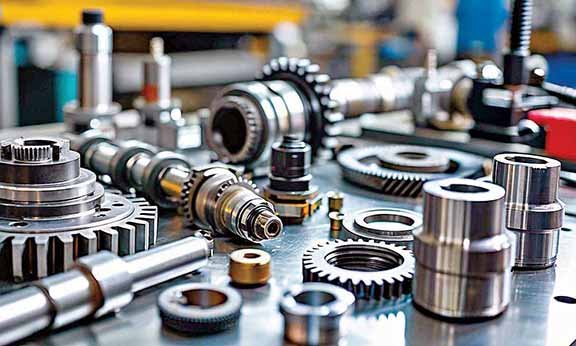
Bosch contributes its global expertise in commercial vehicle electronics, software and systems engineering. The company believes advanced compressed-air systems will become an increasingly important element of future commercial vehicles as automation, connectivity and electronic control continue to expand.
Brakes India contributes decades of experience in pneumatic braking systems. The company expects the joint venture to strengthen its ability to deliver electronically controlled air braking solutions that support the industry’s transition towards software-driven and electrified commercial vehicles. Wheels India brings more than three decades of experience in air suspension systems for buses. Through the collaboration, the company aims to advance electronically controlled air suspension technologies for customers in India and global markets. Together, these complementary capabilities are expected to accelerate the development of integrated air systems capable of addressing evolving OEM requirements while improving overall system performance.
Supporting Future Commercial Vehicles
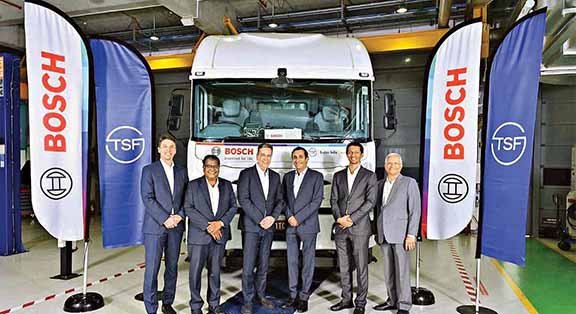
The joint venture will be headquartered in Chennai. Sales within India will be managed by the new company, while the global supply chain, excluding China, will continue to be handled through the existing entities of Bosch, Brakes India and Wheels India. The collaboration is expected to support OEMs responding to increasing demands for efficiency, safety and automation. As commercial vehicles become more connected and electronically controlled, air systems are evolving beyond conventional mechanical assemblies into intelligent vehicle subsystems capable of supporting multiple functions through integrated electronic controls. Rather than supplying individual pneumatic components, manufacturers are increasingly focusing on complete system solutions that simplify vehicle integration while improving performance, diagnostics and operational efficiency.
The Bosch–TSF Group partnership represents more than the formation of a new joint venture. It reflects the increasing convergence of electronics, software and pneumatic engineering within the commercial vehicle industry. As trucks and buses continue to adopt advanced braking, suspension and vehicle-control technologies, intelligent air systems are expected to become an increasingly important element of future vehicle architecture. For Bosch, Brakes India and Wheels India, the collaboration combines complementary strengths in electronics, braking and suspension technologies. For the industry, it signals another step towards software-defined commercial vehicles, where integrated systems are expected to play an increasingly important role in improving vehicle performance, safety and operating efficiency.