

As the Automotive Research Association of India (ARAI) marks six decades, SIAT 2026 highlight how innovation in components,validation infrastructure,R&D depth and policy alignment will define India’s next mobility growth cycle, write Niharika Singh & Sahil Kesari
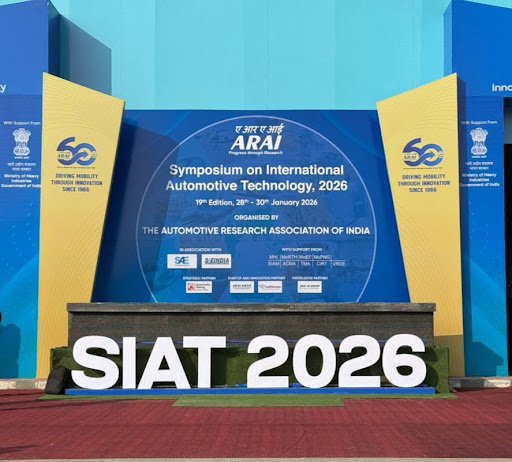
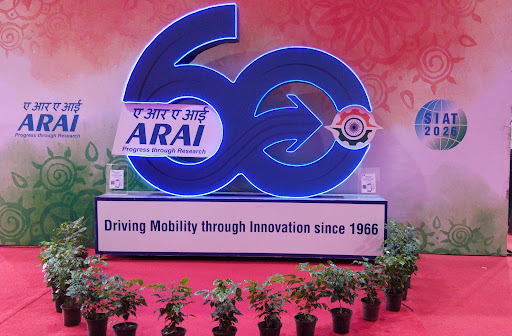
The 19th edition of the Symposium on International Automotive Technology (SIAT 2026) opened at the Pune International Exhibition and Convention Centre at a defining moment for India’s automotive and auto component ecosystem. Hosted by the Automotive Research Association of India (ARAI) as it marked its 60th anniversary, the symposium unfolded against six decades of regulatory evolution, research advancement and technical capability building that have directly shaped India’s component manufacturing strength. Inaugurated by Union Minister for Heavy Industries H. D. Kumaraswamy, the biennial gathering carried the theme “Innovative Pathways for Safe and Sustainable Mobility.” While the broader narrative focused on mobility transformation, the underlying current was clear: the next phase of India’s automotive growth will be powered as much by its component suppliers as by its vehicle manufacturers.
Ceremonial Opening with a Technology Mandate
In his inaugural address, Kumaraswamy underscored India’s ambition to become the world’s third-largest economy and highlighted mobility as a strategic growth enabler. For the auto component sector, this vision translates into expanded manufacturing scale, technology upgradation and stronger global integration. During the ceremony, he formally launched the Global Automotive Safety Regulations Book, the SIAT 2026 Proceedings and ARAl’s Technical Reference Papers. These publications represent more than documentation-they codify evolving compliance frameworks, validation protocols and engineering benchmarks that directly influence component design, testing and homologation.
The minister referenced government initiatives such as the FAME India Scheme, the PM e-Drive Scheme, the Capital Goods Scheme and Production Linked Incentive (PLI) programs. For component manufacturers, these policies are not abstract enablers; they create demand visibility for electric powertrain components, battery systems, high-voltage wiring, power electronics, lightweight materials and advanced safety assemblies.He pointed out that public transport vehicles account for nearly 40 percent of India’s pollution load, reinforcing the urgency of electrification and clean fuel adoption. This shift places component suppliers at the centre of transformation-supplying motors, controllers, battery packs, hydrogen storage systems, emission control modules and advanced structural components required for cleaner mobility platforms.
India’s Manufacturing Strength: Opportunity for Components
 Industry leadership echoed the strategic optimism. Shailesh Chandra, Managing Director of Tata Motors Passenger Vehicles Limited and Tata Passenger Electric Mobility, highlighted India’s position as a global leader in three-wheelers, among the top producers in two-wheelers, passenger vehicles and commercial vehicles, and a record exporter in 2025. For the auto component industry, this scale creates compounding opportunities. Every vehicle platform expansion multiplies demand across castings, forgings, electronics, braking systems, driveline assemblies, suspension modules and safety systems. However, Chandra emphasized that future competitiveness will not be defined by production scale alone. It will hinge on technological depth, software integration and sustainable manufacturing areas where component suppliers must invest aggressively.
Electrification, software-defined architecture and advanced safety technologies are becoming baseline requirements. This evolution demands a shift from traditional mechanical supply capability toward integrated system-level engineering.
Testing Infrastructure: A Boost for Component Validation
A defining highlight of the inauguration was the launch of three advanced testing facilities at ARAl’s Takwe campus:
- Advanced Driver Assistance Systems (ADAS) Smart City Test Track
- High Energy Impact Test Facility
- Cylinder Testing Facility
For component manufacturers, these facilities are critical enablers.
The ADAS Smart City Test Track supports validation of sensors, radar modules, cameras, ECUs and embedded software under controlled yet realistic urban scenarios. This significantly reduces dependency on overseas testing for advanced safety components. The High Energy Impact Test Facility strengthens crash validation capabilities-directly benefiting suppliers of structural parts, restraint systems, chassis components and high-strength materials.
The Cylinder Testing Facility supports safety compliance for high-pressure storage systems used in CNG, hydrogen and alternative fuel vehicles. As hydrogen mobility gains attention, indigenous validation infrastructure will accelerate domestic component development. Collectively, these facilities reinforce a key message: component innovation must be supported by world-class validation infrastructure.The scale of participation around these facilities also reflected how validation capability is becoming a strategic differentiator for suppliers. Several exhibitors at the symposium presented specialised testing equipment, measurement systems and engineering solutions aimed at supporting component qualification and compliance readiness. For many suppliers, particularly those working in electrification and alternative fuel domains, access to domestic validation infrastructure reduces development timelines and dependency on overseas facilities. This linkage between testing capability, supplier readiness and product deployment was a recurring undercurrent across the event discussions.
R&D as the Growth Engine
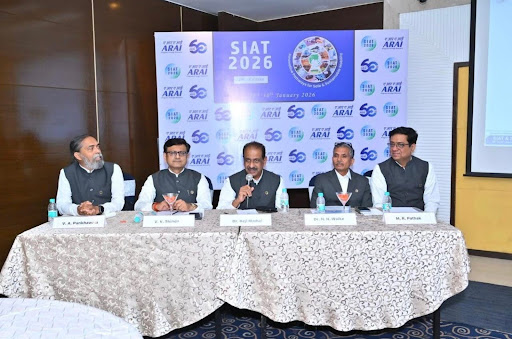
Dr. Reji Mathai, Director of ARAl and Chairman of’ the SIAT 2026 Advisory Committee, highlighted the symposium’s technical depth, with more than 250 presentations covering safety engineering, emission technologies, electrification, hydrogen mobility, materials science and software-defined vehicles.
For the component sector, the discussions underscored several transformation drivers:
- Advanced battery analytics and thermal management
- Lightweight composite and high-strength steel applications
- Lifecycle emission modelling
- Cybersecurity in connected systems
- Al-driven simulation tools for accelerated development
These themes point toward a clear structural shift in the component ecosystem. Electrification is pushing suppliers into engineering domains that require deeper capability, particularly in battery analytics, thermal management and power electronics integration, where efficiency, durability and safety are closely linked. Lightweighting is also evolving beyond material substitution toward integrated structural design using high-strength steels, composites and advanced forming techniques to meet emission and performance targets.
At the same time, increasing electronic content in vehicles is expanding the scope of component responsibility. Cybersecurity and functional safety considerations are becoming integral to connected modules and control systems, while AI-driven simulation tools are shortening development cycles by enabling faster design validation before physical testing. Together, these trends indicate that suppliers are moving beyond conventional manufacturing roles toward early-stage engineering collaboration and system-level integration, with technical depth and validation capability emerging as key competitive differentiators.
SIAT Expo 2026: The Components Ecosystem in Motion
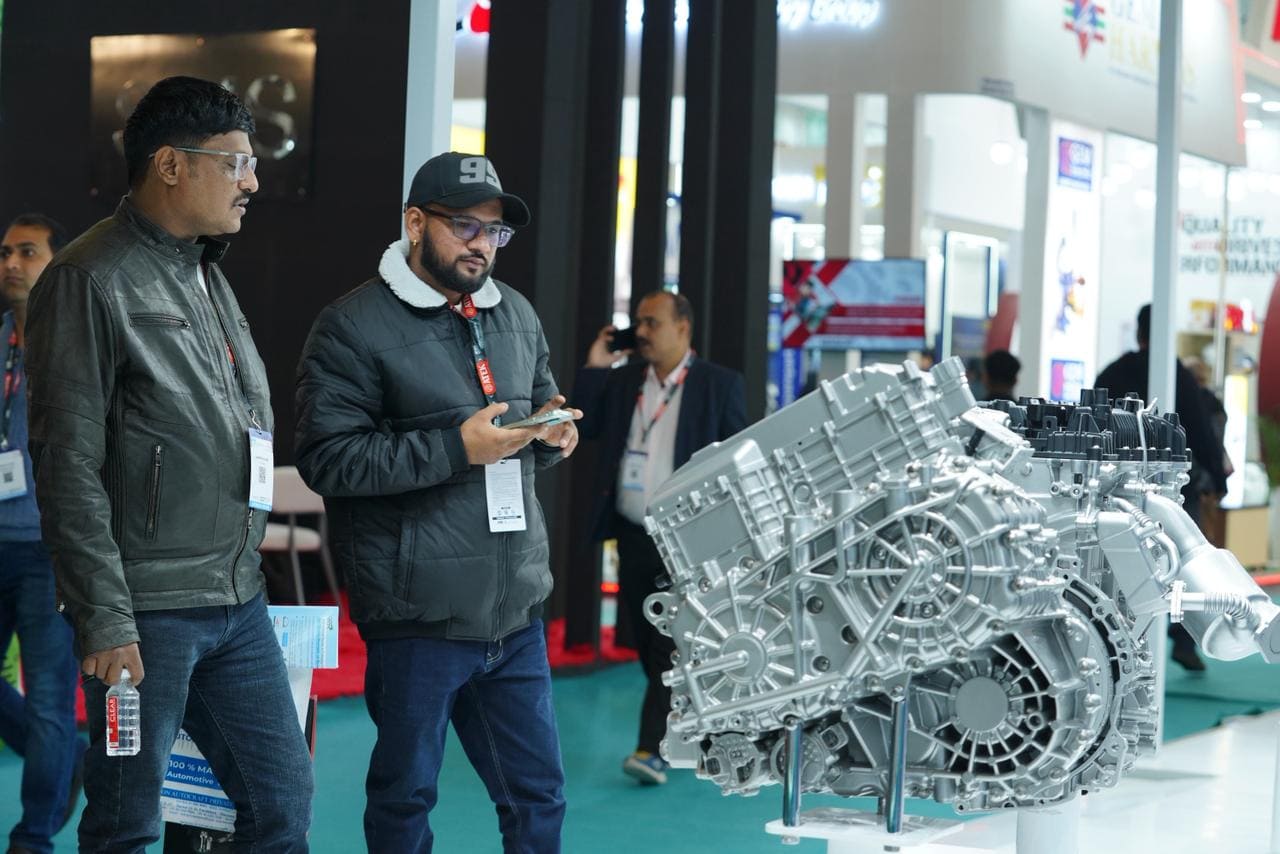
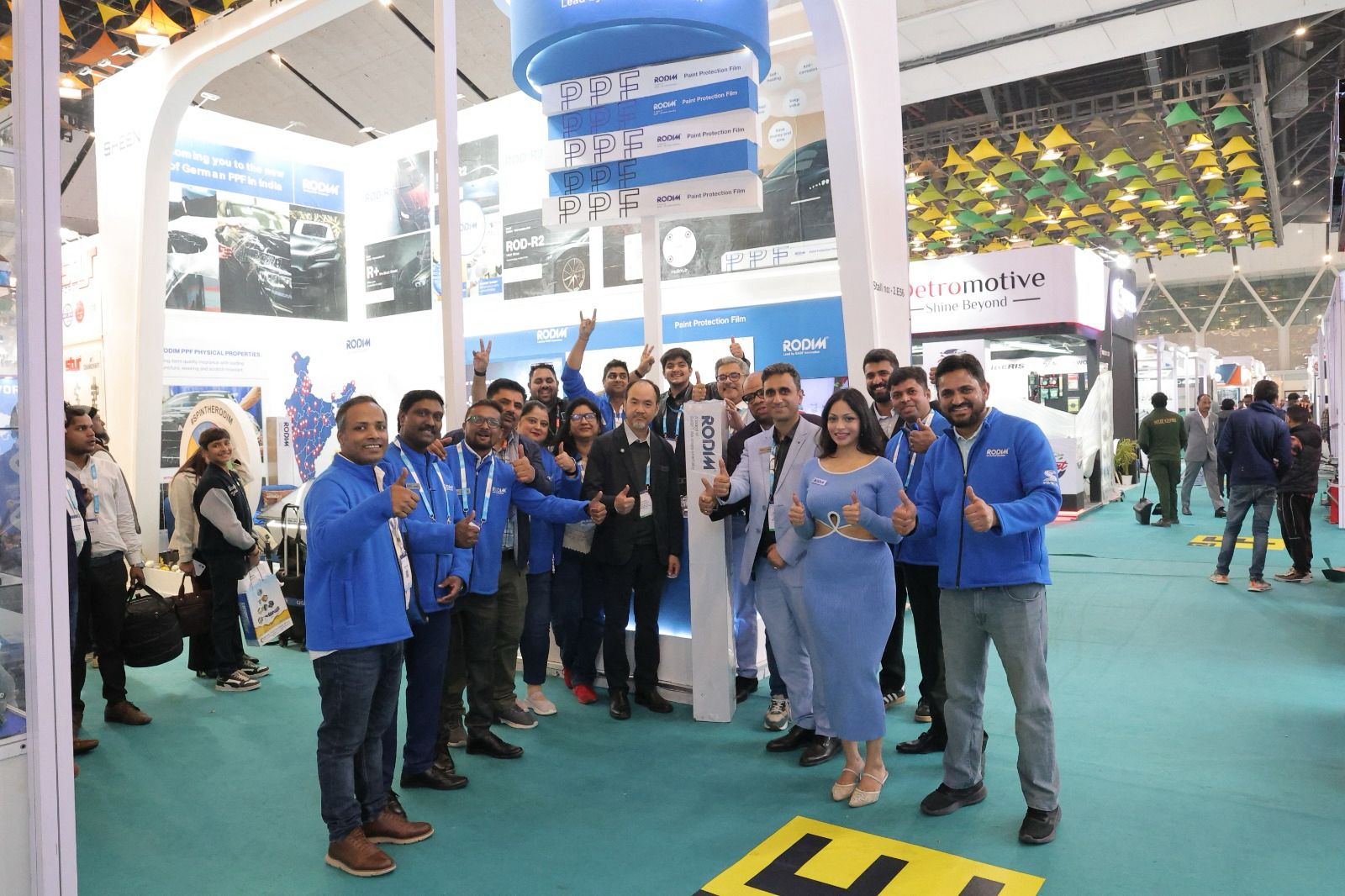
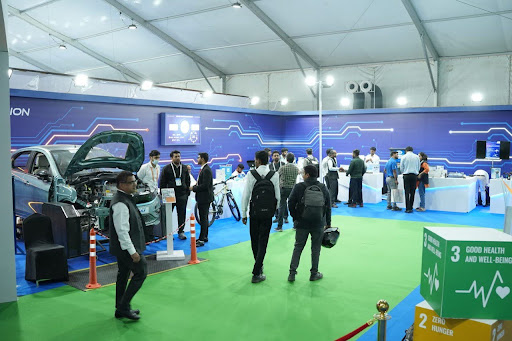
The accompanying SIAT Expo 2026, featuring 275 exhibitors from ten countries, functioned as a live showcase of the evolving component ecosystem.
Tier I, Tier Il and Tier Ill suppliers presented innovations in electric drivetrains, power electronics, braking systems, steering assemblies, ADAS modules, hydrogen components, advanced materials and diagnostic tools. Startups and MSMEs demonstrated niche technologies in sensor fusion, software platforms and lightweight manufacturing solutions. The exhibition floor reinforced a significant shift: vehicle innovation today is highly collaborative. OEMs increasingly rely on specialised suppliers for subsystems, embedded software, validation expertise and digital engineering services. The supplier ecosystem is no longer peripheral-it is central to product differentiation.
The Students’ Poster Presentation Competition added another dimension, connecting academia with industry. For component manufacturers, such engagement represents an opportunity to access fresh research talent in materials engineering, electronics, embedded systems and simulation modelling.The concurrent exposition also underlined how automotive development is becoming increasingly ecosystem-driven. Alongside vehicle manufacturers and component suppliers, the event brought together testing agencies, engineering service providers, simulation tool companies and specialised technology firms working across validation and product development. For the component sector, this convergence is significant. As vehicle technologies become more software-intensive and safety-critical, suppliers are required to collaborate earlier in the development cycle, often engaging with testing and engineering partners even before production tooling begins. Events such as SIAT therefore function not only as technology showcases but as integration platforms where OEMs, suppliers and development partners align on future programmes, capability requirements and validation pathways.
Engineering Outcomes: Innovation at the Architecture Level
Beyond policy and infrastructure, SIAT 2026 highlighted tangible engineering innovation. A notable example was the presentation of a commercial vehicle architecture based on a 245/90R16 tyre configuration enabling a 8.5-tonne GVW truck to operate with a four-tyre layout instead of a dual-rear configuration. From a component perspective, this innovation illustrates how optimisation at the tyre and suspension interface can redefine vehicle architecture. Improved load-bearing capacity, reduced kerb weight and lower rolling resistance directly enhance fuel efficiency and operating economics.
Such advancements depend on close coordination between tyre manufacturers, axle suppliers, chassis designers and regulatory bodies. It is a reminder that breakthrough efficiency often emerges from integrated component-level innovation rather than radical platform redesign.
Safety as a Systems-Level Opportunity
Safety discussions at SIAT 2026 reflected a transition from compliance driven implementation to proactive engineering integration. Regulatory improvements have influenced vehicle design, but accident trends indicate that next-generation safety gains will depend on wider ADAS deployment, predictive simulation and robust validation frameworks.
For component suppliers, this creates growth potential in:
- Radar and camera systems
- Electronic control units
- Airbag and restraint technologies
- Advanced braking systems
- Structural reinforcements using high-strength materials
Importantly, safety technologies are moving beyond premium segments toward broader adoption, expanding addressable market size for suppliers.
Policy, Collaboration and Global Integration
Prasan Firodia, Managing Director of Force Motors and Vice President of ARAl’s Governing Council, acknowledged government support and emphasized alignment between regulatory frameworks and innovation momentum. The collaborative tone at SIAT 2026 reflected the complexity of modern mobility. Policymakers discussed harmonisation with global safety norms. Engineers debated validation methodologies. International delegates explored benchmarking practices. For India’s auto component industry, global integration is both an opportunity and obligation. Compliance with international standards, sustainability reporting, and digital traceability are increasingly prerequisites for export growth.
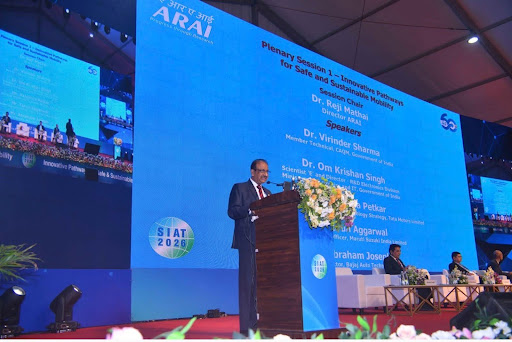
Dr. Reji Mathai, Director of ARAl
A Strategic Inflection Point for Auto Components
What distinguishes SIAT 2026 is its timing. As India advances toward its 2047 development vision and 2070 net-zero commitment, the component industry will play a decisive role in enabling electrification, hydrogen integration, lightweighting and digitalisation. Public transport electrification alone implies exponential growth in motors, battery modules, inverters, wiring harnesses and charging interface components. Hydrogen initiatives demand high-pressure tanks, valves and safety systems.
Intelligent mobility requires sensors, software platforms and connectivity modules.
Component manufacturers must therefore invest in:
- Advanced manufacturing technologies
- Simulation-driven design tools
- Electronics and embedded software capability
- Sustainability-focused material innovation
- Robust testing and validation integratio
Reinforcing a Six-Decade Foundation
As ARAl marks sixty years of service, SIAT 2026 stands as both reflection and projection-reflection on decades of regulatory rigor and technical institution-building, and projection toward a future defined by electrified platforms, software-defined architectures and intelligent safety systems. For the auto component sector, the message is unequivocal. The era of incremental improvement is giving way to systemic transformation. Product leadership now requires digital integration.
Technology leadership requires continuous R&D investment. Sustainability demands measurable lifecycle impact reduction. Safety demands uncompromising engineering standards. Held in Pune the heartland of India’s automotive manufacturing SIAT 2026 signals a decisive milestone. It underscores that India’s mobility transformation will be engineered not only by vehicle manufacturers, but by a robust, technology-driven and globally aligned auto component ecosystem ready to scale innovation with accountability.