

Godrej Motor Solutions is targeting a 40 per cent revenue growth by 2028. Their rapid manufacturing expansion, export-oriented strategy, and collaborative global client solutions position it as a future-ready leader in India’s electric motor industry, writes Upendra Kasbekar.
Godrej Motor Solutions is aiming for Rs. 1000 crore in revenue by FY28. It has set itself an equally ambitious target for export revenue of 20 per cent. The Godrej Enterprise company is positioning itself as a force in both the domestic and global electric motor markets. The strategic expansion in motor manufacturing comes at a time when the Indian government is focused on reducing import dependency in critical components, and global OEMs are looking for reliable partners beyond China.
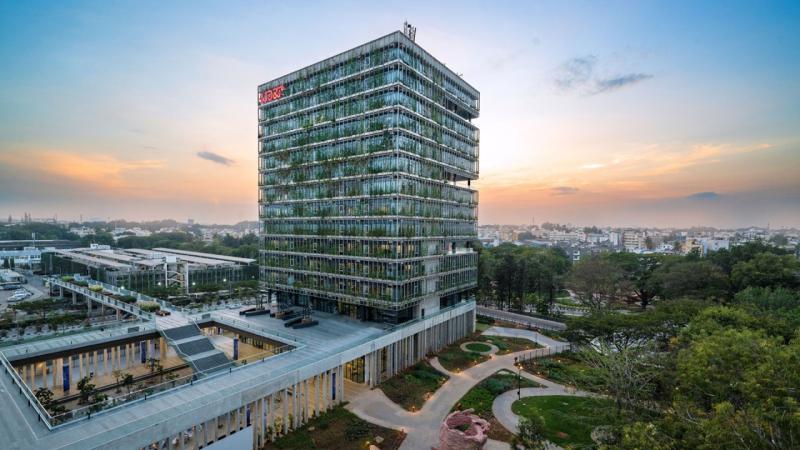
To power this growth, Godrej has earmarked Rs. 40 crore to invest in motor manufacturing infrastructure, product innovation, and sustainable practices over the next three years. The investments are being channelled into the company’s flagship 36-acre manufacturing campus in Shindewadi, Pune, home to the group’s Motor Solutions business. The facility is undergoing rapid expansion to support upcoming product lines for EVs, automation, and precision engineering segments.
Capability Building
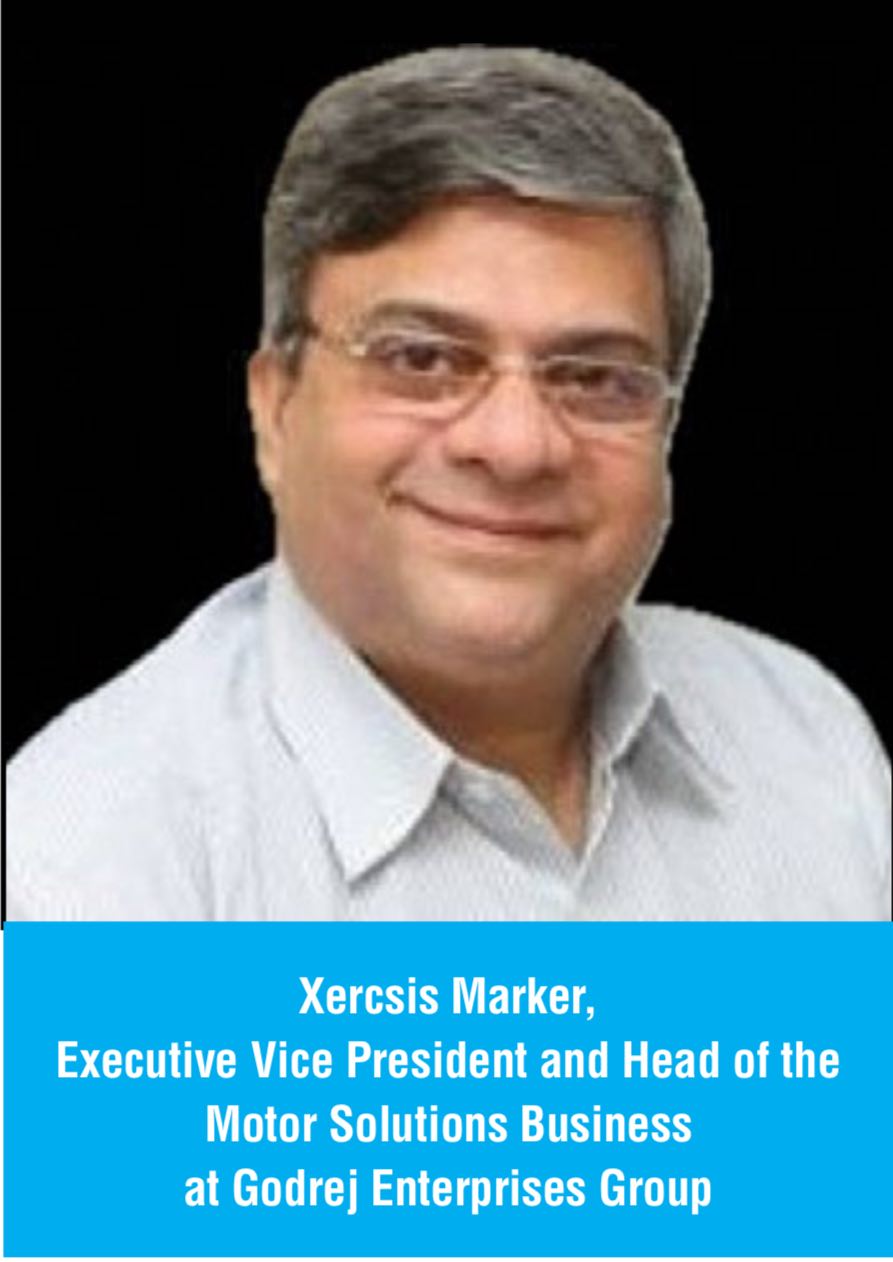
The Indian market is witnessing a shift in demand towards high-performance, energy-efficient motors used in e-mobility, HVAC, pumps, and actuators. As OEMs build next-generation electric vehicles and machinery, the need for compact, lightweight, and magnet-free motors is on the rise, as per Xercsis Marker, Executive Vice President and Head of the Motor Solutions Business at Godrej Enterprises Group. “The goal is not just scale, it is sustainable, technologically-sound growth,” Marker stated. “Hinting at going beyond rare earth metals at a time when China has restricted its exports, he pointed to the continued investment in technology and capacity to serve the identified growth sectors. The company is also advancing innovations in motor design, which in turn will aid the lower dependence on rare-earth materials.”
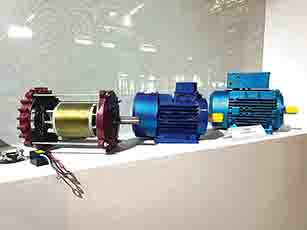
Among the new initiatives is a dedicated motor assembly line tailored to electric vehicles, particularly for off-road applications. With clients in the US and Europe already on board, Godrej is preparing to scale its exports significantly. The company is currently developing a motor-controller combination for a leading German industrial brand, along with new traction motors for American customers. These efforts are underpinned by deep technical capabilities and a legacy of high-quality engineering.
Export Edge
Godrej’s growing traction in global markets is best reflected in its collaboration-led approach. For instance, a long-term American client in the HVAC segment recently transitioned to Godrej’s hermetic motors for its next-gen inverter-based compressors. The shift came after successful field testing under extreme humidity and voltage fluctuation conditions, where the motors delivered 15 per cent higher energy efficiency compared to previous imports, as per claims.
In another case, a European automation company opted for Godrej’s actuator motors in robotic arms deployed in semiconductor fabs. Here, Godrej’s ability to meet cleanroom-grade material standards and zero-backlash requirements played a crucial role in winning the deal. These case-specific innovations not only underline technical prowess but also showcase Godrej’s growing adaptability to international compliance and performance benchmarks.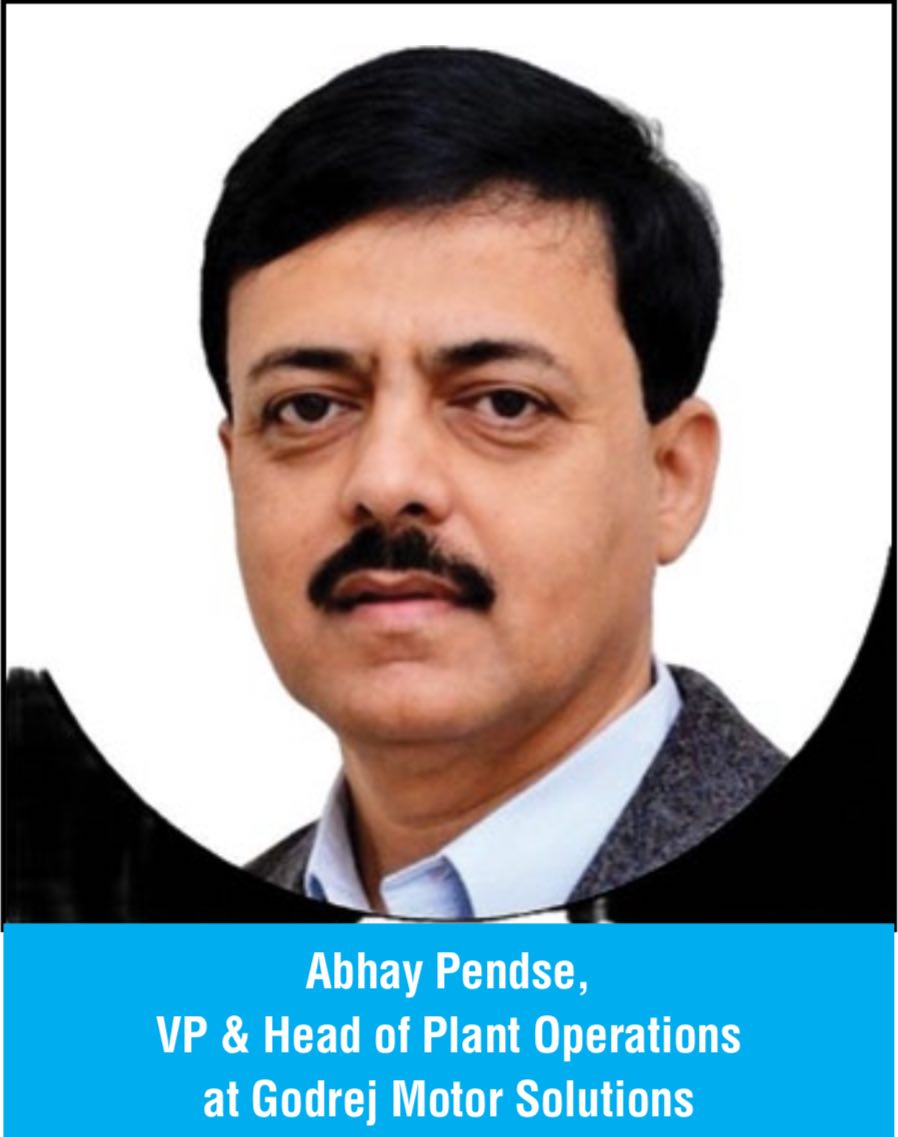 The most notable example rem
 ains its co-development of a high-efficiency traction motor with a German industrial brand. Though the brand name remains under NDA, this engagement is significant because the motor had to meet both EU green design directives and long-life criteria under high-vibration operating environments. These use cases reinforce how Godrej is not merely exporting parts; it is exporting solutions.
Lamination Punching Precision
A key pillar of this transformation is the adoption of high-speed lamination punching technology. The Shindewadi plant will have the company install an advanced AIDA press line sourced from Japan that enables the production of ultra-thin laminations. These laminations are critical for manufacturing high-speed motors used in EVs, aerospace systems, and precision industrial machines. The process involves operating the press at over 250 strokes per minute, requiring tight tolerance control, lubrication, and temperature regulation. Scrap rates in lamination punching can touch 30 per cent, but Godrej is leveraging real-time data analytics and predictive maintenance to control tool wear, optimise yield, and improve uptime.
The company manages over 70 lamination profiles, which brings its own set of challenges in tooling and inventory management. Each profile requires precise tooling setups and rapid changeovers, which can disrupt production time lines. However, by digitising operations and integrating sensor-based fault alerts, Godrej has reduced tool changeover time and improved asset utilisation. From the operator interface to the tool shop back end, every stage of the lamination process is monitored in real-time.
Post-Punching Operations
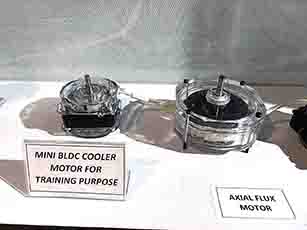 The technical focus doesn’t end at punching. Post-punching operations include advanced annealing and heat treatment. These processes are crucial in aligning the grains of the magnetic material to achieve maximum energy efficiency. For this, laminations are passed through furnaces operating at close to 800 degrees Celsius in an inert environment rich in hydrogen and nitrogen. The heat treatment furnaces used at Godrej are equipped with automated temperature and gas flow controls to ensure consistency.
These state-of-the-art systems enable the plant to deliver over six million motors annually, covering more than 300 SKUs tailored to customer specifications. The product portfolio ranges from hermetic motors used in compressors and HVAC applications to high-performance propulsion motors for EVs and steering actuators. Godrej already commands a 60 per cent market share in hermetic motors within India, and is now leveraging its position to expand globally.
Market Advantage Analysis
While Indian motor makers are catching up in volume, very few can match Godrej in vertical integration and process discipline, as per claims. With a 60 per cent market share in hermetic motors in India, Godrej has set a benchmark for reliability and scale. Unlike smaller competitors dependent on out sourced stamping or imported tooling, Godrej controls the entire value chain from tool design to end-of-line testing.
This enables faster prototyping, tighter quality control, and better cost optimisation. On a global scale, this places Godrej in a competitive spot against mid-tier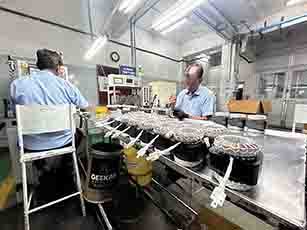 European or Korean motor suppliers, particularly in HVAC and emerging e-mobility platforms. Moreover, its green manufacturing credentials, like water positivity and zero waste to landfill, give it a clear edge with environmentally conscious customers, especially in Europe and Japan. By embedding sustainability, co-development, and automation into its DNA, Godrej isn’t chasing global business just by price; it’s doing it by delivering lasting value.
Digitising Plant Operations
The company is also focused on digital transformation. An integrated Manufacturing Execution System (MES) allows live monitoring of production batches, operator efficiency, and maintenance schedules. Fault alerts are displayed on shopfloor dashboards and sent to plant managers via mobile notifications. These systems help reduce downtime, increase first-pass yield, and bring transparency to operations.
Sustainable Manufacturing
Abhay Pendse, Head of Plant Operations at Godrej Motor Solutions, highlights the company’s broader vision. “Our commitment to zero waste to landfill, energy-efficient processes, and a water-positive ecosystem makes us proud contributors to India’s green manufacturing journey, he said.” The Shindewadi facility is a certified IGBC Platinum and GreenCo Platinum Plus plant. It operates with a zero waste to landfill policy, recycles 80 per cent of its packaging material, and maintains a water-positive footprint. The company’s green procurement policy ensures that most vendors are located within a 100-kilometre radius, thus reducing logistics emissions and supporting local economies.
Rare Earth Alternatives
These efforts go hand in hand with the company’s work on rare-earth-free motors. With global attention shifting to sustainability and supply chain resilience, motor manufacturers are experimenting with Switched Reluctance Motors (SRM) and Synchronous Reluctance Motors (SynRM). These motor types offer good efficiency and performance without relying on expensive and geopolitically sensitive rare-earth magnets. Godrej’s R&D team is actively developing prototypes and working with customers to evaluate commercial use-cases.
Supporting this R&D effort is a new product development lab equipped with advanced software for electromagnetic simulation, thermal mapping, and acoustic performance testing. The lab enables engineers to fine-tune designs, reduce prototyping cycles, and improve design-to-manufacturing efficiency. AI-driven analytic are being used to predict failure patterns, simulate loads, and optimise coil winding patterns.
Automation and Testing
In terms of manufacturing excellence, Godrej has also invested in automated winding and stator assembly systems. These systems use vision-guided robots and torque monitoring to maintain coil tension and placement accuracy. The winding quality is critical in ensuring low noise, reduced power loss, and longer life. Once assembled, the motors undergo end-of-line testing using automated rigs that simulate real-world operating conditions.
Traceability is another area where the company stands out. Every motor produced is tagged with a unique identification code that links back to its components, tooling, operators, and test results. This allows full backwards integration in case of any performance issues in the field. Compliance with global standards such as CE, UL, and RoHS is ensured through routine audits and robust documentation practices.
Tooling and Training
There is also a strategic move towards internalising tool development. High-precision stamping tools are often the bottleneck in lamination manufacturing, and importing them is both expensive and time-consuming. Godrej’s internal tool shop is now capable of producing multi-cavity progressive dies with micron-level accuracy, helping reduce lead times and tooling costs. The company is also exploring 3D printing for rapid prototyping and small-batch component manufacturing.
Training is viewed not as a compliance task, but as a strategic enabler at Godrej. On average, each operator receives more than 40 hours of structured training annually, covering everything from machine safety to digital dashboards. New joiners go through a foundational skill matrix that includes hands-on learning, simulations, and assessments.
For team leaders and engineering staff, the company runs a continuous improvement program focusing on problem-solving techniques, Six Sigma, and Industry 4.0 modules. The HR team collaborates with external consultants to keep training content updated with emerging technologies and standards.
From a diversity and inclusion lens, Godrej has begun initiatives to increase female workforce participation on shop floors, especially in inspection and quality control roles. Internal mentorship programs and soft-skill development sessions aim to build a more future-ready workforce equally agile with machines and with ideas.
Expanding Sector Horizons
India’s growing role in global supply chains makes Godrej’s journey especially relevant. As the global electric motor market races past the USD 200 billion mark, Indian companies that invest in advanced technology and quality systems will be well-positioned to lead. Godrej’s emphasis on co-development with global clients, investment in automation, and focus on sustainability puts it in a strong position to capture a significant share of this opportunity.
Looking ahead, Godrej plans to diversify further into aerospace and defence-grade motors. These applications require extremely tight tolerances, radiation resistance, and long-term performance under harsh conditions. The company is in early-stage talks with select OEMs to build capability in this niche but high-value segment. ACI




Leave a Reply