

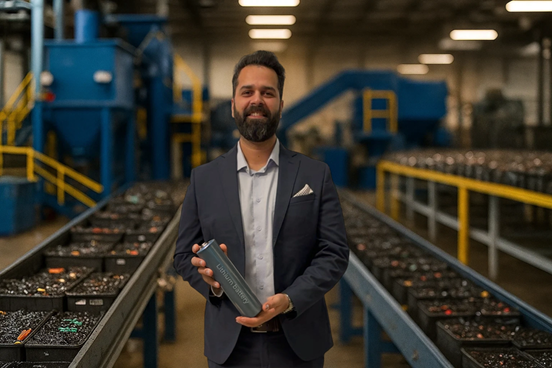
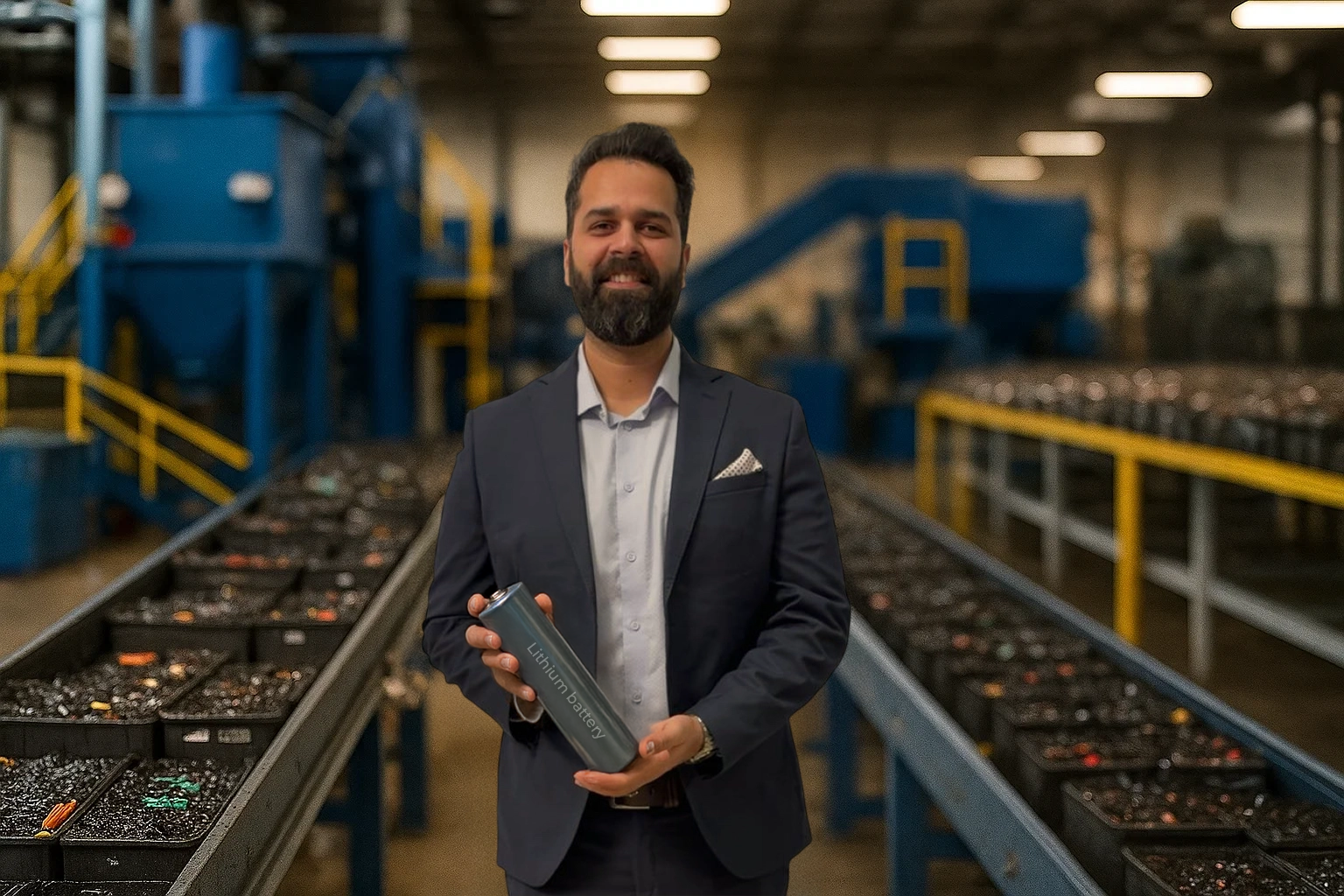
In the second part of the conversation with Harry Bajaj, CEO of Mobec Innovations, he opens up about the company’s journey as a bootstrapped startup, its growth trajectory, and the role of technology and AI in shaping its future, with Richa Tyagi.
Q. EV infrastructure is a capital-intensive play. What have been your biggest challenges, funding, regulation, tech development, and how did you overcome them? How did you overcome them?
We are a bootstrap company. I believe we’ve never received external funding, nor have we actively sought it. We’ve focused on bootstrapping and pushing ourselves to grow organically as a company, and that’s been working well for us so far. Of course, for any company to scale further, funding does become important, and we’ll see how things progress on that front.
On the technology side, we are very strong. I’ve personally been involved in this category of technology for as long as I can remember. We’ve implemented several internal technology solutions in our recycling facility, as well as integrated them into our products. We’ve also developed enterprise-level technology completely in-house, which has been a major strength for us.
As for government policies, I believe challenges usually arise for those who don’t fully understand the regulations or don’t know how to execute them properly. We’re well-versed in managing documentation and compliance requirements. As long as we continue doing things the right way, we don’t see any major challenges on that front.
Q.You wear multiple hats, founder, investor, CSR leader. How do you manage your time and stay innovative?
I really get bored if I do just one thing. Whatever I do has to either make sense or make money. The things I’m involved in are either financially rewarding or meaningful to me, that’s a no-brainer. If I’m not doing something I enjoy or something that creates an impact, I’ll simply lose interest. It’s that simple for me.
Q. Talking about CSR activities, what are you doing on these fronts?
Mobec has a CSR initiative under its own trust called Samsara India. It’s positioned quite differently, focusing on two key groups, the younger generation and the generation that built our society, the elderly.
The idea behind Samsara India is to make senior citizens feel valued and important. We have a unique concept where we plan to take a few elderly individuals, especially those living alone, on short vacations to our facility for a month or two. The goal is to bring joy to their lives, because they, too, deserve a break and some happiness. This is one of the ways we want to give back and support the elderly community.
On the other side, for the younger generation, we’re launching an acceleration program. It’s open to students from 10th grade up to the second or third year of college. We’re setting up an innovation lab equipped with next-generation technology and robotics, where they can freely experiment, build, and even break things as part of learning. I personally want to encourage them to explore and create, to find their path and make something meaningful out of their lives. We believe that if you empower the youth, they’ll create a better future for all of us, and that’s the core idea behind what we’re doing.
Q. How did the company perform in Q2 and Q3 of FY25 compared to your expectations? What were the biggest growth drivers or milestones in the last two quarters?
Compared to last year, this financial year looks very promising. By the time we close in March next year, I believe we’ll achieve at least seven times the revenue we did last year. That’s the kind of growth we’re seeing, both in terms of revenue, expansion, and processing capabilities. As for challenges, I’d say they come our way almost every day, sometimes even twice a day! Some are completely new, while others are familiar and manageable. I wouldn’t point out any single, major challenge from last year; it’s more of a continuous learning process. Whenever an issue arises, we either tackle it head-on or refer back to our experience and past learnings to resolve it. At the end of the day, if there are no challenges, there’s no business, challenges are what keep us evolving and moving forward.
Q. In what ways do you think artificial intelligence will influence your business, and how are you currently utilising it?
When it comes to artificial intelligence, there can be multiple implications and use cases. However, in our category, it’s primarily about data. For instance, in off-grid and big-grid solutions, AI-driven analytics help optimise power consumption and output, evaluate performance, and even track earnings or expenditures over the year. So AI is already playing a valuable role there. In our R&D, AI also supports our engineers by assisting in various research activities and data-driven experiments. At this stage, AI acts more as an enabler for us rather than a replacement.
The kind of products we build still require human expertise and intervention. I don’t believe AI is going to take over Mobec as a company. It might automate time-consuming or calculation-based tasks, but in our line of work, I see AI purely as a benefit, a tool that enhances what we do, not something that replaces us.
Q. Where do you see yourself in next 5 years?
When it comes to global expansion and new technologies, that’s definitely on the way. We’re planning to expand further into the African and Middle Eastern regions. My goal is to ensure that what we’re building truly makes sense and creates real value. If we get that right, everything else will naturally fall into place. This company is not just about me, it’s built by an incredible team, an entire army of people who are equally passionate and dedicated. They have their own aspirations, and I want to stand with them to help the company reach a point where it can run and grow independently in the coming years.






Leave a Reply