


Driving Towards A Greener Future: Ashok Leyland’s Pioneering Journey In Green Mobility And Sustainability
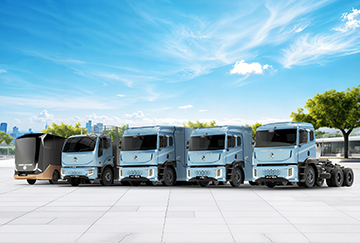
In an era where sustainability is no longer optional but a necessity, Ashok Leyland has emerged as a pioneering force in the shift toward green mobility and clean energy solutions.
Over the past few decades, the company has consistently demonstrated a commitment to reducing the carbon footprint of commercial transportation, both in India and globally. From introducing alternative fuel vehicles to driving innovation in clean energy technologies, Ashok Leyland’s journey reflects its dedication to a sustainable future for the automotive and logistics sectors.
Green Mobility Milestones: Leading The Charge In Sustainable Transport
Ashok Leyland has been at the forefront of adopting alternative fuels since the 1990s, making strides in both technology and environmental responsibility. The company’s innovative approach began with the introduction of Compressed Natural Gas (CNG) buses in India’s urban fleets, particularly in major cities like Delhi and Mumbai, where pollution was reaching critical levels. By partnering with government transport undertakings and international collaborators, Ashok Leyland played a crucial role in developing CNG-compatible powertrains and fuel systems, laying the groundwork for its future clean fuel initiatives.
Building on its early success with CNG, Ashok Leyland expanded its portfolio by venturing into Liquefied Natural Gas (LNG) vehicles, particularly heavy-duty trucks, which offered improved logistical and efficiency benefits. The company’s commitment to alternative fuels continued into the 2010s, with the launch of electric buses showcased at events like the Auto Expo. These electric buses were designed to provide last-mile connectivity with zero tailpipe emissions, making them a cleaner alternative for public transport. With the introduction of the Switch EiV series under Switch Mobility, Ashok Leyland set a new benchmark in electric mobility.
In the early 2020s, the company extended its vision to electric trucks, offering models ranging from 14 to 55 tonne Gross Vehicle Weight (GVW). Ashok Leyland’s electric trucks save approximately 40-50 tonnes of CO2 emissions per year, thanks to their zero-tailpipe emissions. Customers have also found these electric vehicles to be highly economical, with their superior technology—such as PMPS motors, Li-ion battery systems, and dedicated cooling mechanisms—driving down operational costs.
To support its green mobility initiatives, Ashok Leyland has also made significant investments in battery technology, fuel cell research, and charging infrastructure. More recently, Ashok Leyland has also been investing in hydrogen-powered trucks and buses, including hydrogen internal combustion engine (H2-ICE) platforms. This technology promises the benefits of lower emissions and high performance, especially for long-haul truck applications. Notably, the hydrogen-powered solutions come with lower capital expenditure for customers while being able to operate with grey hydrogen.
The company recently showcased its first batch of hydrogen fuel cell-powered buses at the Maha Kumbh Mela in 2025, underlining its role as a technology leader in the green mobility space. A notable feature of Ashok Leyland’s strategy is its development of fuel-agnostic, modular vehicle architectures. These platforms are versatile and can support a variety of fuel types—diesel, CNG, LNG, electric, and hydrogen—ensuring that the company’s vehicles remain future-ready and adaptable to evolving fuel technologies.
Impact On India’s Green Logistics: Transforming Urban Mobility And Beyond
Ashok Leyland’s commitment to green mobility goes beyond just vehicle production. The company has actively collaborated with government agencies, state transport undertakings, and international technology partners to pilot and commercialise alternative fuel solutions. By partnering with organisations such as CoZET, RMI, and NHEV, Ashok Leyland has played a pivotal role in shaping India’s green logistics landscape. Its efforts contribute to the government’s broader Go-Green initiatives and support the transition to clean energy in the logistics sector.
The impact of Ashok Leyland’s green solutions is already visible, particularly in urban areas like Delhi, where the introduction of CNG buses in the 1990s significantly reduced Particulate Matter (PM) emissions. Now, the company’s electric, LNG, and hydrogen-powered vehicles are beginning to make a similar impact, heralding a cleaner and more sustainable future for Indian cities.
Furthermore, Ashok Leyland’s alternate fuel vehicles have played an instrumental role in India’s broader transition to clean energy, supporting the government’s vision of an Atmanirbhar Bharat and a Viksit Bharat (Developed India). With every step, Ashok Leyland is helping shape a future that prioritises both progress and sustainability.
Sustainability Initiatives: Ashok Leyland’s Comprehensive Approach To Environmental Responsibility
Ashok Leyland’s commitment to sustainability extends beyond its vehicle offerings. The company has embedded Environmental, Social, and Governance (ESG) principles into its core strategy, setting ambitious goals such as achieving carbon-neutral operations by 2030 and net-zero emissions by 2048.
A significant portion of Ashok Leyland’s emissions—nearly 74 per cent—come from Scope 2. To address this, Ashok Leyland has made considerable strides in using renewable energy. In FY24, 61 per cent of the electricity used at its facilities came from renewable sources. The installed solar park capacity was 75 MW, wind energy was 63 MW, and Solar rooftop was 10.14 MW. In the year FY25, the company has initiated projects by way of adding 12.4 MW solar park, 6 MW ground mounted solar and nearly 6.6 MW of solar rooftop. This has enhanced the green energy generation to 69 per cent (FY25) from the previous level of 61 per cent.
In terms of water management, Ashok Leyland has set a target to be 80 per cent self-reliant in water consumption by promoting the use of rainwater and treated water. This initiative reduces the dependency on groundwater, making it more sustainable in the long term. On the waste management front, Ashok Leyland has been recognised for its efforts in ensuring zero waste to landfills. The company has implemented systems to recycle waste, use it as alternative fuel in cement industries, or repurpose it as raw materials.
These initiatives have earned Ashok Leyland several accolades, including a Platinum award by M/s CII SR for its EHS practices and recognition for best waste management initiatives and renewable power generation by various forums. Ashok Leyland’s sustainability efforts have also extended to its supply chain. Nearly 97 of its suppliers, representing 80 per cent of the buy value, are aligned with the company’s ESG principles. Ashok Leyland has initiated awareness programs for suppliers, fostering collaboration on best sustainability practices.
Shaping A Sustainable Future In Green Mobility
Ashok Leyland’s green mobility journey is a testament to its foresight, innovation, and commitment to a sustainable future. From the early days of CNG buses to the cutting-edge hydrogen-powered vehicles of today, the company has consistently led the way in alternative fuel technologies. Beyond vehicles, Ashok Leyland’s robust sustainability initiatives, which encompass energy use, water management, waste disposal, and supply chain collaboration, reinforce its position as a leader in corporate sustainability.
As India and the world move toward a greener, more sustainable future, Ashok Leyland is not just a participant but a key enabler of the green mobility revolution. With its continued focus on clean energy solutions, the company is poised to play a critical role in shaping the next generation of sustainable transportation, ensuring that innovation and environmental stewardship go hand in hand. ACI






Leave a Reply