


Real-world validation puts integrated ADAS safety systems into focus for fleets, writes Sahil Kesari & Niharika Singh
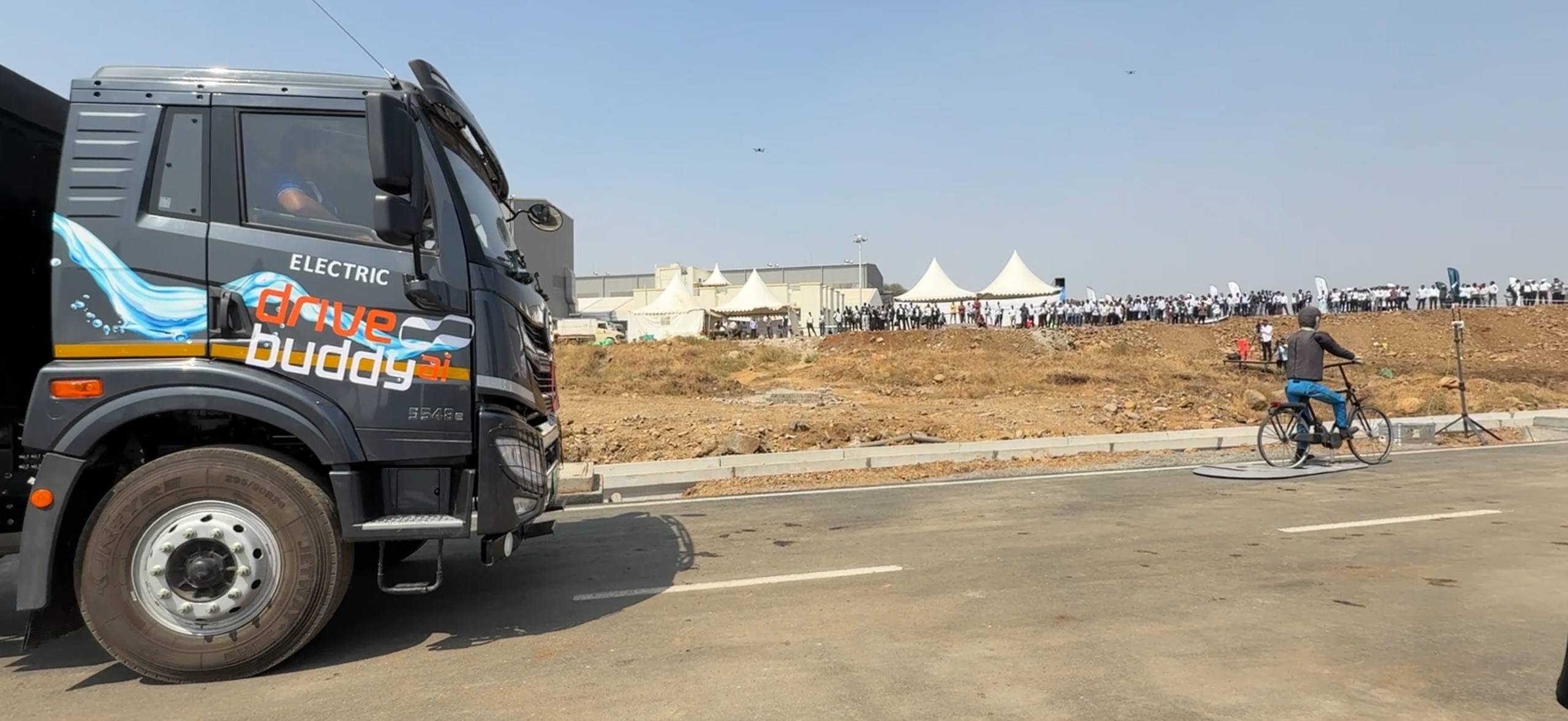
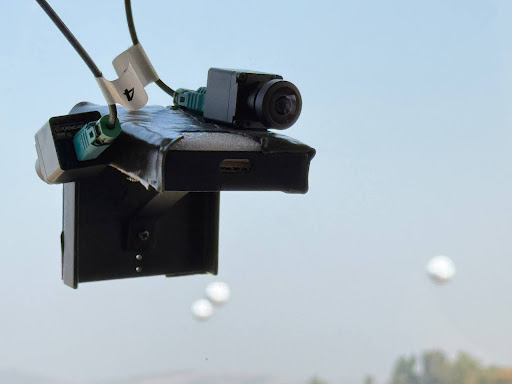
At ARAI’s ADAS test track in Pune, the demonstration focused on how safety systems perform when subjected to real-world commercial vehicle conditions rather than controlled feature showcases. Multiple scenarios were executed on-track to reflect both regulatory requirements and operational risk situations that fleets encounter daily. Within this environment, DrivebuddyAI demonstrated an integrated ADAS system deployed on a commercial vehicle, combining both in-cabin and external sensing into a single working architecture. Driver-facing camera continuously tracked fatigue, distraction and seatbelt usage, while external cameras and sensors monitored surrounding movement, distance and proximity risks. As the vehicle operated through the test environment, the system simultaneously tracked both driver condition and external surroundings in real time, with driver monitoring aligned to AIS-184, blind spot detection corresponding to AIS-186, and pedestrian detection during moving-off scenarios reflecting AIS-187 requirements. Driver monitoring functions captured attention loss and distraction in real time, while blind spot detection was validated through simulated cyclist movement around the vehicle. Pedestrian detection during moving-off conditions was also demonstrated in close-range scenarios, alongside forward collision warnings triggered through dynamic distance changes. What defined the demonstration was not individual features, but the ability of all these functions to operate together on a single platform. The system processed multiple inputs simultaneously, creating a unified response layer rather than fragmented alerts, closer to how such systems would function in actual fleet deployment.
Detection to Behavioural Correction
Beyond the on-track scenarios, the demonstration reflected a shift in how ADAS systems are beginning to influence driver behaviour in commercial operations. In the case of DrivebuddyAI’s system, this shift is visible in how behavioural inputs are treated as a core part of safety logic rather than a secondary layer.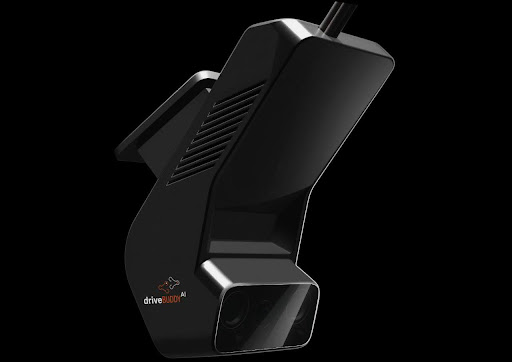
Instead of functioning purely as alert mechanisms, such systems are now being evaluated based on how effectively they can drive behavioural change over time. Early deployment patterns indicate that drivers begin to respond more quickly to alerts, reducing the need for repeated intervention. The system’s role, therefore, extends beyond warning to conditioning. Distraction and fatigue, two of the most persistent risks in commercial Vehicles driving, are being addressed not only at the point of detection but through continuous monitoring that shapes response patterns. The system identifies behavioural triggers early and intervenes in a way that gradually builds driver awareness, rather than reacting only at critical thresholds. This shift positions ADAS as a behavioural layer within fleet operations, where the objective is not just to detect risk, but to reduce its recurrence.
Built Around Indian Driving Realities
DrivebuddyAI’s system, as demonstrated at the track, is built specifically around Indian operating conditions rather than adapted from global ADAS models. The architecture reflects the realities of mixed traffic, inconsistent lane behaviour and close-range interaction that define everyday commercial vehicle movement. In such environments, detection alone is not sufficient. The system is calibrated to interpret context, timing and behavioural patterns, responding to how vehicles and drivers actually interact on Indian roads rather than idealised scenarios. This approach was evident during the demonstration, where safety functions operated within dense and unpredictable conditions without relying on structured road behaviour. Localisation, in this case, is not an additional layer but the basis of system design, ensuring that performance remains consistent under real operating conditions.
Linking Vehicle Intelligence to Fleet Operations
 Another dimension highlighted during the demonstration was the connection between in-vehicle intelligence and fleet-level visibility. The system extends beyond driver alerts to provide a centralised view of behaviour and risk events across multiple vehicles. Instead of continuous manual monitoring, operators can identify specific vehicles requiring attention based on real-time inputs. This targeted visibility enables timely intervention without increasing operational complexity. In this sense, safety is not confined to the vehicle, but integrated into fleet-level decision-making where behaviour, performance and risk are continuously tracked.
System-Level Validation
What the demonstration establishes is a clearer direction for how such systems are being positioned within the market. By executing multiple AIS-aligned safety functions within a single, continuously operating system, the focus shifts toward practical usability rather than isolated capability. Instead of being evaluated as individual features, systems are now being assessed on how reliably they operate under combined risk conditions, where driver behaviour and external environment intersect in real time. This is where the relevance of such demonstrations lies, not in showcasing capability, but in validating consistency. The outcome is less about technological advancement in isolation and more about readiness. Systems that can operate within these conditions without fragmentation are closer to deployment reality than those still confined to controlled validation stages.
Q n A Part
Q: What are the key challenges in building ADAS systems for India?
- India has a very complex traffic environment. Earlier, roads were slower and drivers were more engaged. Now, with better infrastructure, roads are smoother and sometimes empty for long stretches, which actually increases risk because fatigue sets in faster. From 2020 to 2024, government data shows that road fatalities have increased, and that reflects this shift. Speeds have gone up, but safety behaviour hasn’t evolved at the same pace. That is where technology becomes important. At the same time, Indian requirements are very different from global markets. A lot of companies are importing or white-labelling ADAS systems, but those don’t work effectively here. The technology has to be built and validated specifically for Indian conditions.
Q: How does driver behaviour change once your system is deployed?
- Driver behaviour is where we are seeing the biggest impact. Initially, a driver would need around 20–25 alerts before reacting properly. Over time, that comes down to around 5–7 alerts, which shows a clear psychological improvement. We are also seeing around 60–65% improvement in maintaining distance and reacting to alerts. When alerts come in, drivers start slowing down immediately. The system is designed to be sensitive enough so that drivers respond early rather than reaching critical levels.
Q: Do you have real data from fleet deployments?
- Yes, we work with client-level data. For example, with a fleet of around 500 vehicles where the system has been deployed for about a year, we track how drivers respond to alerts and how behaviour changes over time. One clear impact is on mobile phone usage. We have seen around a 71% reduction in phone usage while driving. Earlier, drivers would continue driving even after multiple alerts for long durations. Now, most drivers respond within a shorter time frame.
Q: What kind of response are you seeing for fatigue and drowsiness alerts?
- Around 79% of drivers stop the vehicle when they receive a Level 2 drowsiness alert. The idea is to intervene before it reaches a critical stage. Also, there is a misconception that drowsiness happens only at night. That’s not true. We are seeing cases even during the day, drivers showing fatigue within 15–20 minutes of driving, even around noon. Driver shortage is also contributing to longer working hours.
Q: What are the biggest barriers to adoption today?
- There are two major factors, price sensitivity and trust. The market has become competitive, and customers are very cost-conscious. At the same time, drivers and operators are still building trust in these systems. Even today, many drivers don’t fully use features like cruise control, so adoption depends on how reliable and practical the system feels in real operations.
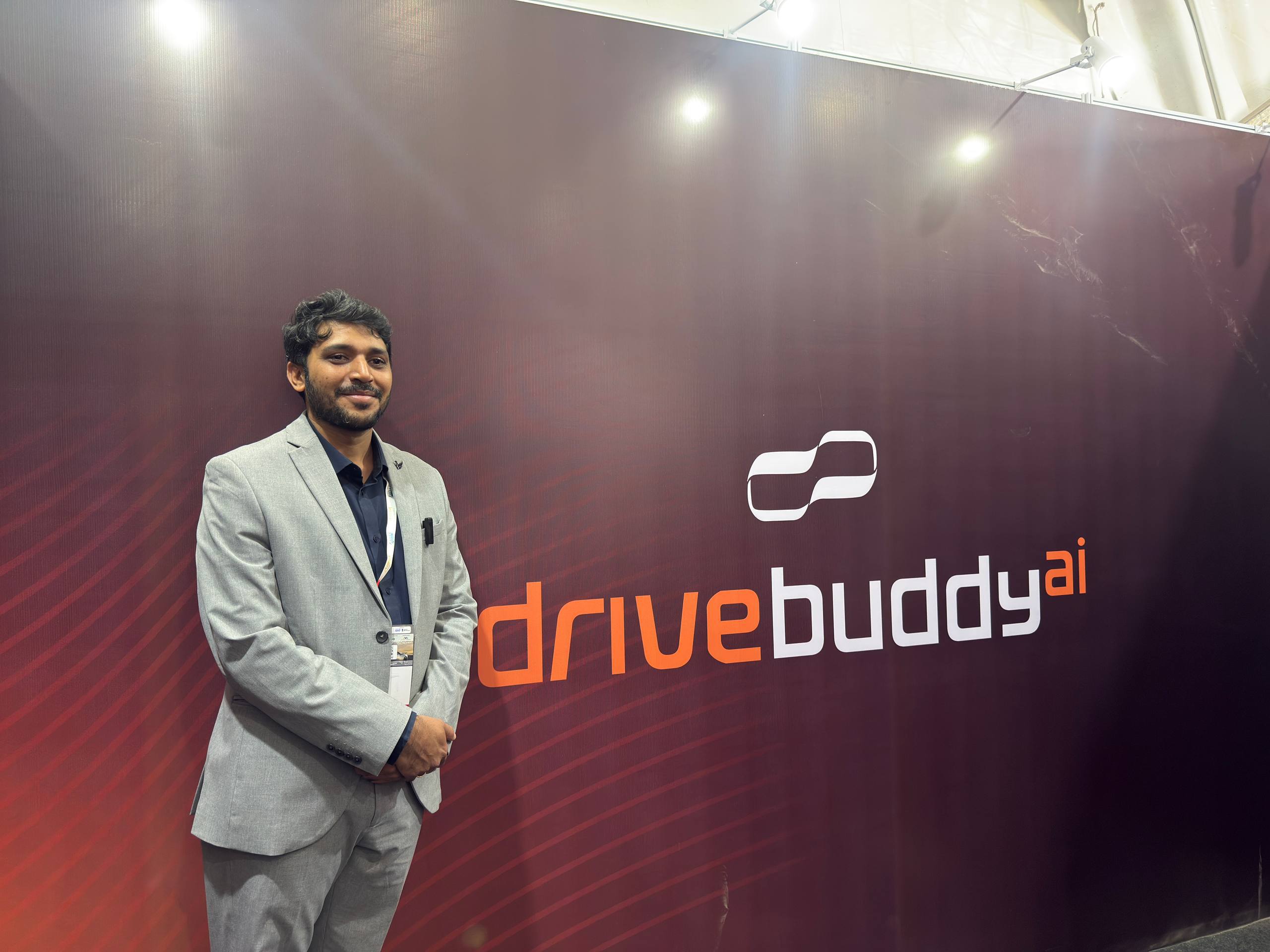
Nisarg Pandya, CEO & Founder, DrivebuddyAI,






Leave a Reply