


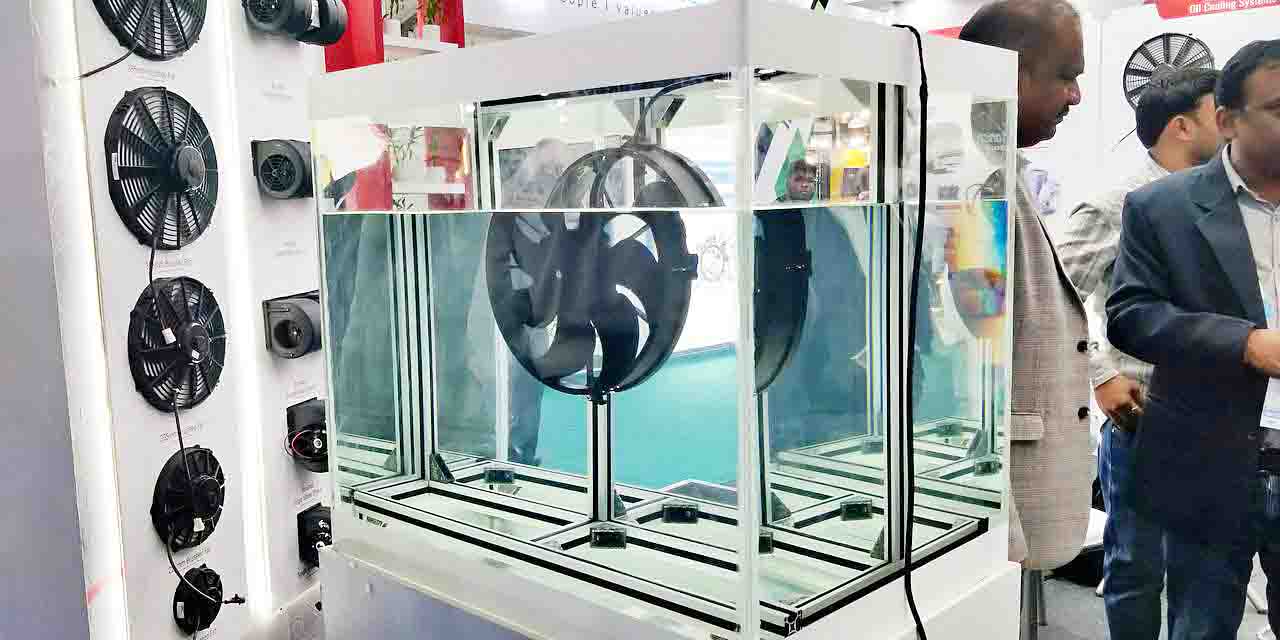
Brushless fans, integrated diagnostics, and intelligent thermal management engineered into products ensure optimal battery efficiency, power electronics protection, and cabin comfort for next-generation vehicles, writes Upendra Kasbekar.
In Electric Vehicles (EVs), thermal management is a derivative of battery efficiency, power electronics protection, cabin comfort, and intelligent energy management. Italian thermal solutions specialist SPAL Automotive, through its Indian arm SPAL India Pvt. Ltd., is making bold strides to meet these emerging demands. At the Auto Components Show 2025, SPAL India made a notable presence by showcasing its advanced range of electric fans and blowers.Ninan Philip, Director (Sales & Marketing), SPAL Automotive, has given deeper insights into the company’s roadmap and how it plans to shape India’s EV and mobility landscape.
EVs Bring A New Cooling Equation
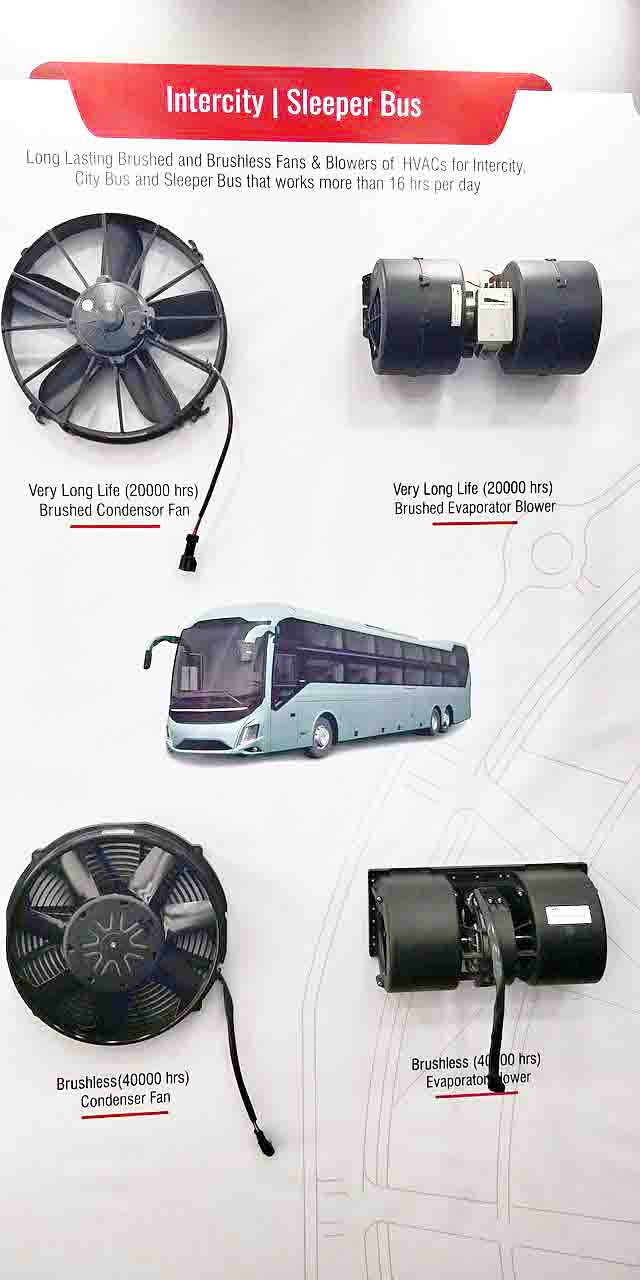 Electric vehicles, as Mr. Philip pointed out, have changed the dynamics of thermal management. “Earlier, thermal management was largely restricted to engine cooling and HVAC. Now, it’s an ecosystem approach. Batteries, inverters, converters, on-board chargers, everything requires precise thermal control,” he explained. SPAL’s product portfolio for the Indian market includes high-performance brushless fans and blowers that are specifically designed to meet these modern requirements. The BLDC motor-driven fans are not only compact and efficient but also operate with low noise and high reliability an essential feature for EV applications, Philip explained.“Our R&D is focused on helping OEMs achieve greater thermal stability with less energy consumption. We’re not just building fans; we’re building smart thermal modules that talk to the vehicle’s brain,” he claimed.
The Growing Need
With EV penetration increasing the need for advanced thermal management solutions is a given. Overheating is a known menace and linked to reduced range, faster charge degradation, and, in extreme cases, thermal runaway leading to catastrophic incidents including loss of life. These cooling systems help mitigate temperature fluctuations and prevent the battery from reaching unsafe levels, ensuring reliable performance throughout the vehicle’s lifespan.
Power electronics become more compact, requiring precise thermal control to avoid overheating. Inverters, converters, and onboard chargers, essential components in EVs, all rely on efficient cooling systems to operate optimally. The failure to manage the heat generated by these components can lead to inefficiencies, system failure, or even safety hazards. Beyond electric vehicles, the rise of alternative fuel vehicles, hydrogen-powered buses, and autonomous vehicles further expands the scope for advanced thermal management. The evolving mobility ecosystem demands a shift towards integrated cooling systems that can cater to diverse thermal needs across various vehicle types. As such, thermal solutions are moving beyond traditional cooling, evolving into smart systems that can adapt to dynamic thermal loads and provide real-time diagnostics.
The Indian Market Mandate
As India ramps up its EV mission both in passenger and commercial vehicle segments, SPAL is keen on localisation and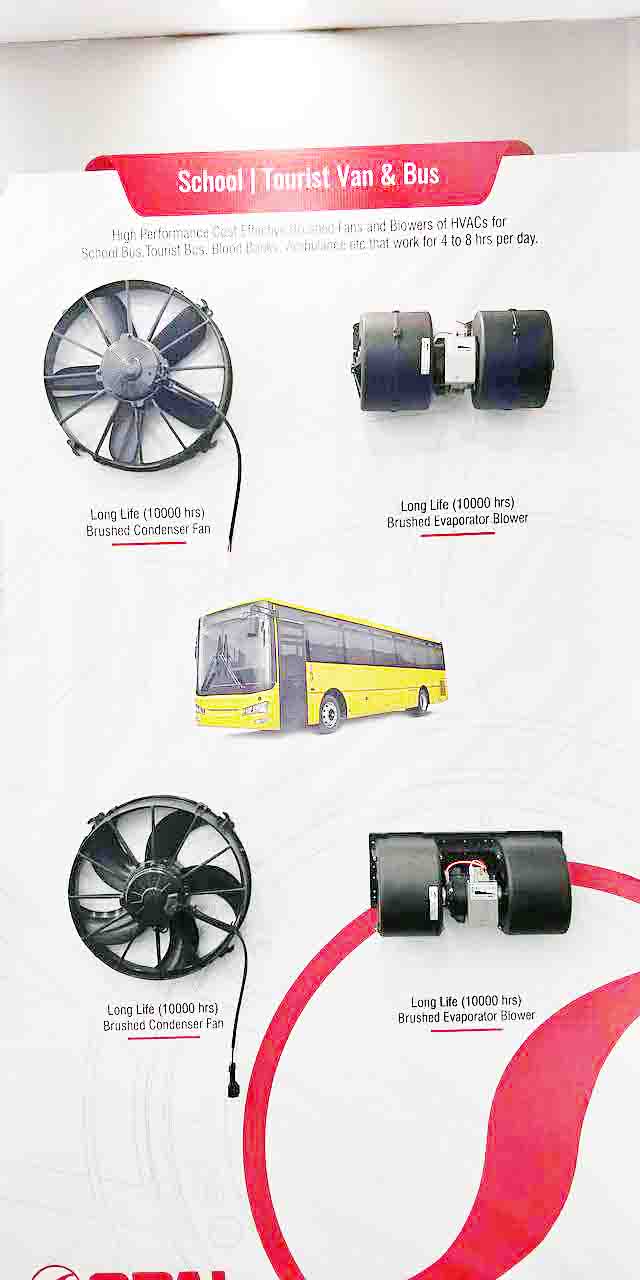 customisation. Unlike western markets, Indian road conditions, climatic variations, and duty cycles demand a different engineering lens. “One-size-fits-all doesn’t work here. That’s why we’re heavily investing in application engineering and simulation capabilities in India,” said Philip. He informed that SPAL is working closely with OEMs to tailor cooling solutions specific to battery packs, motor controllers, and cabin systems used in Indian-made EVs. SPAL’s range of brushless axial fans in the 200–500 mm range, radial blowers, and integrated control units are all designed to support Battery Thermal Management Systems (BTMS), power electronics, and cabin HVACs. Most of these products comply with IP68 and IP6K9K ratings for dust and water resistance, making them ideal for rugged Indian use.
Tapping Future Mobility
While EVs are a key focus area, SPAL is also eyeing future mobility in a broader sense. It is looking at opportunities within hydrogen fuel cells, autonomous vehicles, and even next-gen IC engine platforms that require smart cooling modules. The company’s brushless motors come with LIN and PWM control options will aid seamless communication with vehicle ECUs and respond dynamically to thermal loads in a unique manner. “Future mobility isn’t a single lane. It’s a highway with EVs, hybrids, fuel cell vehicles, and even intelligent logistics platforms all requiring unique cooling strategies. Our strength lies in anticipating these changes,” he reiterated.
SPAL’s collaboration with global automotive players allows it to transfer learnings from Europe, the US, and Japan to the Indian context. But India is not just a recipient, it’s becoming a design and development hub.“We are working on projects where the thermal system design is being led from India,” said Philip. “That’s a big leap for our local engineering team and an indication of how seriously we take India’s role in our global strategy,” he stated.
The Local Footprint
SPAL India operates from its base in Pune, where it has established a customer support, sales, and application engineering centre. The next step, according to Philip, is to scale up local sourcing and possibly explore assembly operations. Our long-term vision includes local value addition to reduce lead times and costs for OEMs. We’re already in discussions with partners for tier-2 component sourcing in India,” he menti. While a full-fledged manufacturing facility is still a few steps away, the groundwork is being laid with a clear intent to deepen SPAL’s Indian footprint.
Safety, Standards, and Smart Integration
SPAL’s products are engineered to meet ISO, AIS, and ECE R100 safety norms. Compact battery cooling fan with integrated diagnostics is known to have caught the attention of several OEM delegates at the trade fair. With built-in sensors and a CAN interface, it can monitor its own performance and alert the vehicle’s central controller in case of
Collaborations And Co-Creation
The importance of collaboration in building better solutions is evident at SPAL India. “The days of standalone component vendors are over. Today, success lies in co-creation. We work shoulder-to-shoulder with OEMs, tier-1s, and even software partners to develop integrated systems,” averred Philip. SPAL is currently collaborating with multiple electric bus and truck makers in India. The company is also engaging with component manufacturers of battery packs and thermal modules to integrate its fans as part of a plug-and-play ecosystem. This systems thinking is evident in the way SPAL designs its components not as standalone parts, but as nodes in a larger thermal architecture.
First Mover
With EV adoption growing, urban delivery vehicles electrifying, and bus fleets going green, the demand for thermal management is poised to skyrocket. SPAL India is gearing up with technology, talent, and strategic intent to be a leading player in this space. Philip concluded, “Cooling may sound like a backend function, but in EVs, it’s mission-critical. ACI





Leave a Reply