

Michelin’s Chennai facility marks a new chapter in India’s tyre manufacturing, localising premium passenger car tyres with advanced automation and Industry 5.0 precision, writes Upendra Kasbekar.
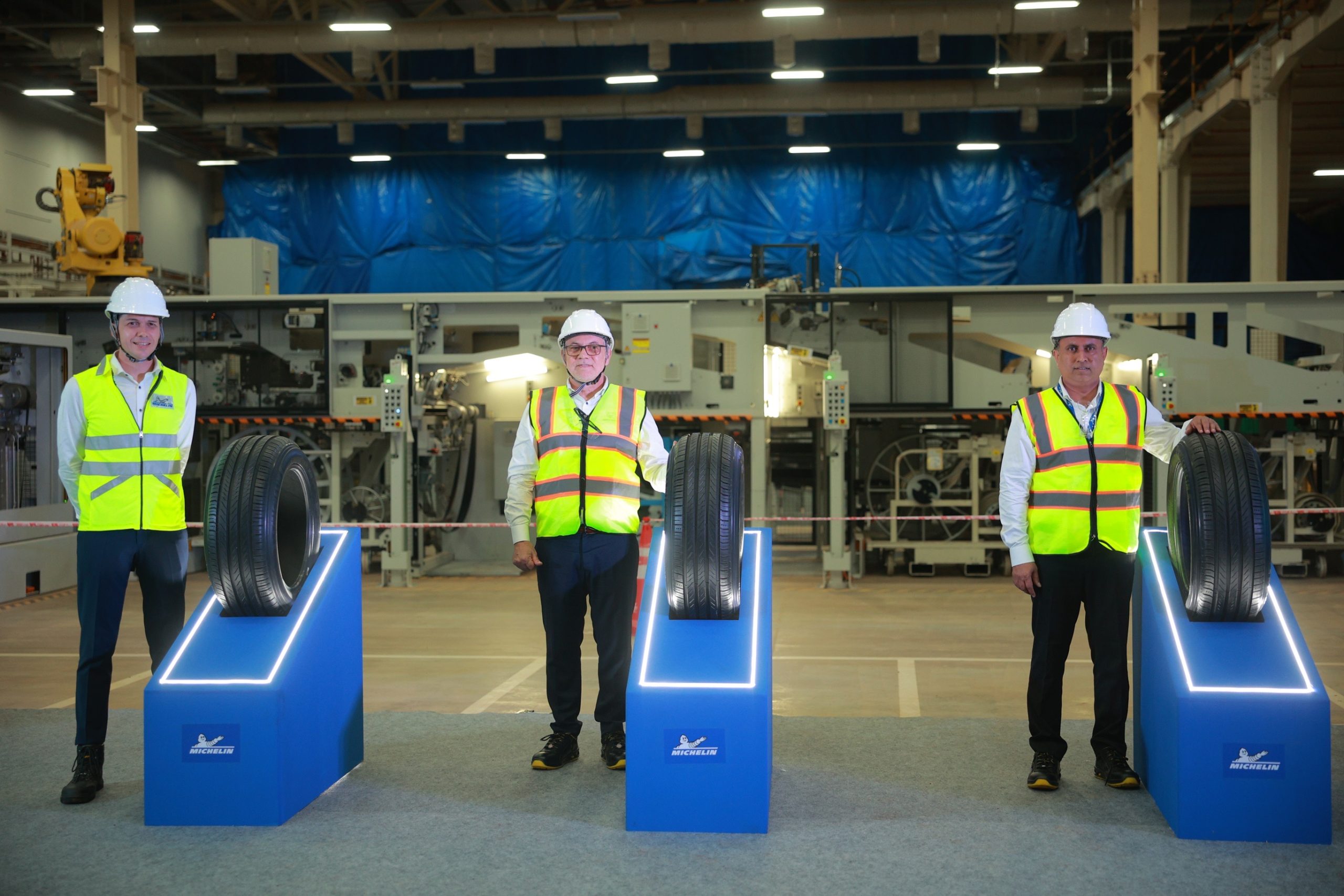
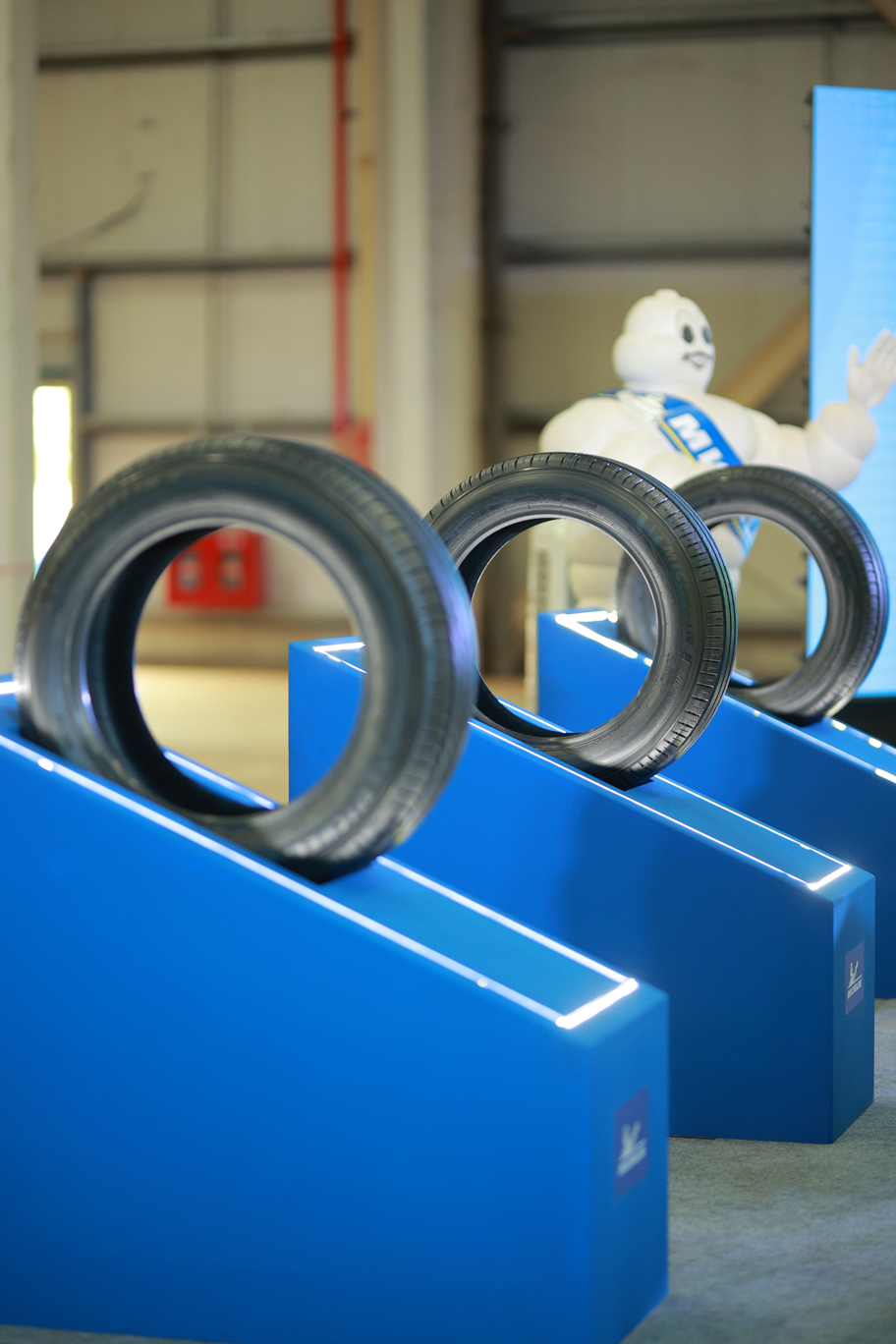
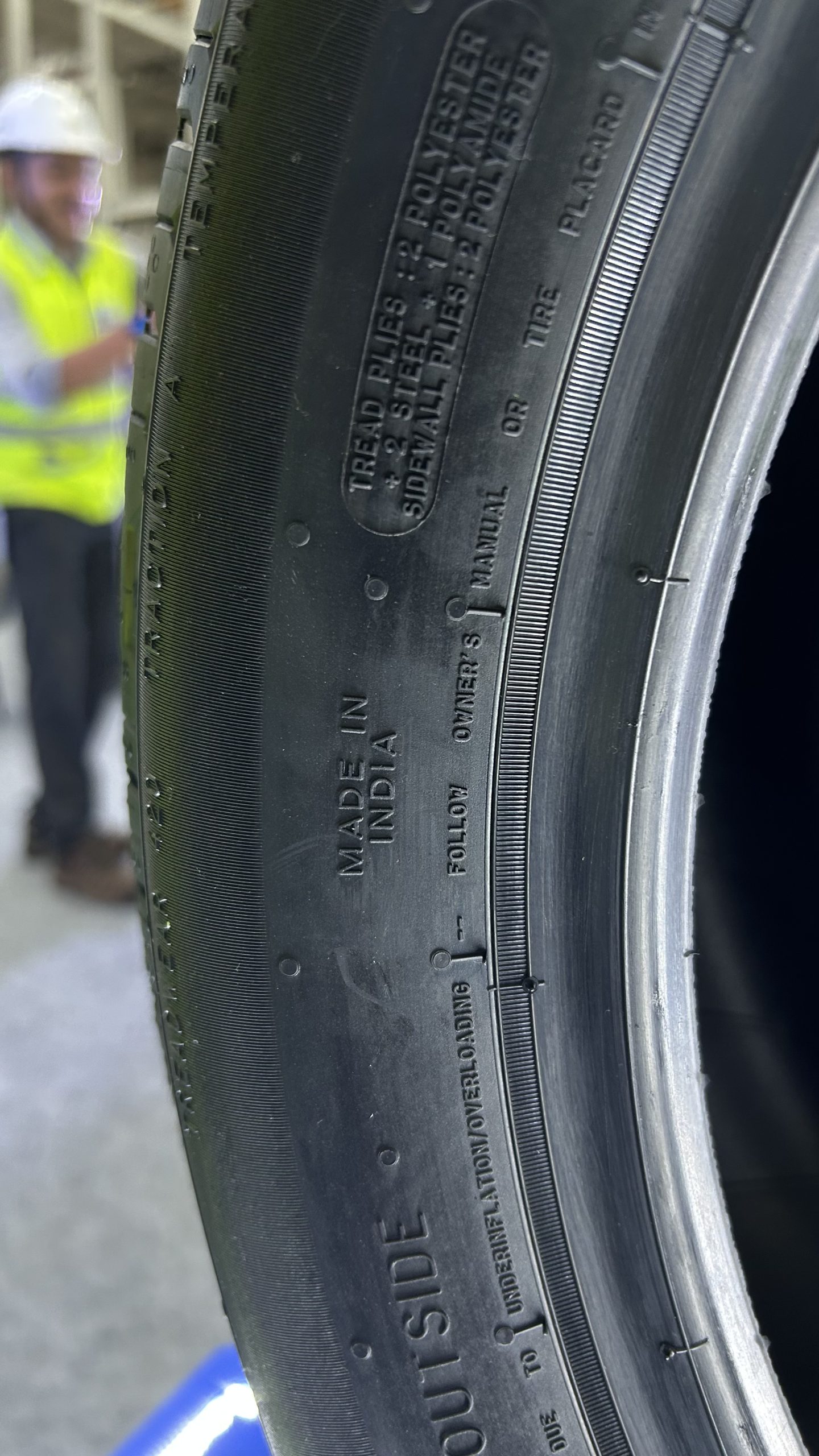
When Michelin unveiled its first made-in-India premium passenger car tyre from its Chennai facility, it marked more than a manufacturing milestone. It signified a strategic shift by the French tyre major transforming India from a commercial vehicle production base into a hub for high-value, technology-driven passenger car tyres. The INR 686-crore investment, completed in record time, positions the company to serve India’s rapidly premiumising automotive market while strengthening its global sustainability and innovation ambitions.
A Milestone in Michelin’s India Journey
Since its entry into India, Michelin has maintained a steady presence through its truck, bus, and defence tyre portfolio, operating from its state-of-the-art plant near Chennai. Commissioned in 2014, the site had already seen cumulative investments exceeding 2,800 crore rupees. With the latest passenger car line, Michelin’s total investment in the country rises to nearly 3,500 crore rupees.
 The new passenger car tyre unit, which spans 22,000 square metres within the existing complex, is designed around Michelin’s Industry 5.0 philosophy combining advanced automation with human-centric efficiency. Within just 12 months of the September 2024 announcement, the company scaled up from plan to first production, involving over 50,000 hours of technical training at Michelin factories worldwide.
Engineering Automation in Action
Michelin’s Chennai plant represents one of the most automated industrial facilities of its kind in India. Robotics and digital manufacturing systems govern most of the operational flow, allowing the plant to run efficiently with just 200 employees less than half the typical workforce for comparable capacity in the tyre sector. This high level of automation enables greater scalability and precision, both critical for premium segment tyres that demand consistency in performance, grip, and noise levels.
The new line will produce tyres ranging from 16 to 22 inch catering primarily to SUVs and premium passenger cars. Among the first products to roll out are the Primacy 5, Pilot Sport 5, Pilot Sport 4 SUV, and LTX Trail ST models that already enjoy global acclaim for balancing performance, comfort, and longevity. Michelin’s Indian-made tyres are also EV-ready, engineered to handle higher torque loads and lower rolling resistance typical of electric powertrains.
According to Shantanu Deshpande, Managing Director, Michelin India, the demand for tyres sized 16 inches and above currently stands between 10 to 12 million units and could rise to 17 million units within the next two to three years. This aligns closely with the country’s growing preference for SUVs, which now represent over 50 percent of passenger vehicle sales.
Aligning with India’s Growth and Premiumisation Story
 India’s passenger car market, valued at 18.13 billion USD in 2024, is projected to reach 33.85 billion USD by 2030, representing an annual growth rate of nearly 11 percent. Improved road infrastructure, higher disposable income, and the aspirational shift among India’s expanding middle class are driving the transition towards larger, feature-rich vehicles.
Michelin’s decision to localise production reflects this macro trend. “Better infrastructure, rising disposable income, and changing consumer preferences are fuelling the growth and premiumisation of the car park,” the company noted in a statement. By manufacturing locally, Michelin not only reduces lead times and import dependencies but also enhances its ability to tailor products for India’s unique driving conditions from urban tarmac to rural terrains.
Retail Expansion and Consumer Experience
In parallel with its manufacturing push, Michelin is strengthening its retail network to ensure easy access to its premium offerings. The company has established 75 standalone Michelin Tyres & Service outlets across India, each staffed by trained personnel capable of articulating the performance advantages of Michelin’s products.
Earlier this year, Michelin introduced its first ‘Experience Store’ in Nashik a unique concept designed to immerse customers in the brand’s technology, sustainability practices, and product innovations. The retail strategy supports Michelin’s plan to enter the passenger tyre space through the aftermarket route, where brand experience and service quality significantly influence buying decisions.
Sustainability at the Core of Manufacturing
Michelin’s Chennai facility has set benchmarks for sustainable industrial practices. It is among India’s greenest tyre manufacturing sites, operating with a zero-carbon footprint, zero liquid discharge, and 100 per cent recycling of waste. Nearly 80 per cent of the plant’s water needs are met through rainwater harvesting, while 45 per cent of its energy is sourced from renewables.
According to Florent Chaussade, Executive Director, Michelin India, tyres produced in India already incorporate 45 percent recycled materials, with the company targeting 50 percent by 2030 and 100 percent sustainable tyres by 2050. These goals align with Michelin’s global vision of transforming into a “world-leading manufacturer of life-changing composites” a philosophy that extends its expertise beyond tyres into sectors such as mobility, construction, aeronautics, and healthcare.
From Tyres to Technology: Michelin’s India Ecosystem
While manufacturing represents one pillar of Michelin’s India strategy, the other equally important dimension lies in its technology and engineering capabilities. Its technical centre in Pune has emerged as a global Centre of Excellence (CoE) for Artificial Intelligence (AI) applications in tyre development. With a team of over 2,500 engineers, it is Michelin’s largest R&D base outside France.
The Pune centre supports not just product design and performance simulations but also data-driven innovations such as predictive wear analysis, real-time pressure management, and smart tyre technologies using AI-based proof-of-concepts around 100 POCs are currently under test. These initiatives position India not merely as a production base but as a crucial contributor to Michelin’s global technology pipeline.
Meeting India’s Mobility Needs Safely and Efficiently
In both its commercial and passenger tyre portfolios, Michelin continues to emphasise the fundamental triad of safety, durability, and comfort. Its India-made tyres are engineered to offer improved grip under varied climatic conditions, lower noise, and longer tread life attributes that are increasingly valued by Indian consumers navigating a mix of high-speed highways and congested city roads.
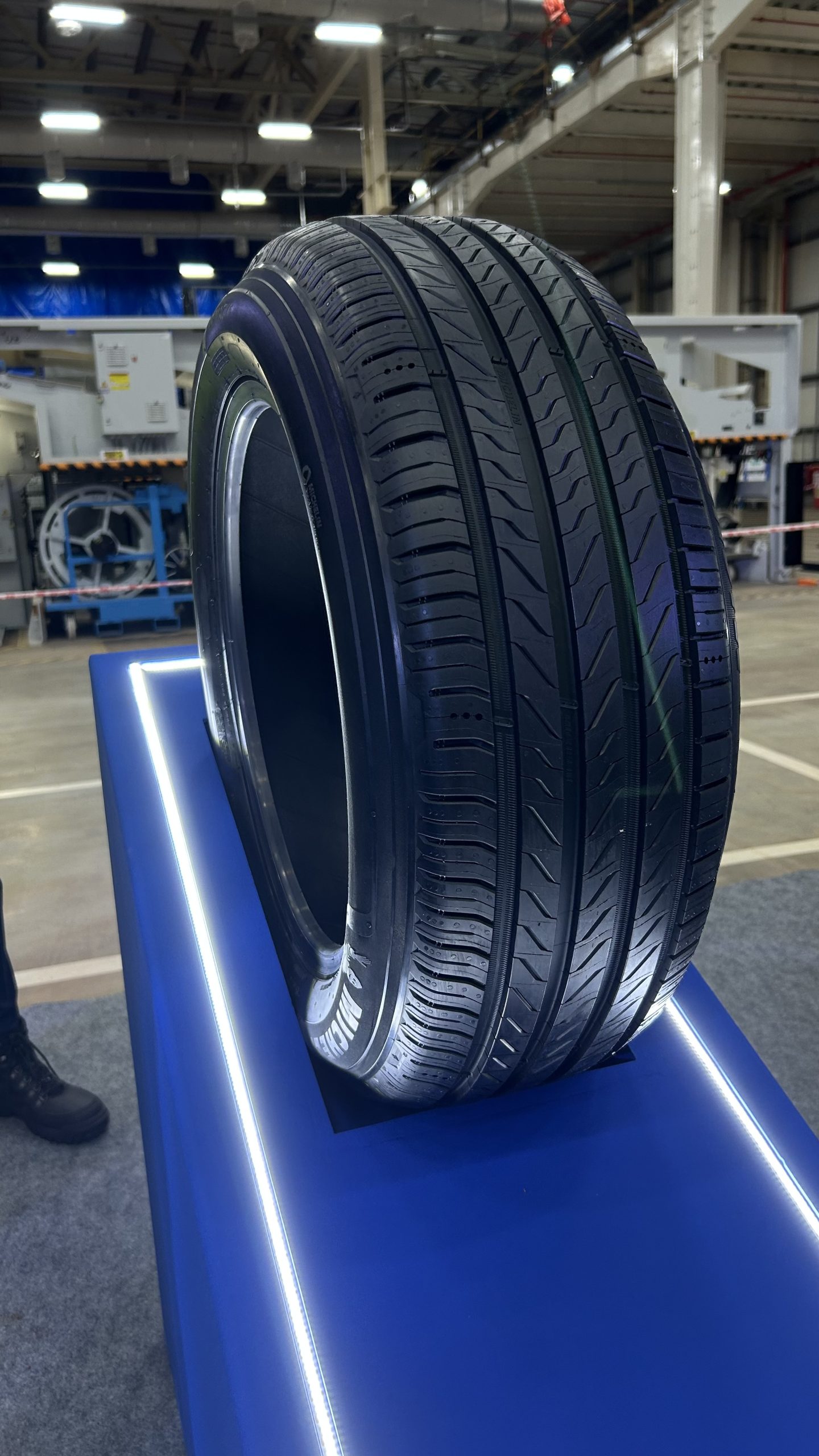
“Michelin proposes a product that takes you from A to B with safety, reliability, and reduced fuel consumption by 6–10 per cent. We are no longer talking about the price of the product, but the value it unlocks for operations,” says Vitor Silva, President Africa, India and Middle East, underscoring Michelin’s philosophy of value-driven innovation over price-based competition.
Fast Scaling, Future Ready
With an expected peak production capacity within a year, the new plant will contribute significantly to Michelin’s annual output increasing from 30,000 tonnes to 54,000 tonnes. The facility’s design ensures scalability and flexibility, allowing it to quickly adapt to demand fluctuations and new product introductions.
Given India’s increasing adoption of EVs, Michelin’s readiness with compatible tyre technologies offers a future-proof edge. The company’s expertise in low-rolling-resistance designs and advanced tread compounds aligns with OEM expectations for energy-efficient and quieter tyres critical for both electric and premium internal combustion vehicles.
A Broader Vision for India
Michelin’s expansion underscores a broader strategic intent to make India one of its most important markets globally within the next decade. “India for us is much more than tyres,” says Silva. The combination of a strong manufacturing base, a rapidly maturing customer ecosystem, and a globally aligned R&D network positions India as both a production and innovation hub in Michelin’s global operations.
As the domestic automotive industry accelerates towards electrification and premiumisation, the localisation of advanced component manufacturing becomes a critical enabler. Michelin’s Chennai facility, blending automation, sustainability, and scalability, sets a new benchmark in this direction.
A Tyre for Tomorrow’s India
The rollout of Michelin’s first made-in-India premium passenger tyre is more than a corporate milestone it reflects a shift in India’s position within the global mobility value chain. By localising advanced manufacturing, embracing Industry 5.0 principles, and embedding sustainability into operations, Michelin has effectively aligned its business model with India’s evolving automotive landscape.
For the Indian consumer, it means access to globally benchmarked products made locally. For the industry, it signifies a new chapter in localisation where technology, sustainability, and market opportunity converge. As SUVs dominate roads and EVs gain momentum, Michelin’s Chennai plant stands as a symbol of how precision manufacturing and engineering excellence can roll India’s mobility story forward.
UPFRONT
Localising Premium Mobility: Michelin’s Leadership on India’s Next Growth Chapter
At the inauguration of Michelin’s new passenger vehicle tyre line at its Chennai facility, Upendra Kasbekar interacted with Vitor Silva, Shantanu Deshpande, Florent Chaussade. The discussion focused on localisation, advanced manufacturing, sustainability, and India’s strategic importance within Michelin’s global operations.
Q: What does this investment mean for Michelin’s operations in India?
 Vitor Silva:
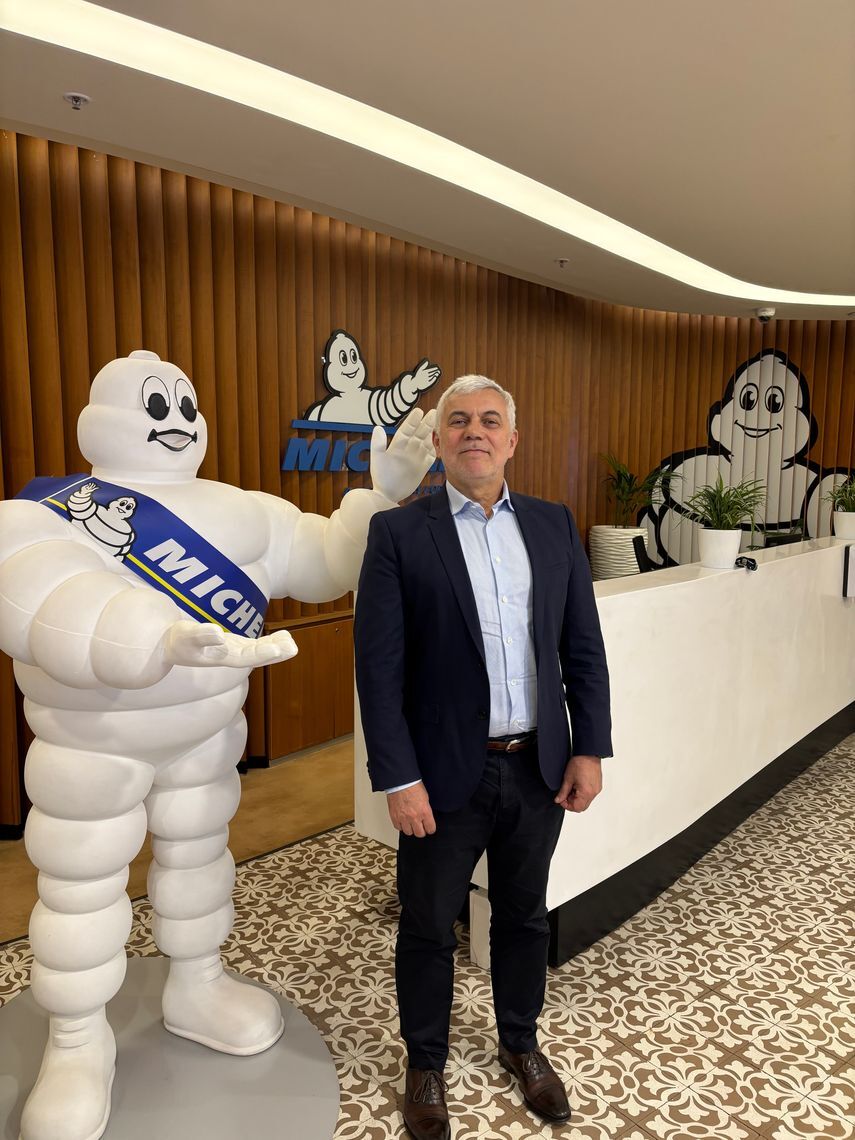
We are excited to produce in India for Indian consumers it’s a proud moment for Michelin. For over a decade, this facility has produced truck and bus tyres, and now, with an investment of ₹686 crore, we are adding our first passenger car tyre line. This expansion positions India at the centre of our long-term growth strategy. India is not only a strong market; it is also a key hub for engineering, AI, and materials that support our global supply chain.
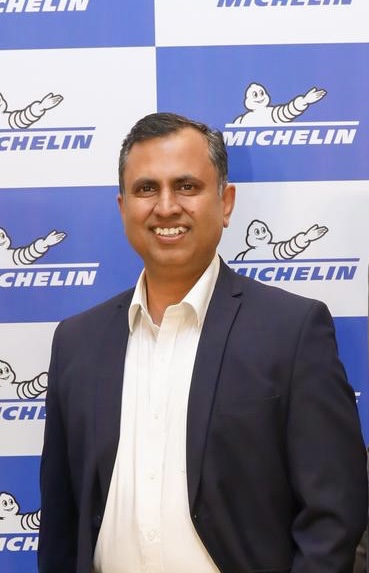
Shantanu Deshpande, Managing Director, Michelin India
Shantanu Deshpande:
The timing is perfect. In India, 50 percent of new cars sold last year were SUVs, and consumers are increasingly choosing premium products. Better infrastructure, higher disposable incomes, and a growing focus on safety and comfort are driving this shift. Michelin’s technology and product range are designed precisely for these needs, especially for the 16-inch-and-above tyre segment that is expanding rapidly.
Q: How is R&D structured to support the new production line?
Vitor Silva:
Michelin’s R&D is global. Our Pune Technology Centre, with about 2,500 engineers, contributes to worldwide tyre development. The same products sold in Europe and North America are engineered and supported here. We didn’t create an India-specific tyre; we are producing a world-class product in India using global technology.
Florent Chaussade:
Tyre manufacturing is highly complex. It involves chemistry, mechanics, and advanced material transformation. R&D extends across every stage raw materials, semi-finished components, and final assembly. Each layer contributes to performance. This approach ensures consistency and durability across all Michelin factories.
Q: To what extent is Michelin sourcing materials locally?
Vitor Silva:
India already supplies many of the materials that go into our tyres carbon black, natural rubber, and steel, for example. The country is a global leader in chemicals and industrial inputs, and we see strong potential to use Indian suppliers not only for domestic production but also for our international supply chain.
Q: What defines the new passenger car tyre line in Chennai?
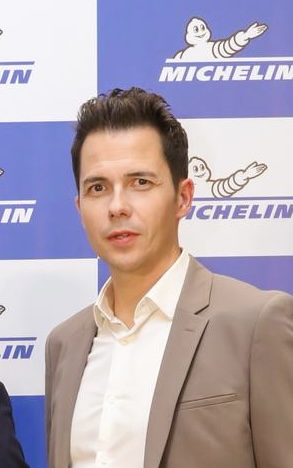
Florent Chaussade, Executive Director, Michelin India
Florent Chaussade:
This new line is a benchmark for Industry 5.0 manufacturing. It uses the same Michelin process deployed in Europe, the U.S., and China. There is no difference in quality or technology across our sites we produce to one global standard.
Before production began, we conducted 50,000 hours of operator and engineer training across Michelin facilities to familiarise the team with the new processes. The result is one of the most advanced and automated tyre manufacturing lines in India.
Our system can flexibly produce tyres between 16 and 22 inches on the same machine. Thanks to automation, only about 200 employees operate this facility less than half the industry average for a plant of this scale.
Q: What is the production capacity and how scalable is it?
Florent Chaussade:
The total annual capacity of the Chennai plant is now 54,000 tonnes, up from 30,000 tonnes earlier. The system is highly flexible and scalable, allowing us to respond quickly to changing market needs. We will manufacture key product ranges here Primacy 5, Pilot Sport 4 SUV, Pilot Sport 5, and LTX Trail ST catering to premium car and SUV segments.
Q: How does the new facility align with Michelin’s sustainability commitments?
Florent Chaussade:
Our strategy follows the “3P” principle People, Profit, and Planet. Each must perform equally for the system to work. The Chennai plant operates with zero liquid discharge, 100 percent waste recycling, and meets 80 percent of its water needs through rainwater harvesting. Around 45 percent of our energy comes from renewable sources.
We also work to reduce waste generation continuously. In fact, the Chennai truck and bus tyre line recently achieved the lowest waste ratio among all Michelin factories worldwide.
Q: What approach is Michelin taking to reach premium car buyers in India?
Shantanu Deshpande:
We are entering the passenger vehicle segment through the replacement market first, before OEM fitments. This allows us to build customer familiarity and retail capability. We’ve expanded to 75 standalone Michelin Tyres & Service stores and launched our first Experience Store in Nashik. These outlets offer a premium environment and informed assistance to customers seeking safety and performance.
On the digital front, we are supporting our dealers through the Dealer Digital Programme. We help them enhance their online presence through Google business profiles and social media, as over 80 percent of consumers now research online before buying tyres. We also train dealers and technicians to handle leads, understand customer needs, and communicate product benefits effectively.
Q: How does Michelin ensure quality parity between India and other markets?
Vitor Silva:
We maintain one standard globally. Whether a tyre is made in Chennai, China, or North America, it must meet the same quality and performance benchmarks. Our promise to customers is universal we deliver the same reliability everywhere. That consistency defines Michelin’s credibility worldwide.
Shantanu Deshpande:
The tyre lines we are now manufacturing in Chennai Primacy, Pilot Sport, and LTX are the same ones we’ve been importing and selling in India. The manufacturing process hasn’t changed; it’s Michelin’s global process replicated here. The factory happens to be in India, but the standards are identical.
Q: What are Michelin’s priorities for the coming years?
Vitor Silva:
We’ve invested ₹686 crore to establish this new line, which is a long-term commitment. These machines and processes are built for decades of use 15 to 25 years. Our near-term goal is to stabilise production and meet demand efficiently. As India’s market grows, we will make incremental investments to expand capacity.
Shantanu Deshpande:
The immediate focus is to ensure our passenger tyres reach the market on schedule. We’re strengthening our distribution network and ensuring retail partners are fully equipped to handle the new product range. OEM business will follow in due course, once we achieve scale and consistency.
Florent Chaussade:
This plant represents the best of Michelin technology, sustainability, and precision manufacturing. From Chennai, we’re not only producing tyres; we’re contributing to the future of premium mobility in India.